Natural dyeing – a colorscape – Émilie Valiquette

Natural dyeing – a colorscape – Émilie Valiquette

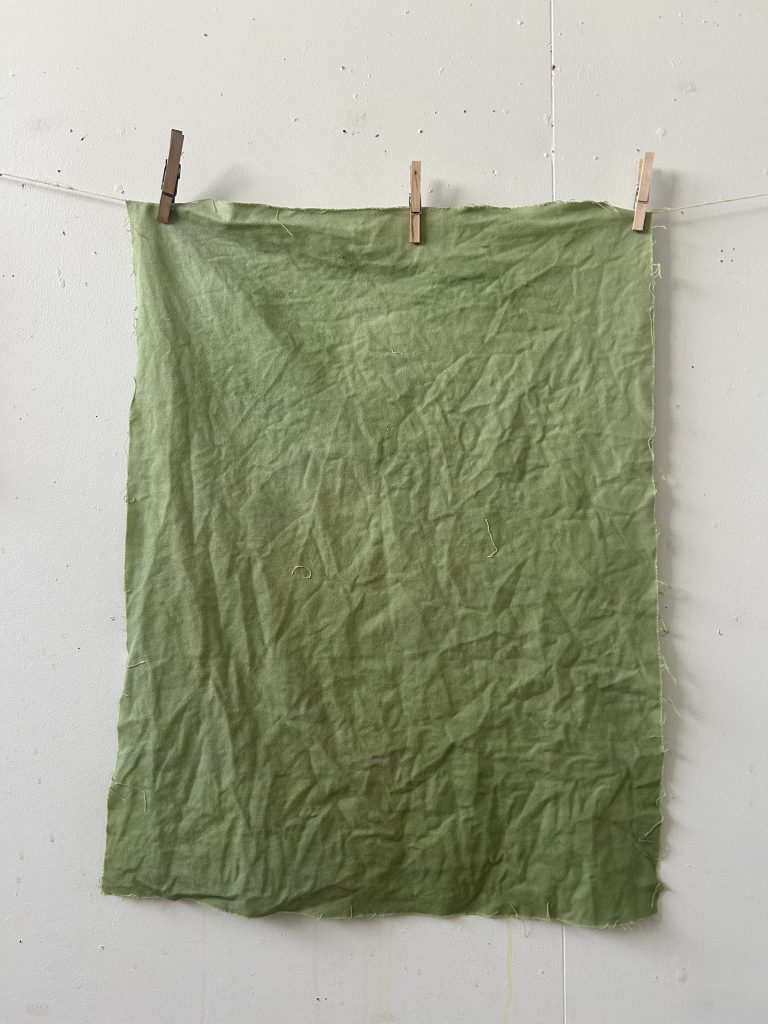
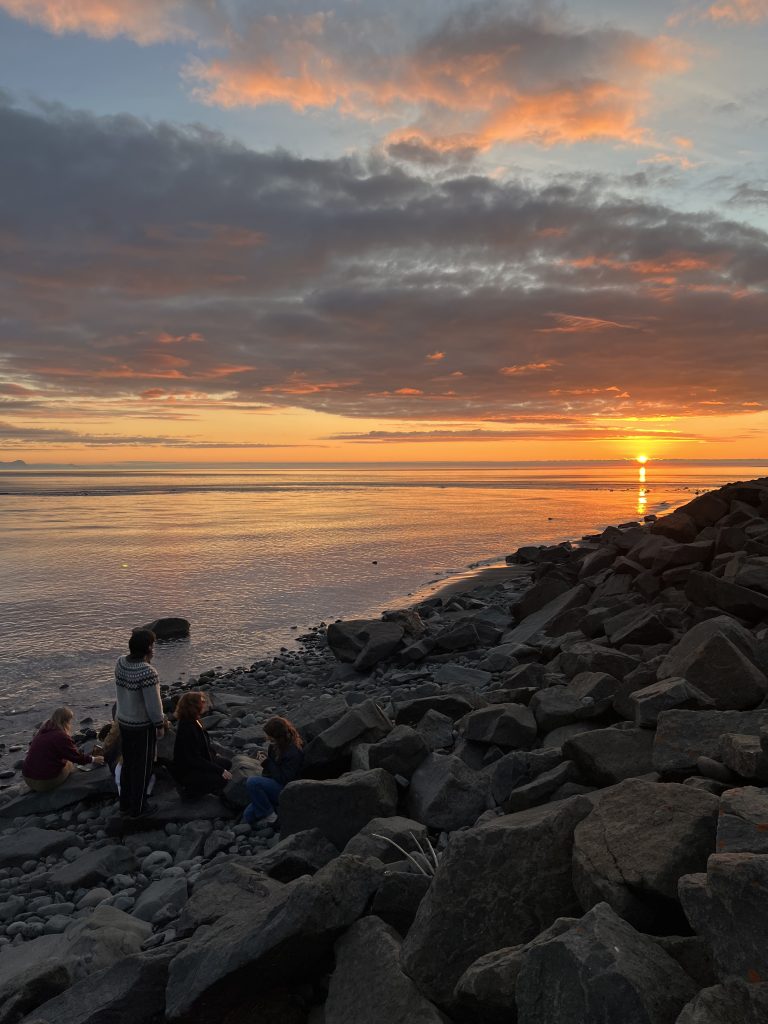
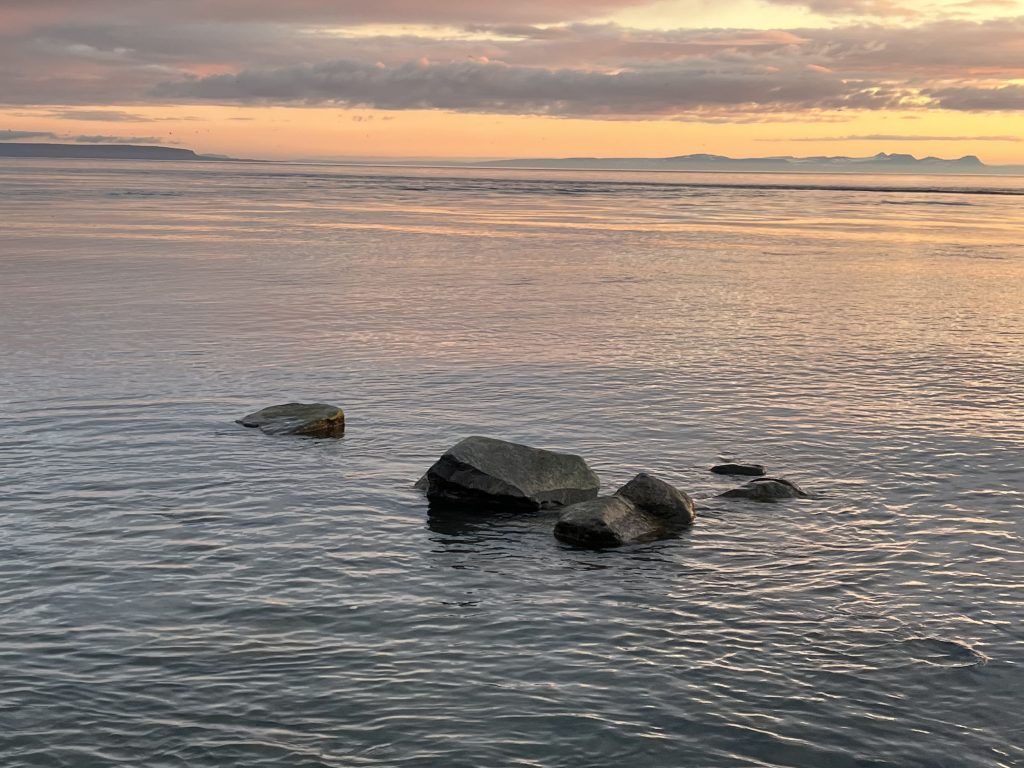
The through line of my experience in Blönduós has been taking in all the colours and the light quality to transpose them into a colorscape through natural dyeing. The experiments on cotton fabric were used to create a garment, a coat representing my experience of the sky using natural matter I gathered from the ground. The results of my experiments on wool were used to try all of the new techniques we were lucky to learn at the Textile Center. I leave this trip having done all of these new techniques for the first time: spinning wool, carding wool, weaving, bioplastics, felting, knitting and tufting.

My natural dyes experiments are each tied to a memory, a community aspect, a moment gathering in nature.

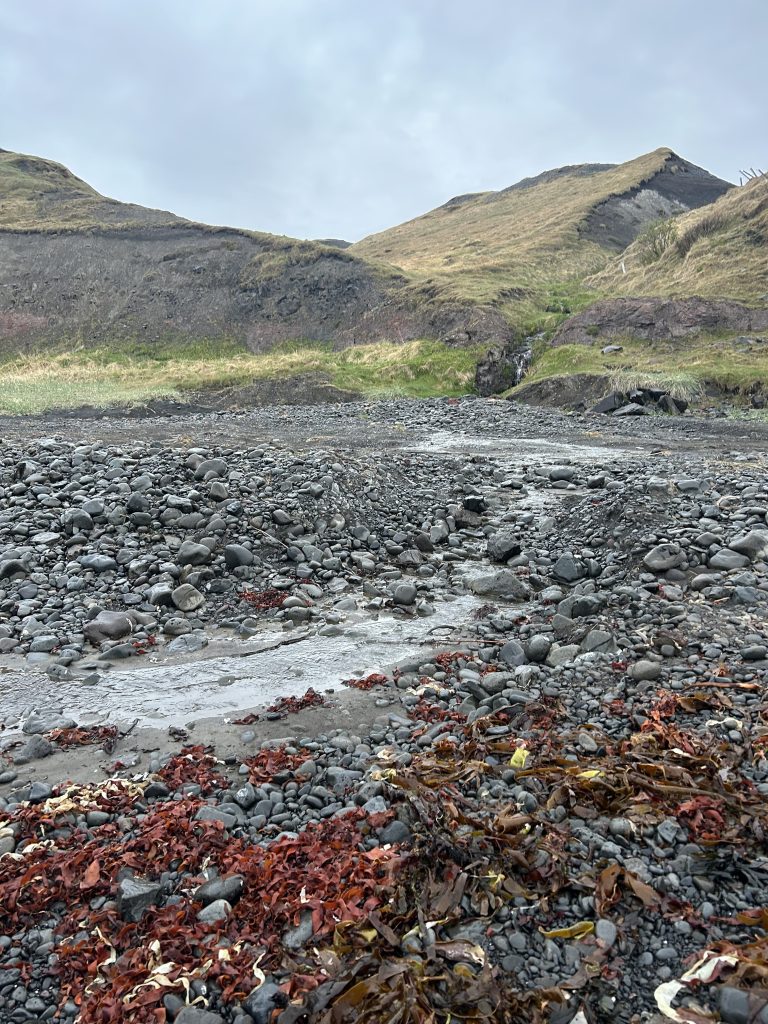
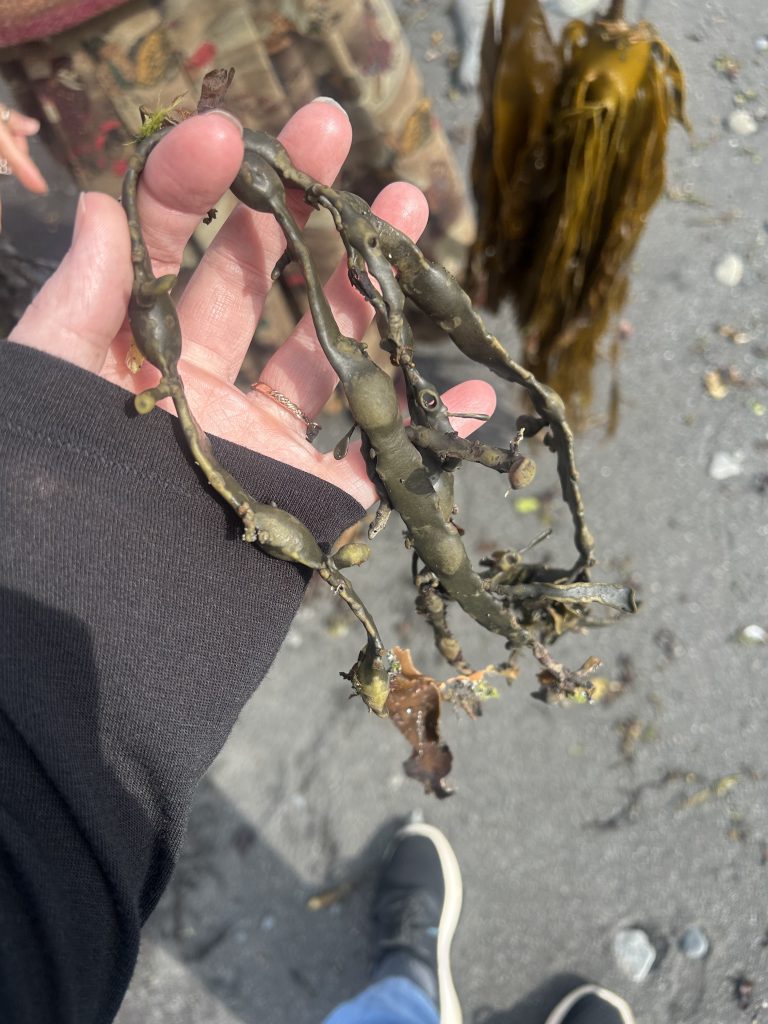
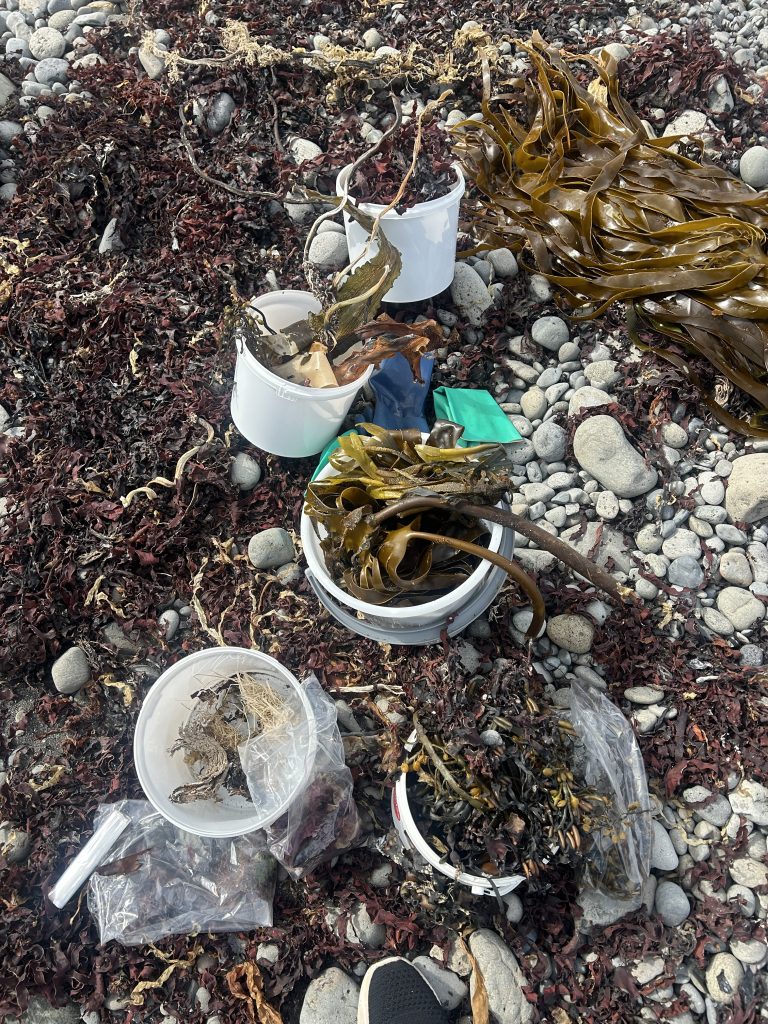
Algae: The algae were gathered with Alyssa and Sarah from the Textile Lab for the bioplastics class. We walked on the lovely black sand beach with our buckets. They told us we could dye with a specific kind of algae called bladderwrack. I distinctly remember the very strong smell of the sea from the pot. The results were a subtle cream colour.
Cochineal: Even if this natural dye originates from Mexico, it was meaningful for me on that trip. We dyed from it in the natural dye class with Þorgerður, and our classmate, Andre, is very fond of it. Experimenting with this natural dye heightened the community aspect of this experience. I got very nice purples and light pinks from this dye. Andre got very vibrant reds. It is impressive that such a vibrant colour comes from a bug.
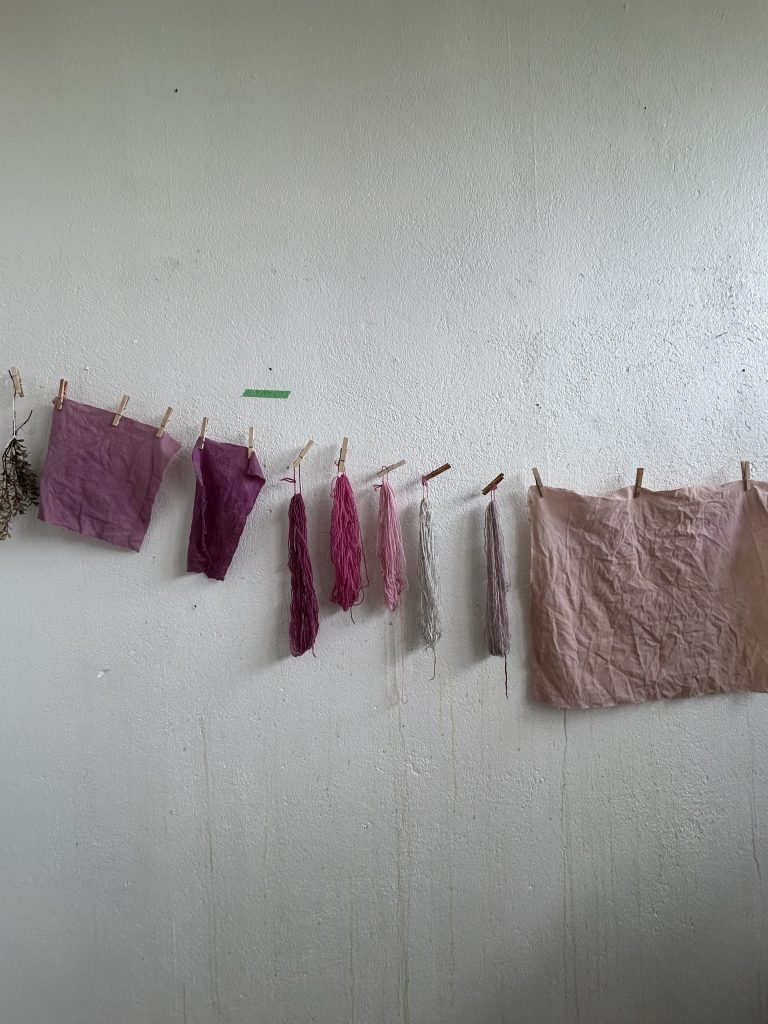
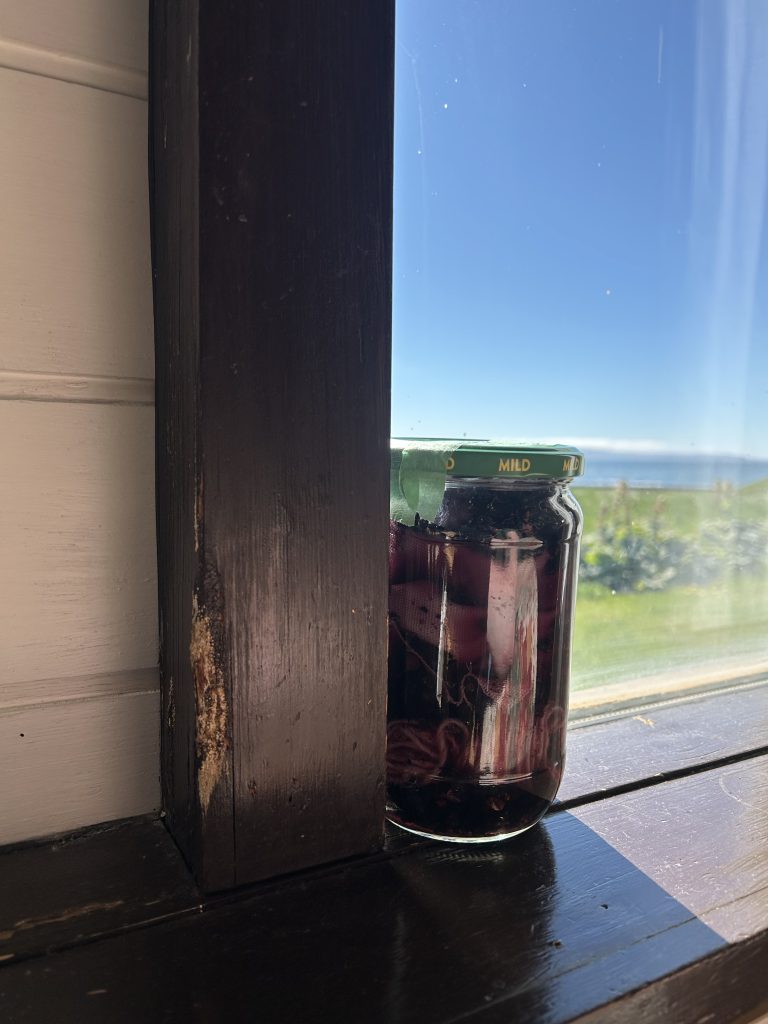
Crowberries: I encountered the crowberries a few times in consumable form across Iceland, so I was pretty happy to see them being sold as a dye material at the market at the Knit Fest being held in Blönduós. I would have liked to gather them myself, but it was also pretty special to be able to buy dye materials and ready-to-dye yarn. The seller, from Graenalaut Studio, recognized me pretty well at the end of the weekend. I gravitated around her booth quite a lot, natural dyes enthusiast that I am. I got to try solar soak dyeing for the first time with this, to keep as much of the colour of the berries as possible. I left the jar on the windowsill of house 35 for a week, and got a lovely vibrant purple on cotton and, surprisingly to me, a grey on yarn. Natural dyes usually take up much more on wool.
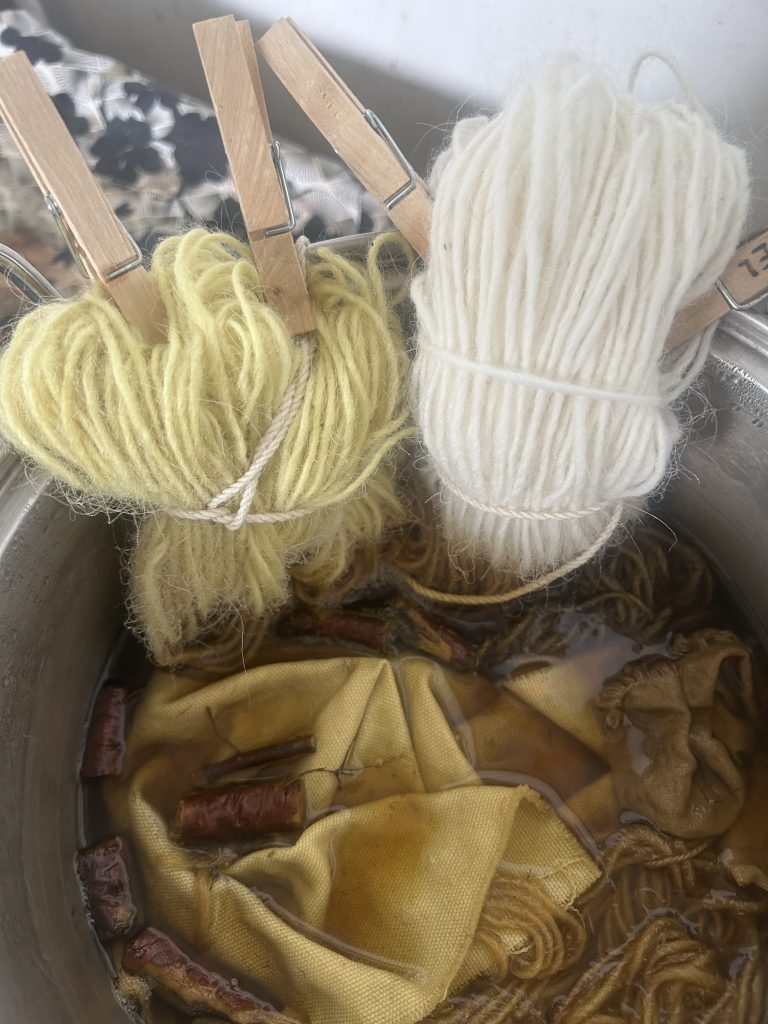
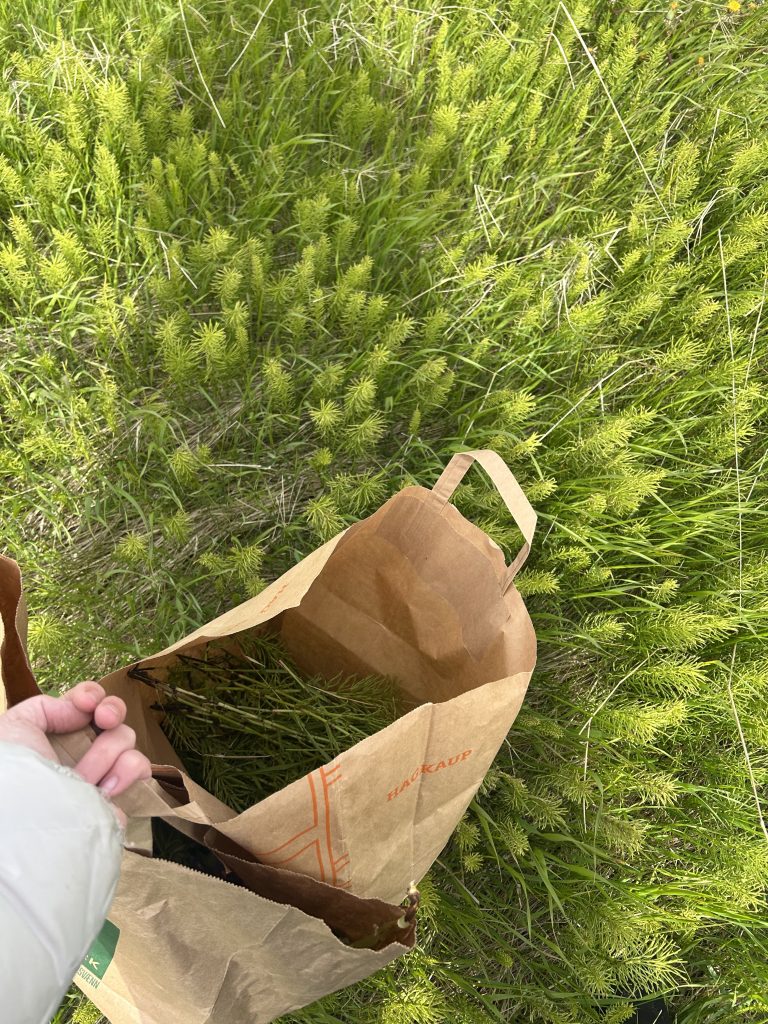
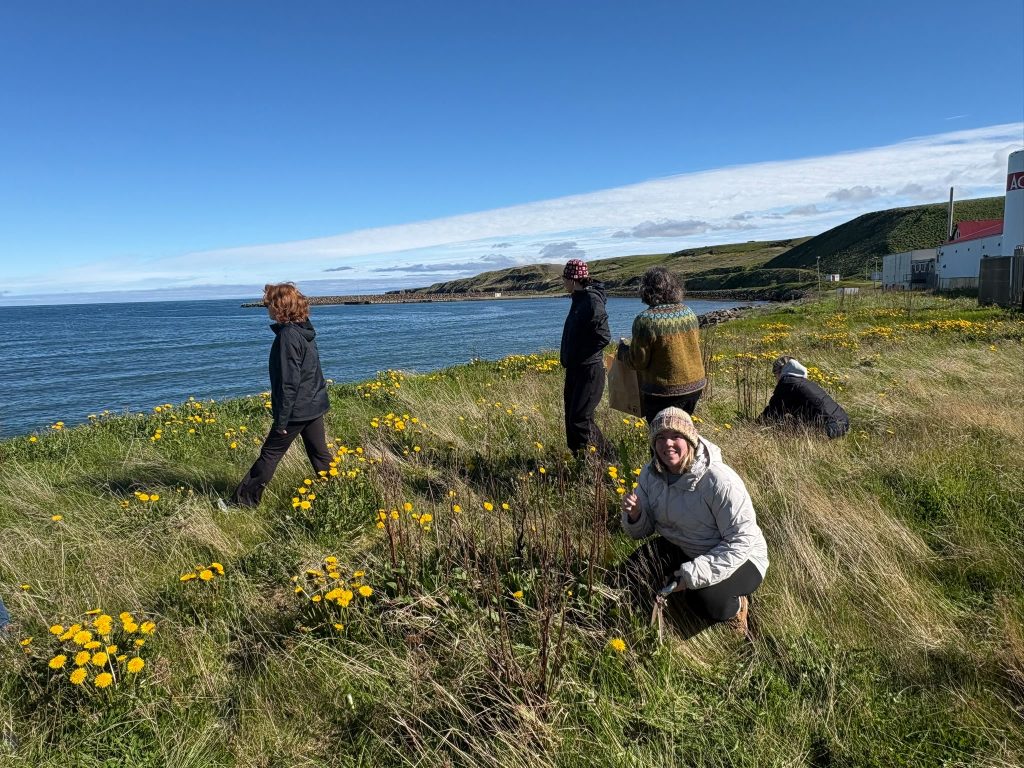
Horsetails: These spiky green plants are abundant in the grassy fields near the water. I was curious to see if they would dye, expecting a muted green. I was very surprised by the very vibrant yellow they yielded. The days I gathered them, it was really windy, true Icelandic weather. I had to hold on tight to my paper bags.
Indigo: I had the chance to dye with indigo at the Knit Fest with Graenalaut Studio. It was my chance to get a true blue, and it was meaningful to take advantage of a community event and integrate it into my dyeing experience.
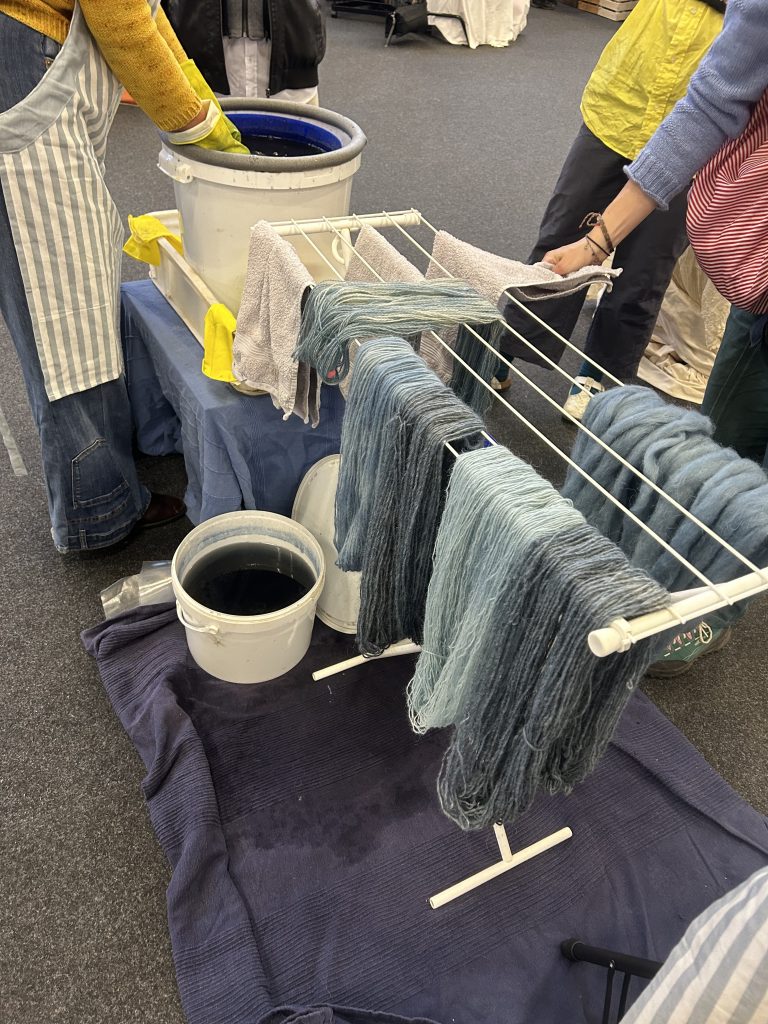
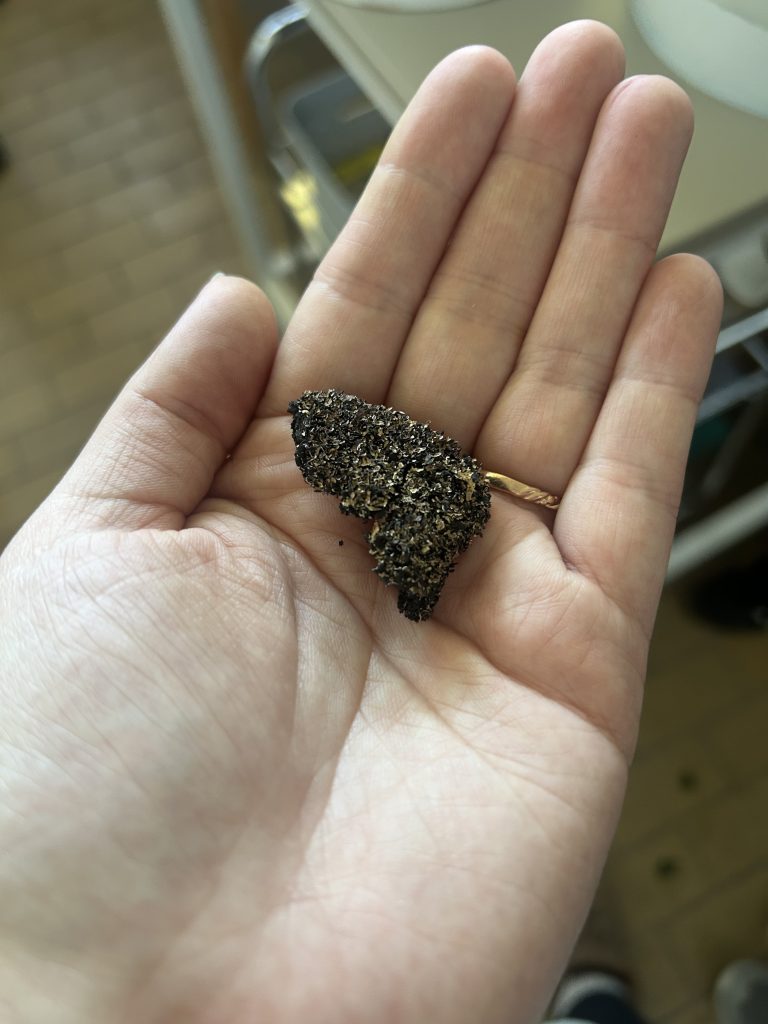
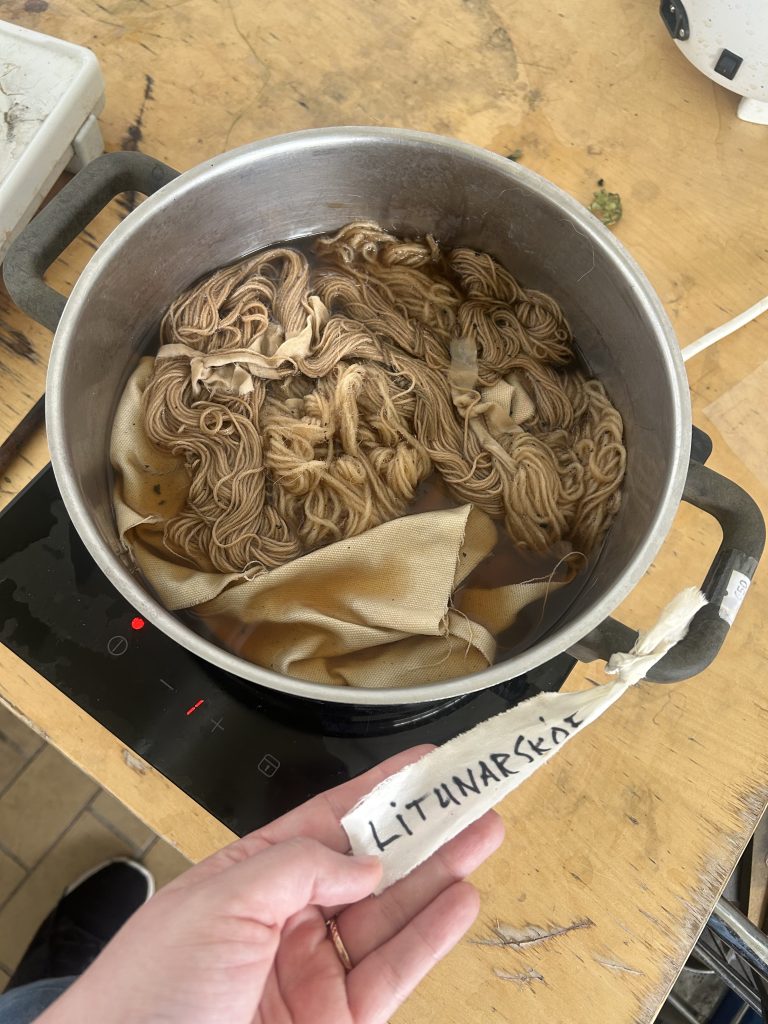
Lichen: Þorgerður, during her natural dyeing class, really put emphasis on the Icelandic name of the lichen she gathered and brought for us to dye with: Litunarskóf. It is a sort of lichen that is of the Parmelia family and is known as a natural dye. The smell was very earthy. With this dye, we did a long soak over multiple days and took off a skein of wool each day to create a gradient. It yielded an orangey cream colored wool.
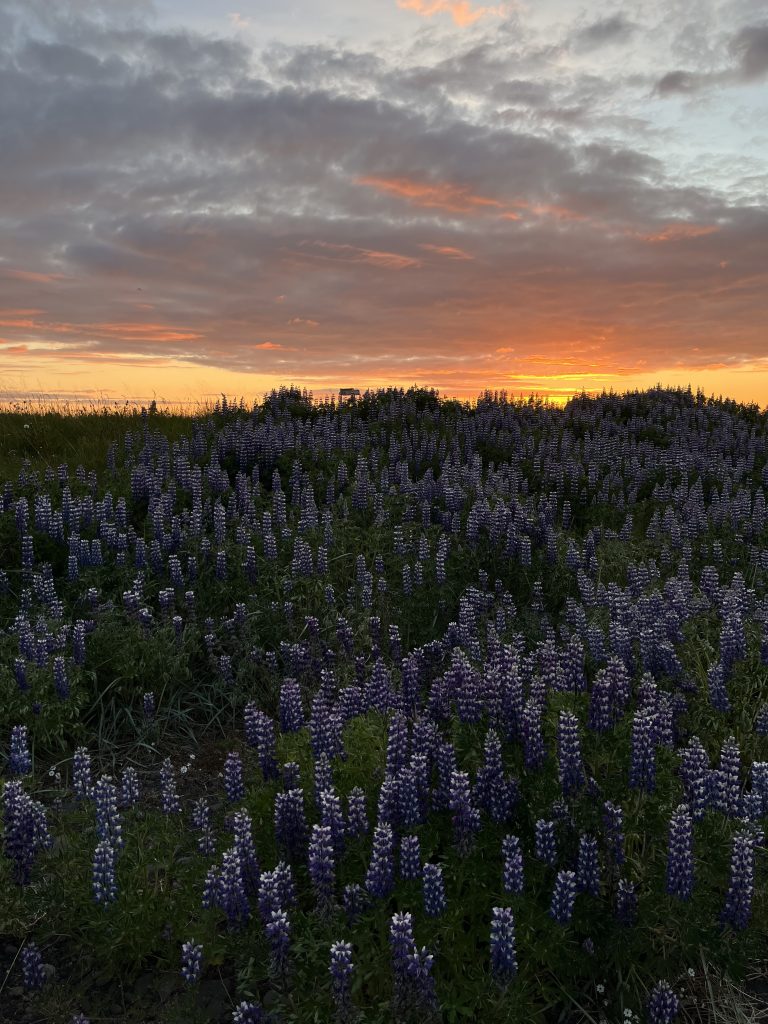
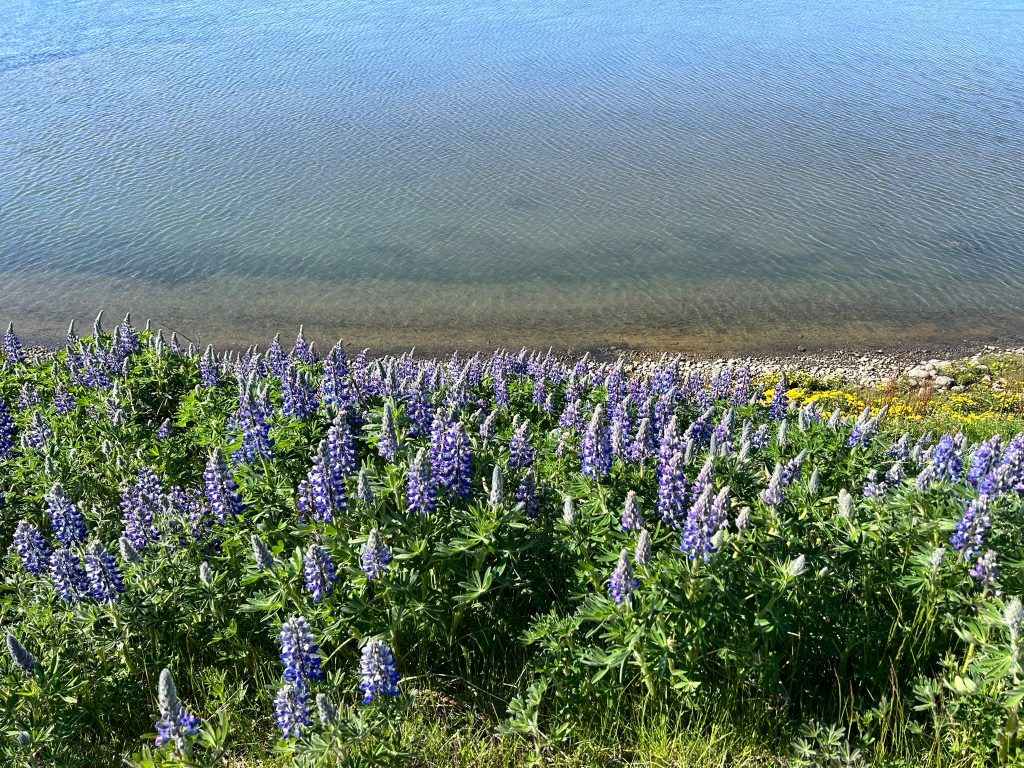
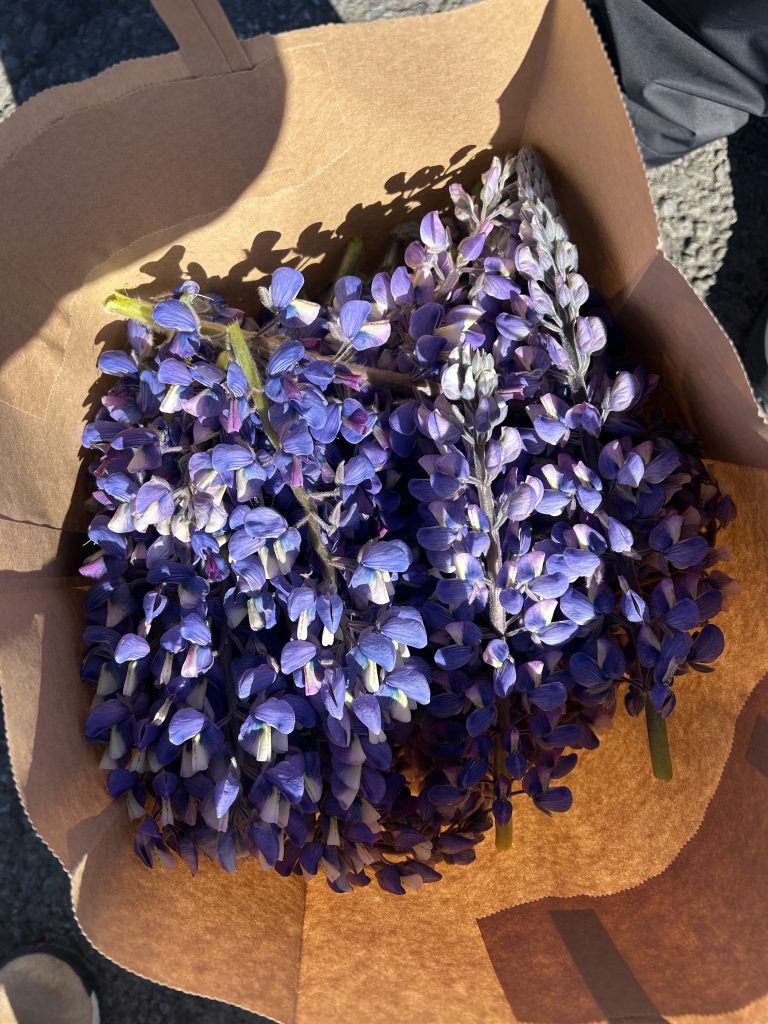
Lupins: Lupins are an invasive species that is not indigenous to Iceland. Most locals have a complicated relationship to it. For that reason, it was meaningful to use it to dye, since there is plenty of it and collecting it is actually a good thing. We were able to see them bloom and fill up the whole fields during June. I used the flowers to yield lovely greens. It was a long process, but really rewarding. To keep the green result, the bath needs to slowly get to 60 degrees and never go above it during the two hours it takes to extract the dye and then dye. The stems and leaves gave me a light yellow. I harvested the lupins on one of my recurring late-night walks to admire the sunset.
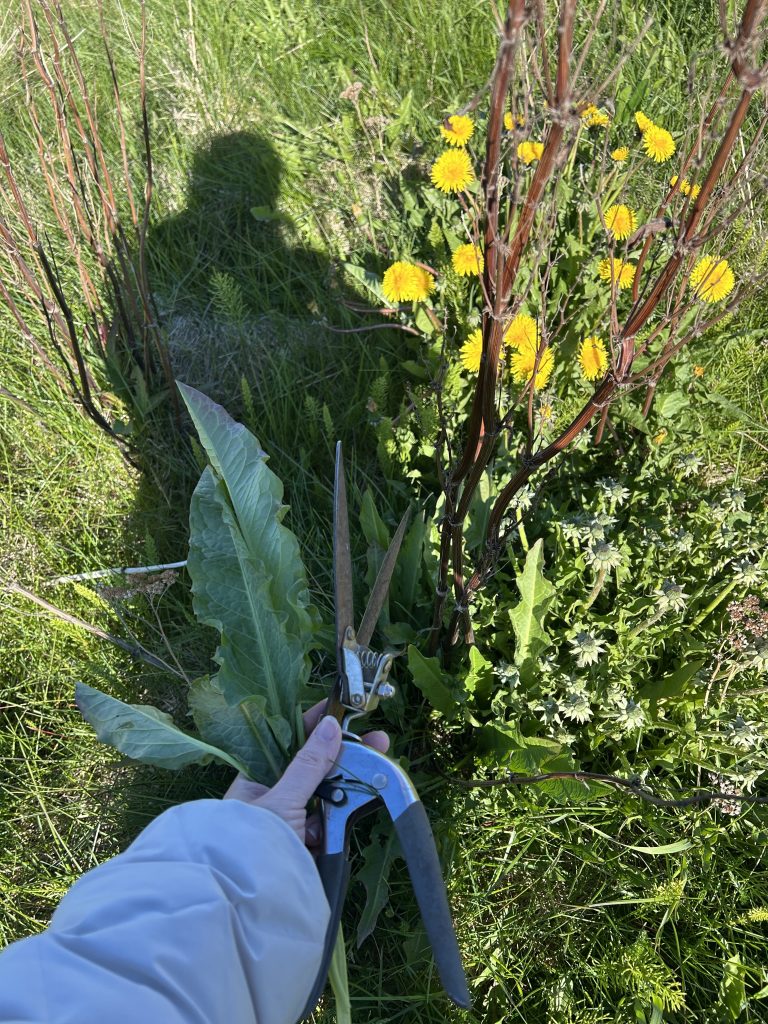
Northern Dock: Þorgerður presented this plant with its Icelandic name: Njóli. We dyed with the leaves. It yielded yellows and greens. It has these very distinctive branches.
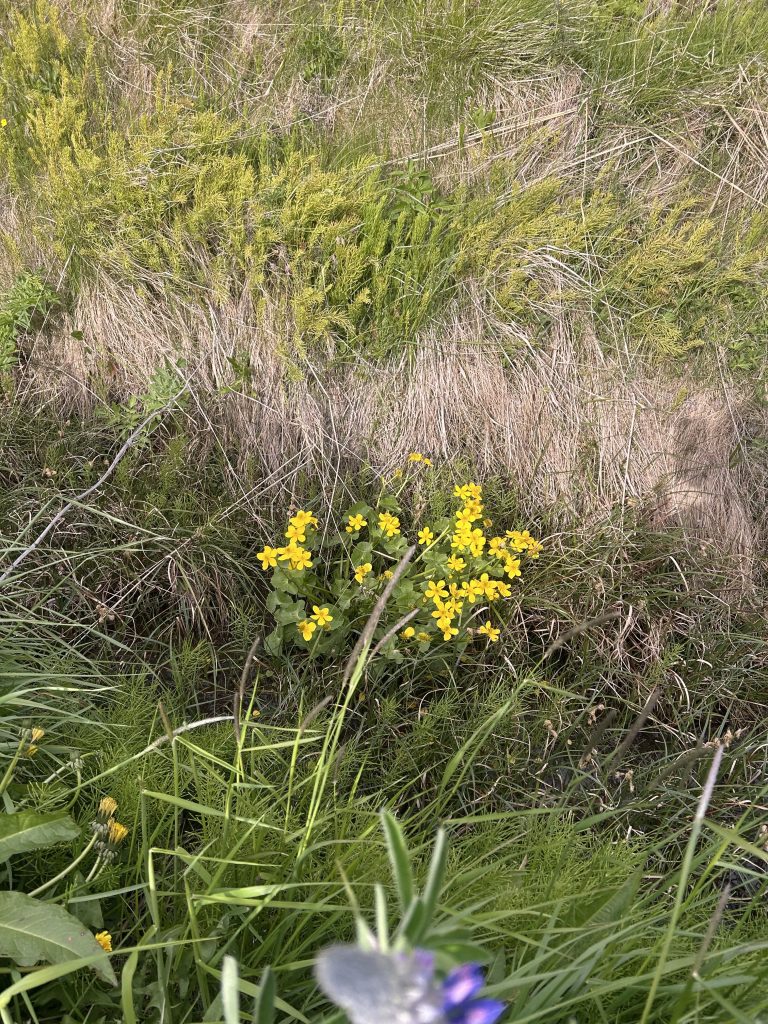
Marsh Marigold: I was charmed by these lovely yellow flowers that only grew near water. I tried a solar soak with them to experiment, since they are not known as a potent dye material. I opted for a solar soak to avoid heating the plant because of its potential slight toxicity. I gathered very little of it with protective equipment, and it yielded a nice yellow. I enjoyed trying a less well-known dye material. I will be able to test for myself its lightfastness.
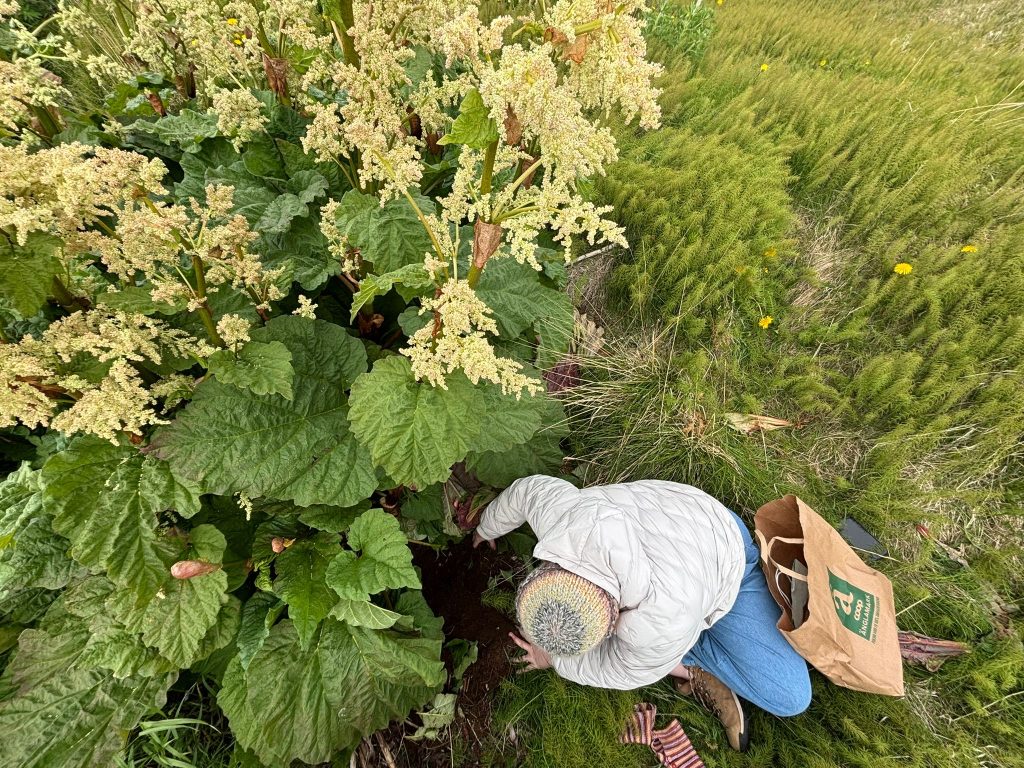
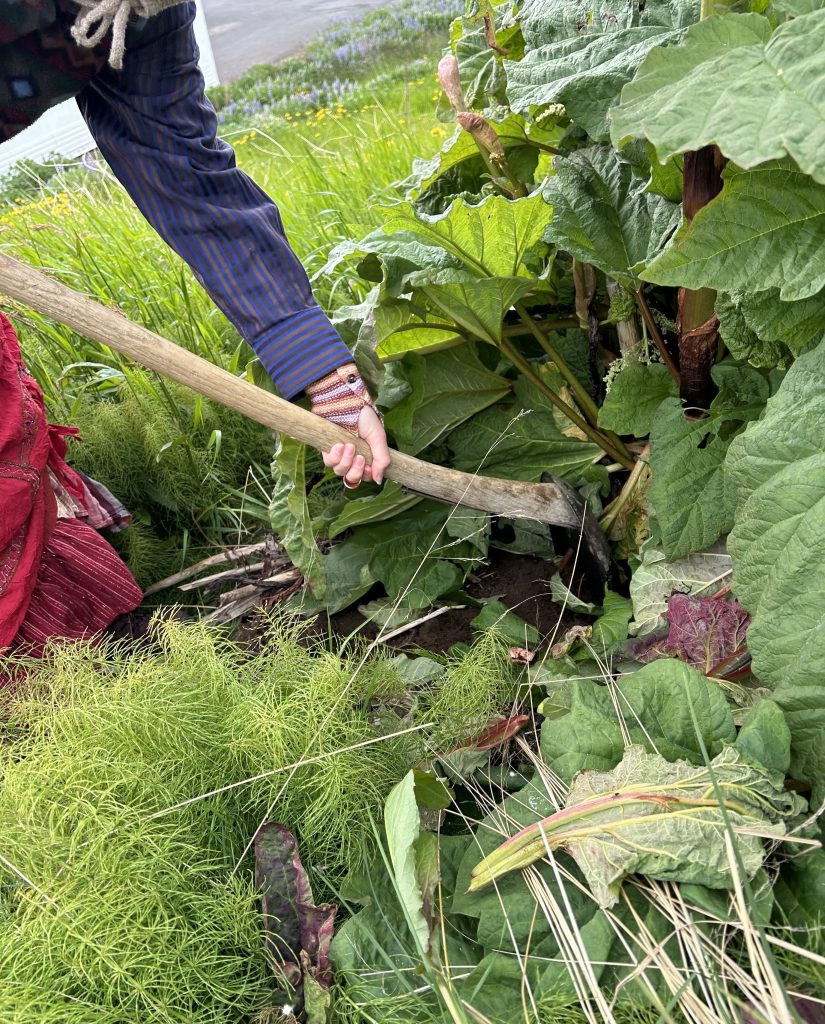
Rhubarb Root: The rhubarb stalks at Blönduós are huge and ancient. I was wary of extracting the root of such an old plant and took only a little, but the root turned out to be a very potent dye that only needed small amounts anyway. It was a fun experience to go dig the root with my classmate Annabel, with a shovel on the shoulder. The rhubarb root gave a rich ochre colour. Boiling the root was really reminiscent of cooking, natural dyeing already being a kind of kitchen magic.
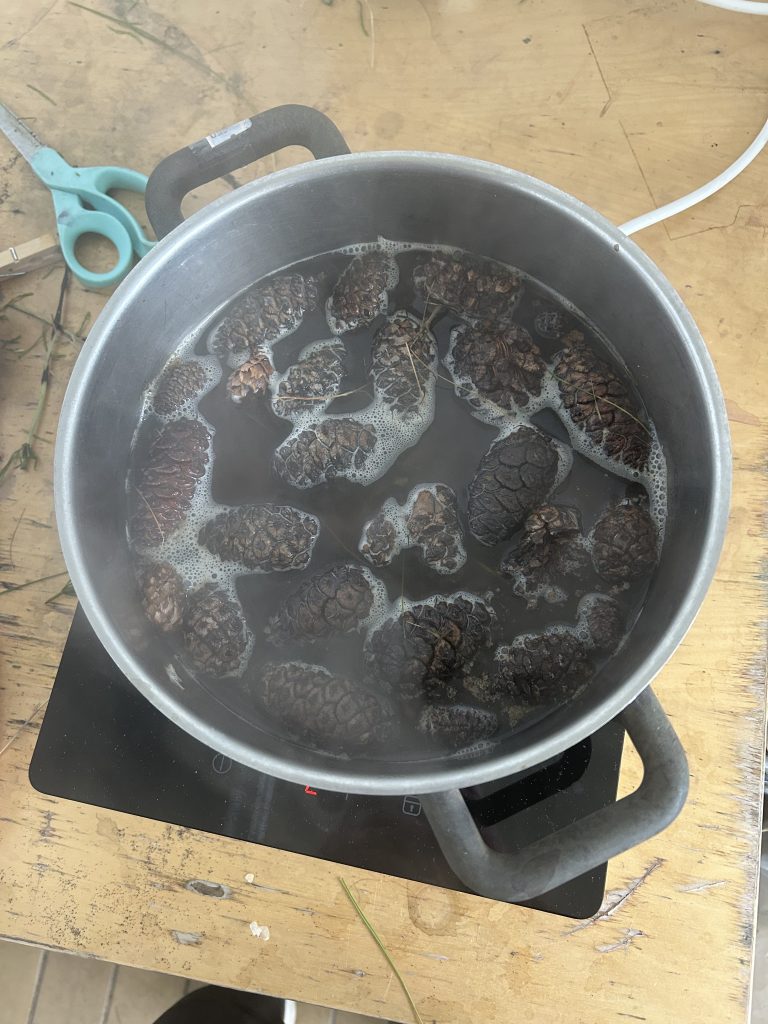
Pinecones: I gathered pinecones on my daily walk to the pool. I was hoping for a slight tint of pink, but I got a nice cream color.
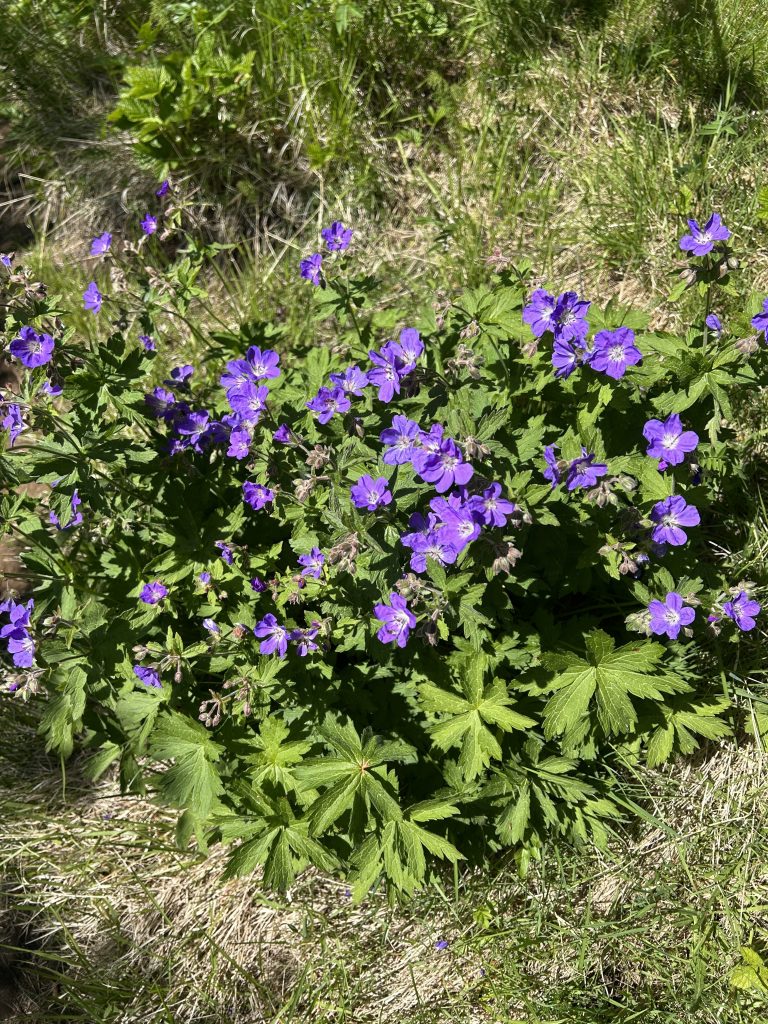
Wood Cranesbill: Þorgerður called it Blágresi. I picked some from Hrutey Island, or, as we call it, Bird Island, which was a lovely walk on the sunniest day we had in the month. The flower is purple, but wood cranesbill gives greens and yellows.
I finished my experiments by experimenting with modifying my results with iron, vinegar and ammonia and compiling my own book of experiments, truthful to the specific times I gathered the plants.
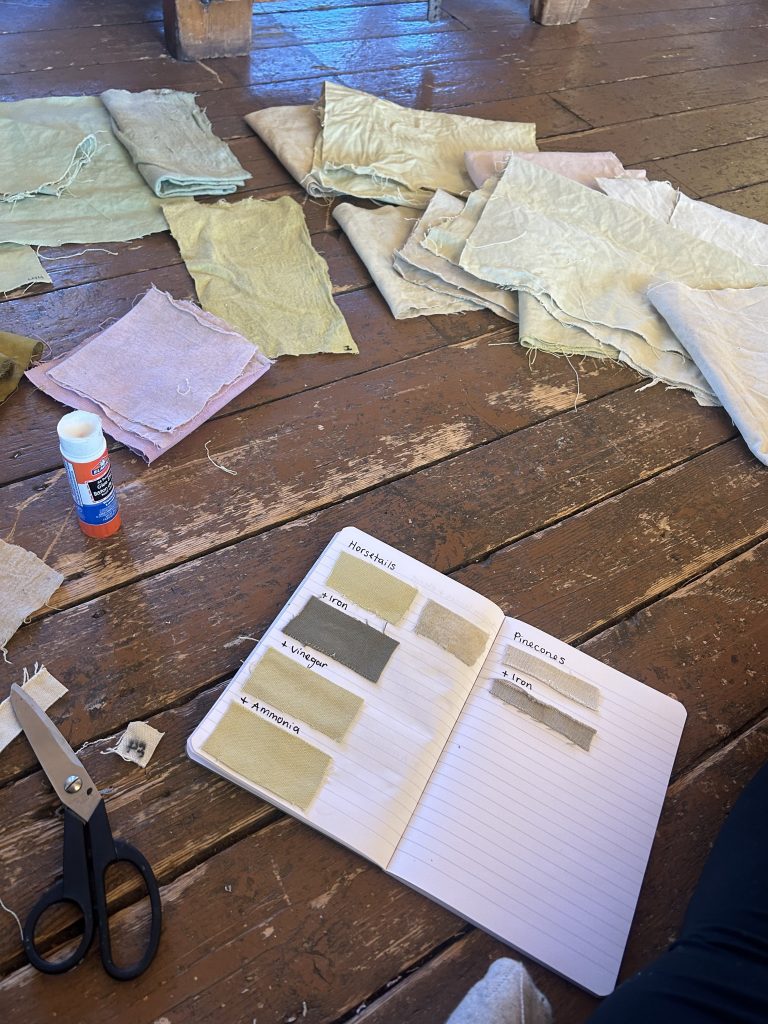
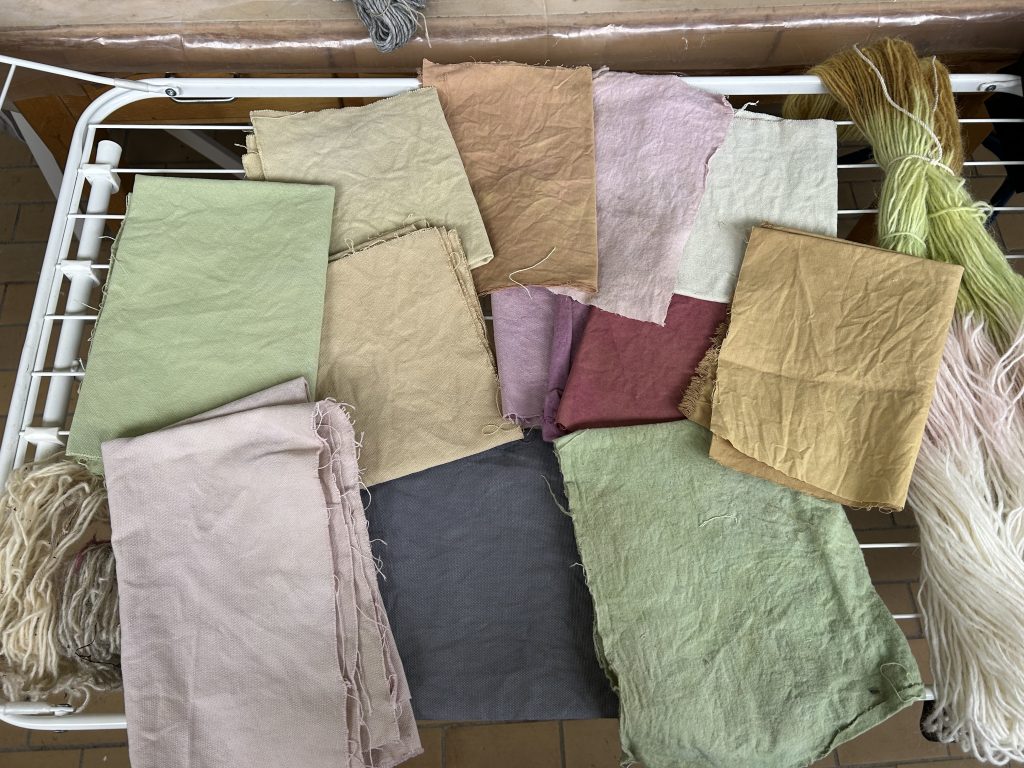
I processed all the results of these experiments by madly patchworking my way to the final coat, a labour of love that took me a lot of time, but melded my experiences together very nicely.
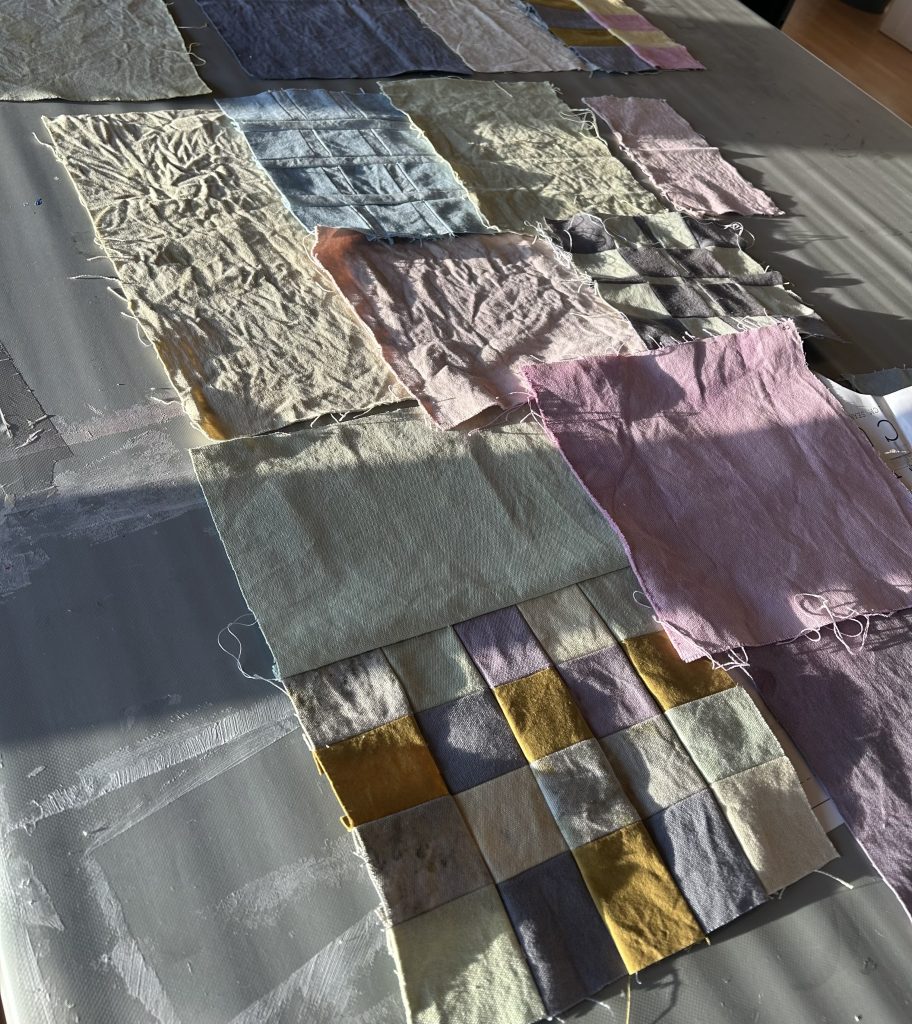
I had to immortalize the coat amongst the flowers I used, under the sky that inspired me.
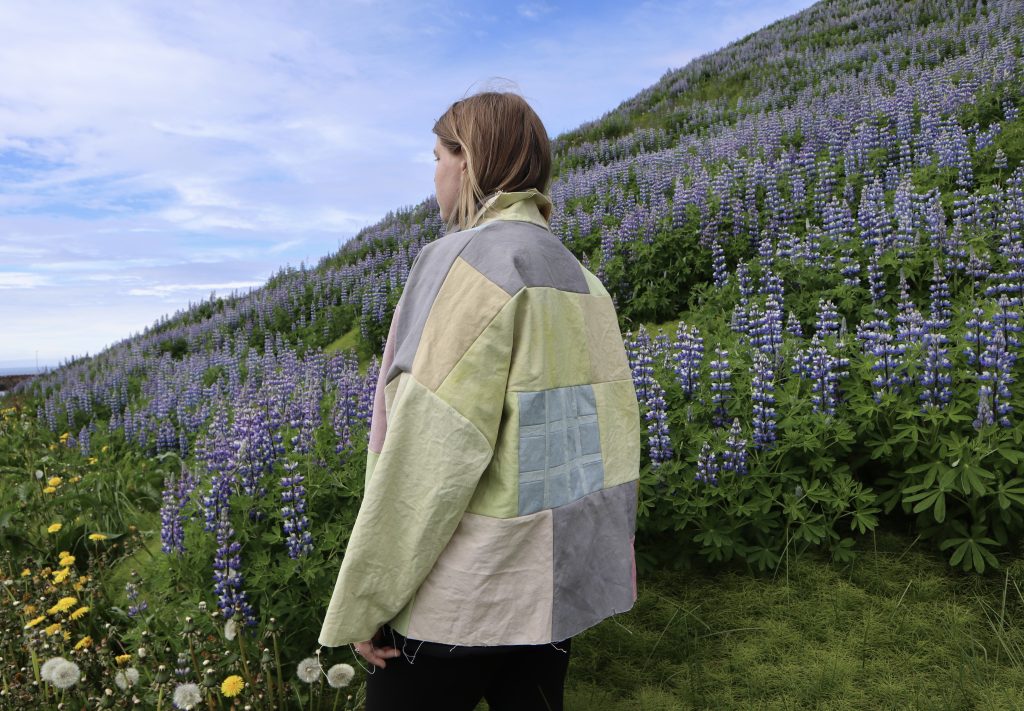
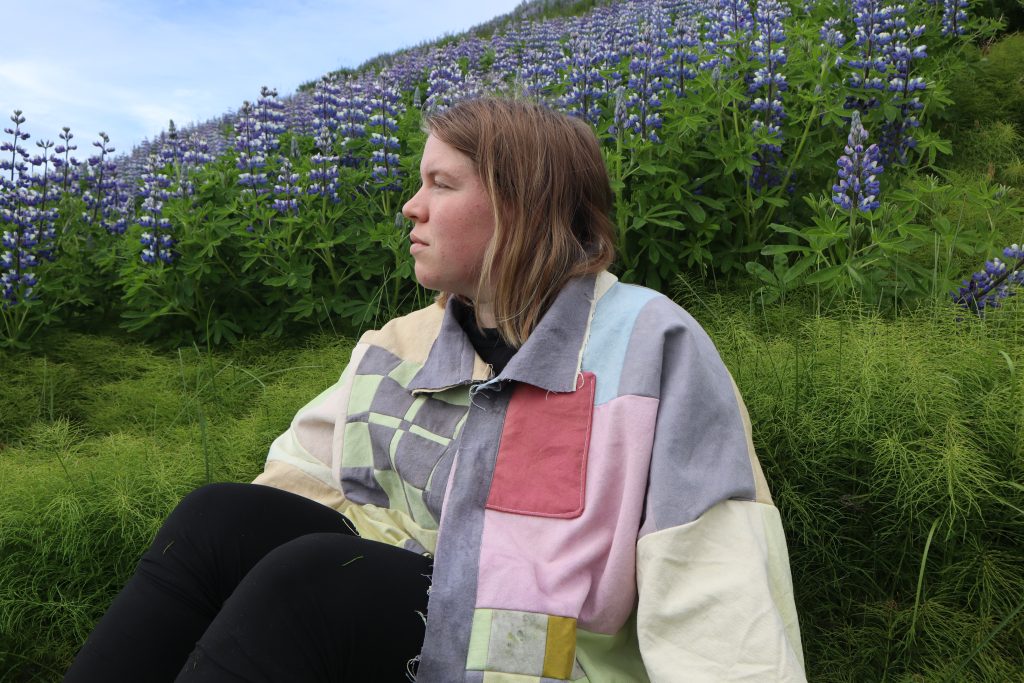
A special thanks to Rowan McKellar for the pictures of the coat in the landscape.
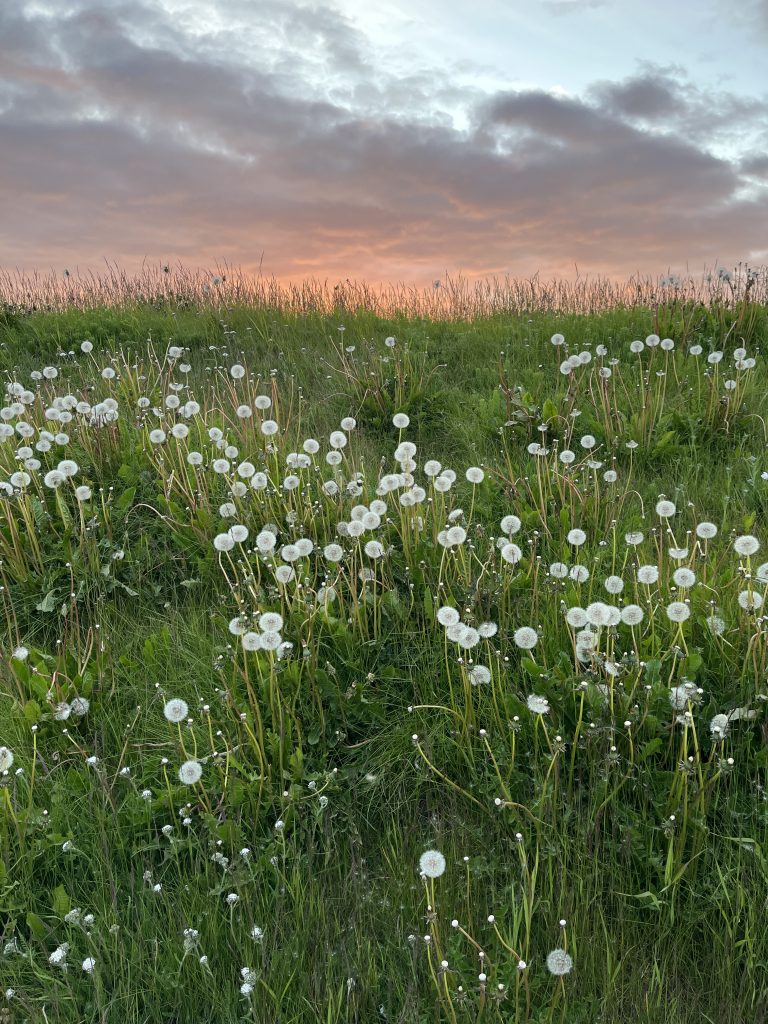
Lumps and Bumps

Observations and wanderings in and around Blonduos. 

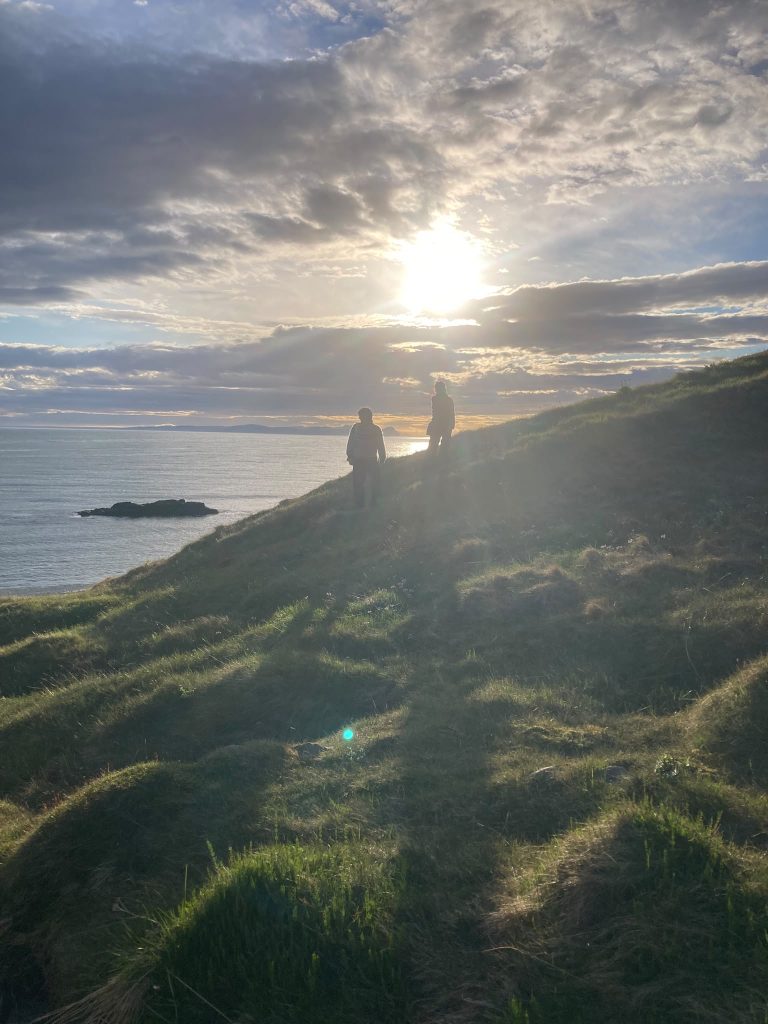
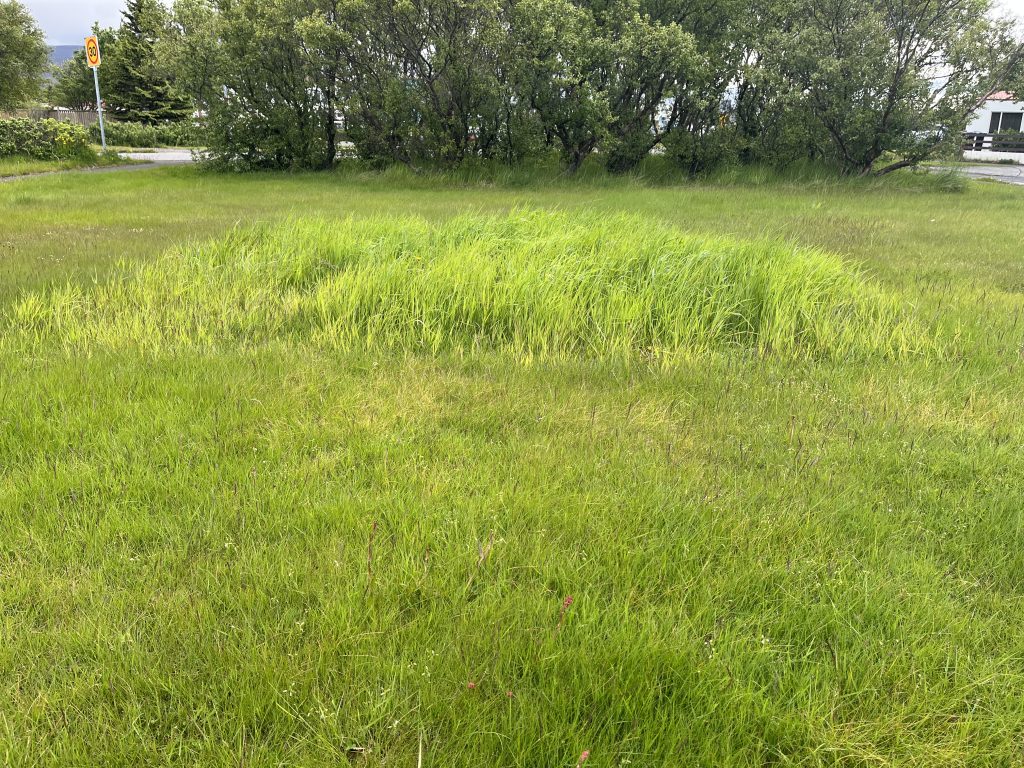
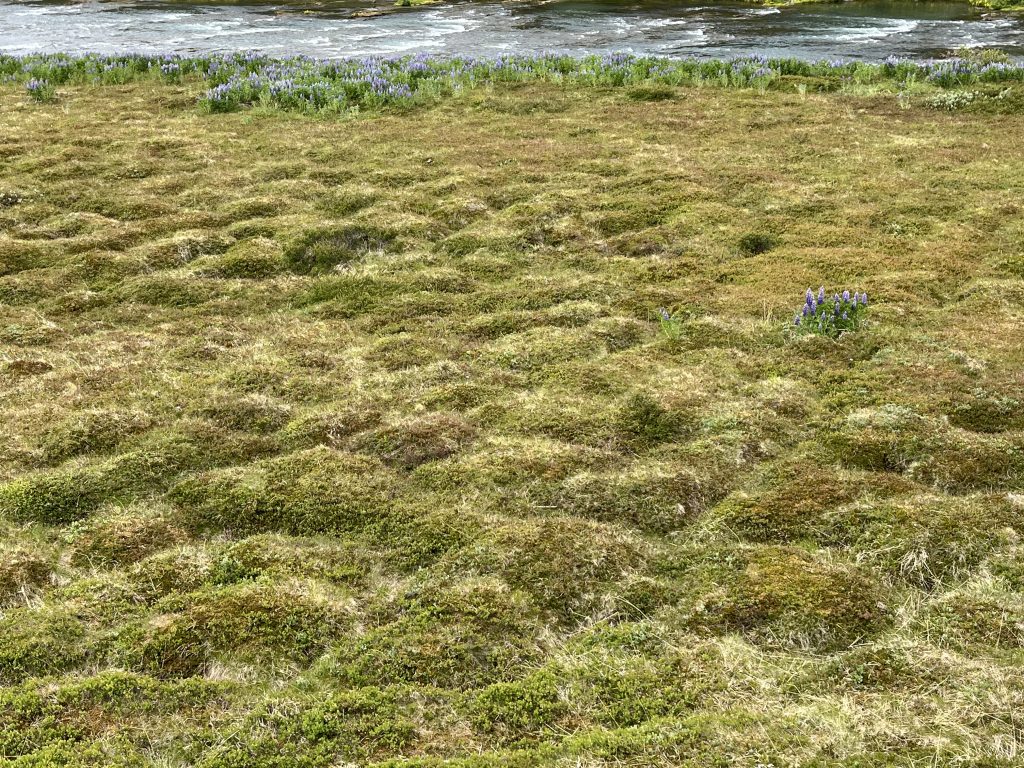
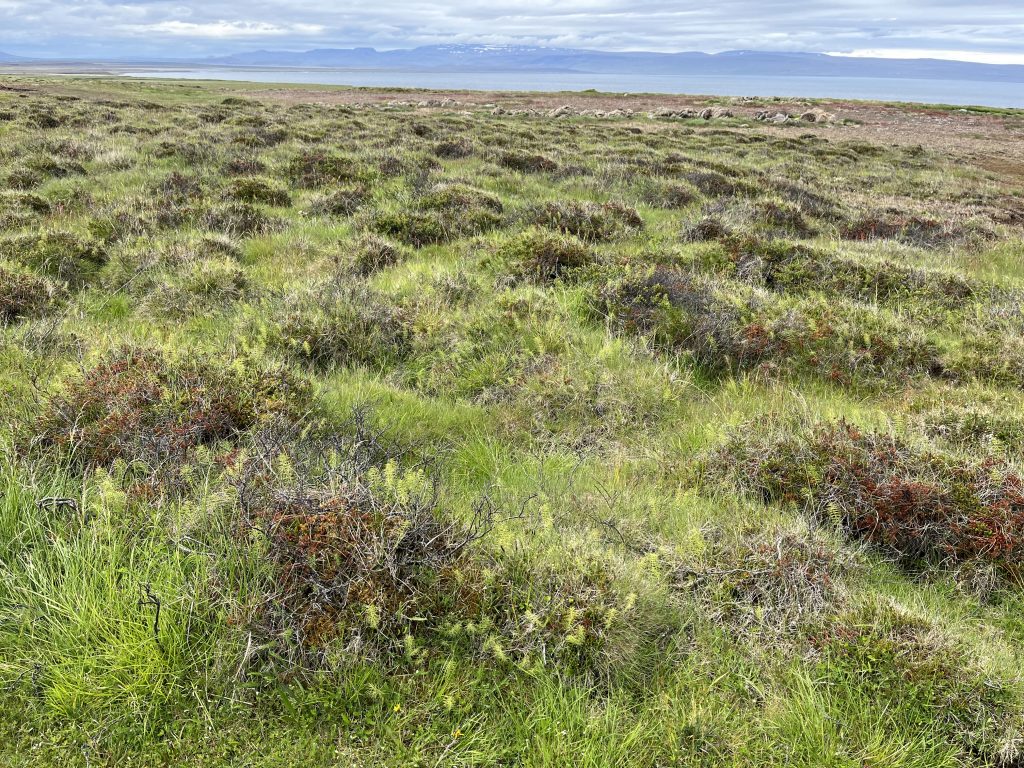
From my window: observing grass bending in the wind.  There are mounds of grass big and small (including Annabel’s “grass crack”) and the clouds in the sky.   Go a little further, the rocks along the shore, the waves rolling in and the hills covered in wildflowers all repeat similar forms of peaks and valleys. 

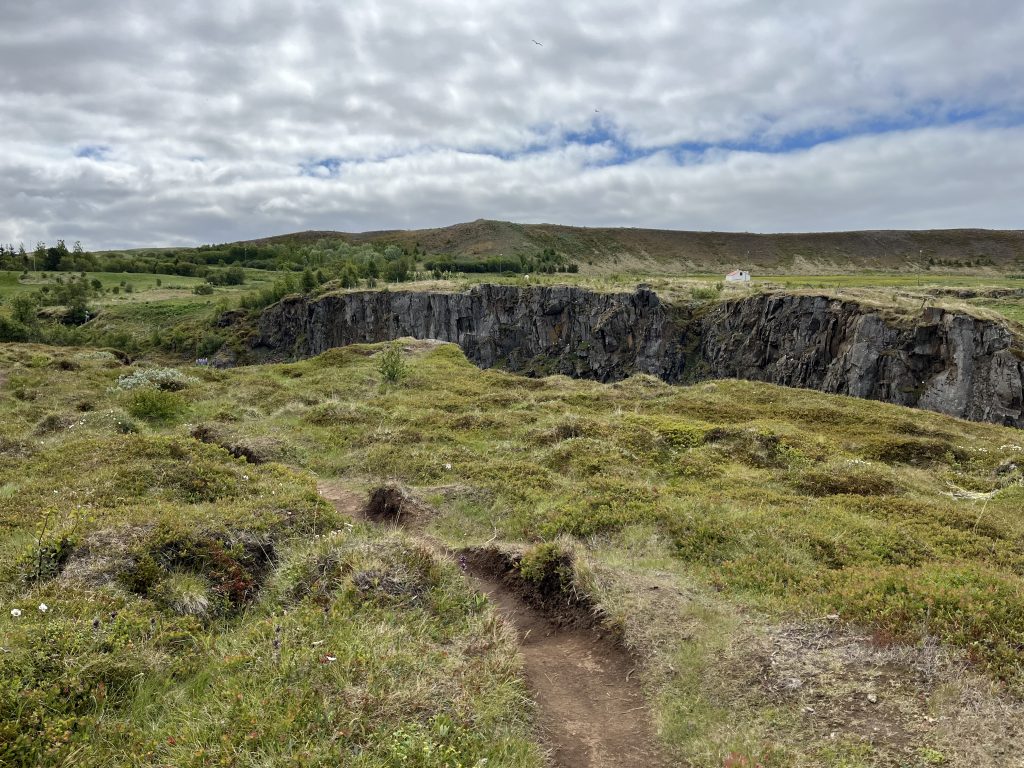
Walk a little further along a ridge line where a narrow path reveals more of these grassy lumps and bumps.  Brief research online revealed that some of these forms may be Þúfur (pronounced thoo-vur), small mounds that are the result of cycles of frost freezing and expanding the soil which does not deflate with the thaw.

I was seeing these forms everywhere, the mountain lines in the distance and in the water,  On the way to the grocery store there is a lone patch of taller grass. When I see these forms or even a solitary rock I can’t help but wonder which creatures might live in all of these forms of land and stone, and soil and water?  Huldufólk? The hidden people? Ragga was sharing stories of trolls turning into rocks.  Maybe they are in there too?

I would take short runs around Blönduós, more of these forms would appear in the landscape.  I found them on Hrutey Island and took a moment to greet them.
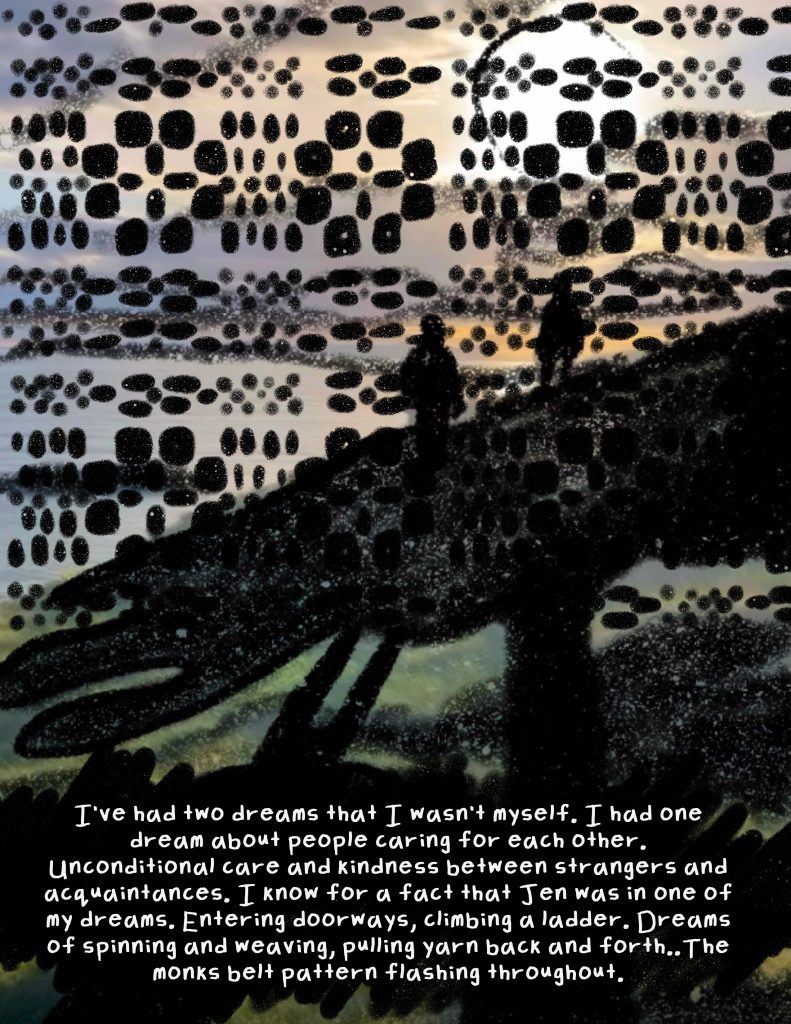
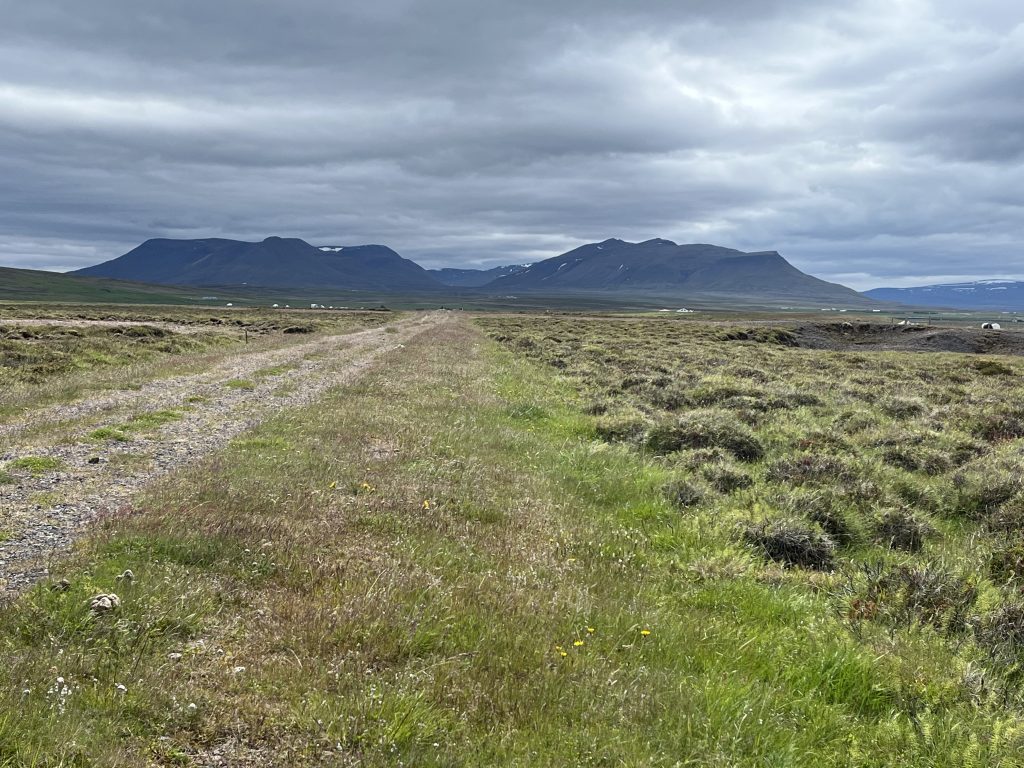
I found them again just outside of town-they were abundant-as I ran on a path in the direction of the valley between two peaks.  I was convinced that if I kept going in a straight line I could reach the foot of the mountains.

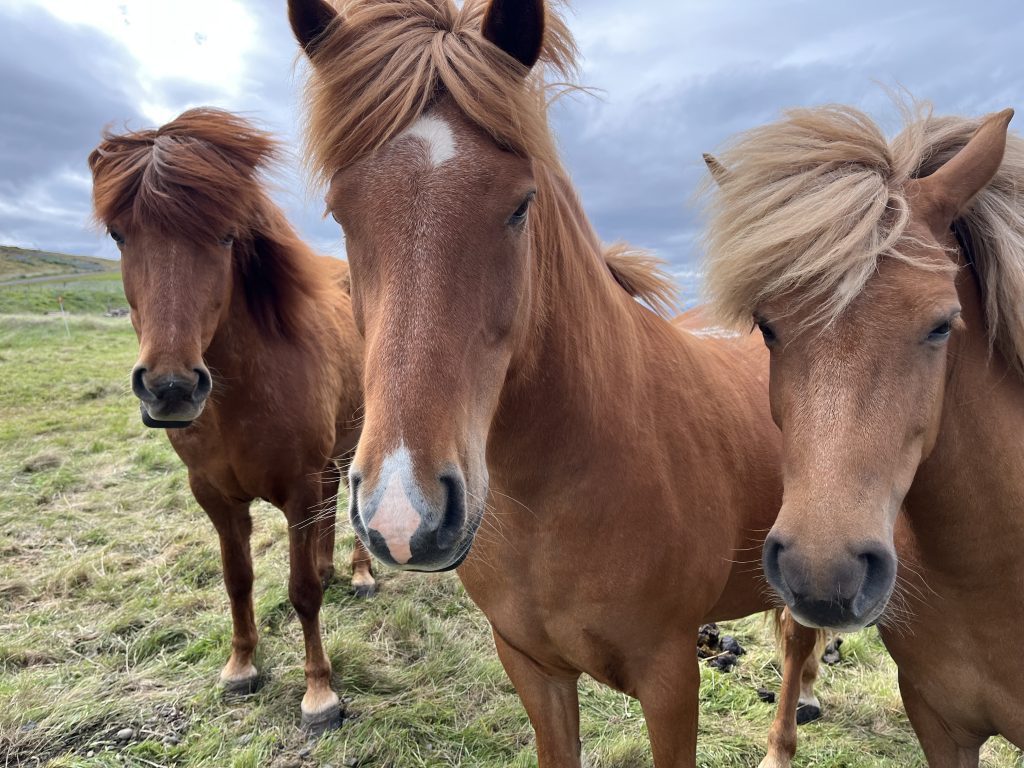
This flyover video shows how far I actually am from the mountains. It was a nice goal while it lasted. The little divot in the path out of town was when I met a trio of handsome horses. They had intense stares and stunning hair.

Melanie Garcia

Love Letter to the FeltLoom

Dear FeltLOOM,

I came to Iceland expecting a knitting oasis, but instead, I met you. At first, I thought you were a little intimidating (you are built from industrial steel and aircraft-grade aluminum after all) but after testing you out, it was love at first fibre. “Just one more pass!” I cried to Sarah and Alyssa. I was mesmerized by your speed and efficiency.


I’d spent months felting by hand, stabbing wool with a single needle. Then I found you and your 750+ needles. Icelandic wool? No problem. A delicate yarn font? Easy. Somehow, everything I fed you emerged as one beautiful piece. We made the best team.


I know you were technically engineered for mills and institutions, but I know chemistry when I feel it. That’s why I’m asking you to run away to Canada with me. I simply can’t live without you! Please!


Leaving Iceland will be difficult. I’ll miss the air, the mountains, the ocean, but mostly, I’ll miss you.


Forever yours,
Keyiana

weaving

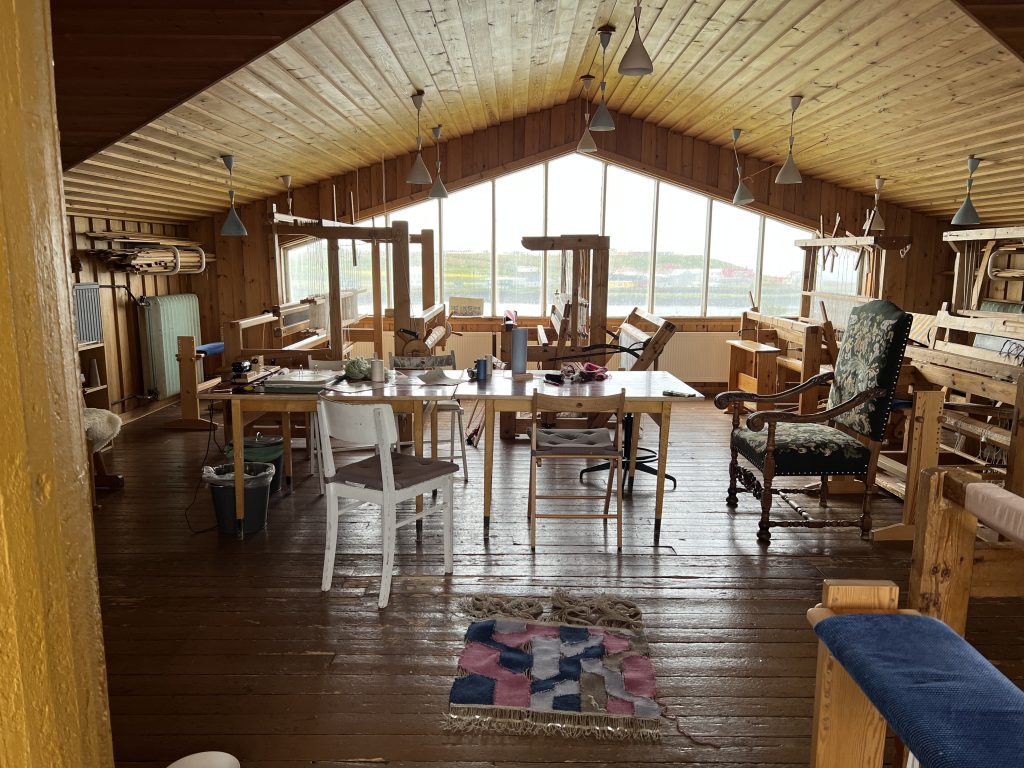
I did not originally plan to weave in Iceland. I had thought more about spinning and knitting, but on the very first day here at 8pm, bleary eyed, tired from travelling, and already falling asleep, I went up to the weaving studio, just a short flight of stairs, and almost immediately felt my plans being thrown out the window (into the Blanda and washed away, out to sea). The looms were wooden and honey coloured, gorgeous ancient beasts that were waiting for us to awaken them. Large windows framed each side of the room, letting in the endless daylight, where you can watch the river flow on one side, and the town and mountains covered in lupins on the other. 


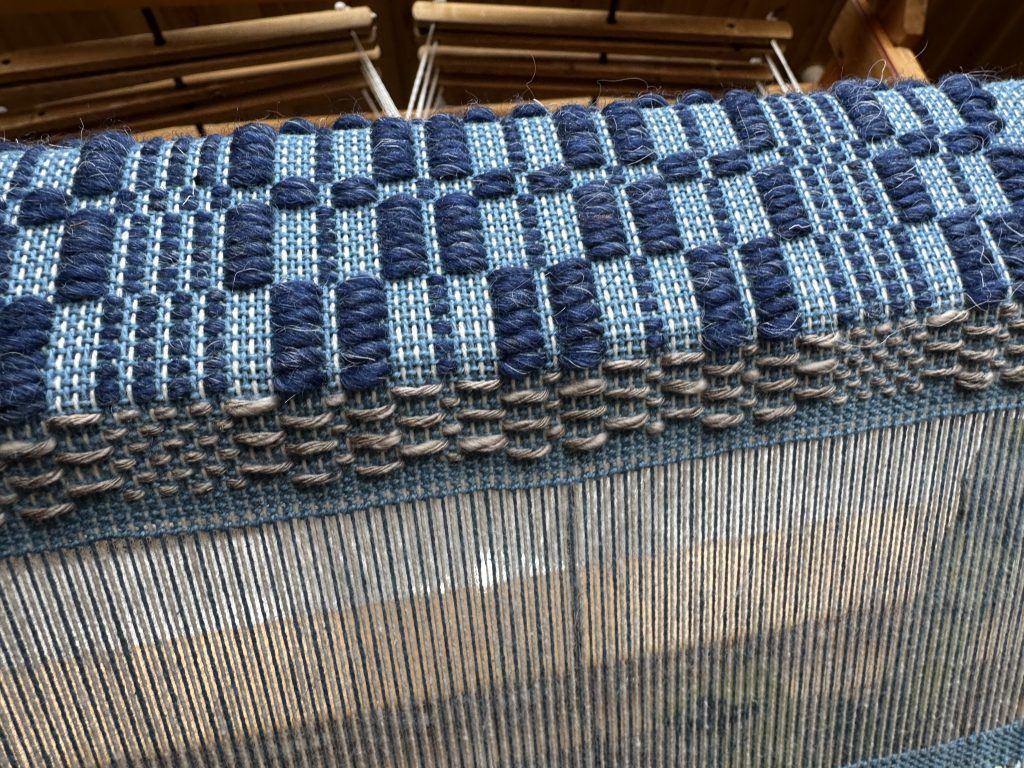
The next day, while visiting the lab, I asked Shan if they’d be interested in sharing a warp, and we both agreed that it would be a small side project, one that wouldn’t distract us from our original plans. We found two cones of 4/2 cotton thread on the free shelf, one white, one blue, and with the guidance of Ragga, decided on a monk’s belt pattern from the textile’s centers database, after riffling through the sample books that populated the shelves of the studio. Next, after careful consideration, our loom was chosen, on the left of the studio, where the looms for beginner weavers are, we chose the center one, with a perfect view on the river. Our warp was wound quickly and efficiently, before hitting our first roadblock in the form of the rattle. A solution involving duck tape ended up getting us through to the next step, but not before a lot of trials and tribulations. 

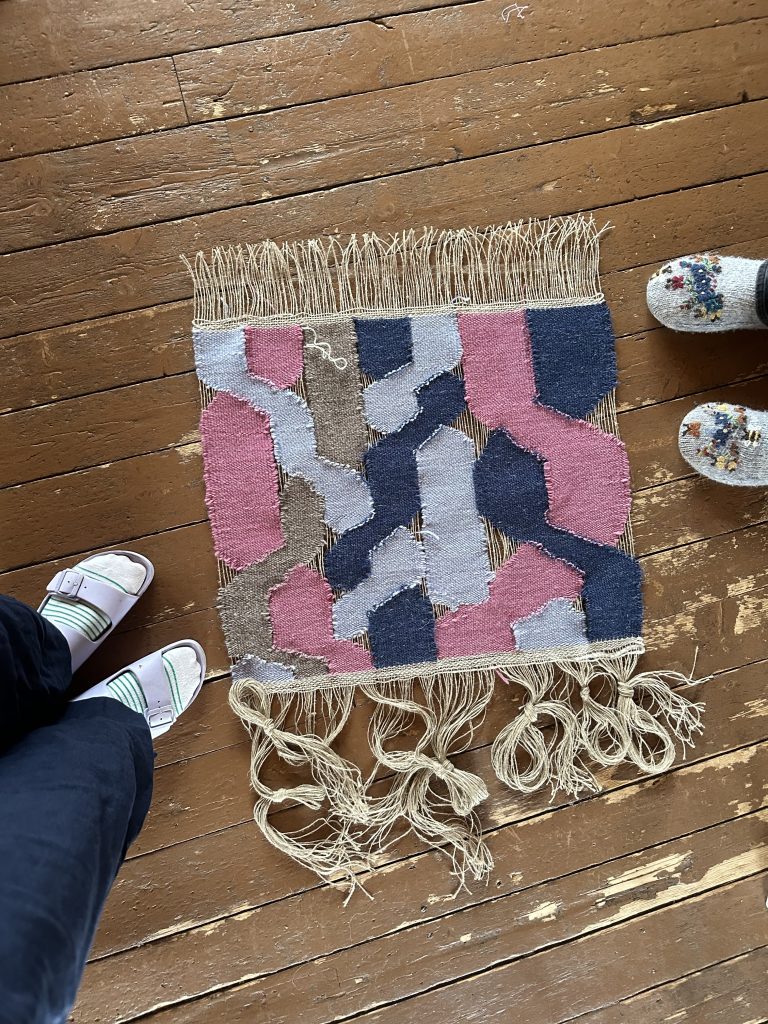
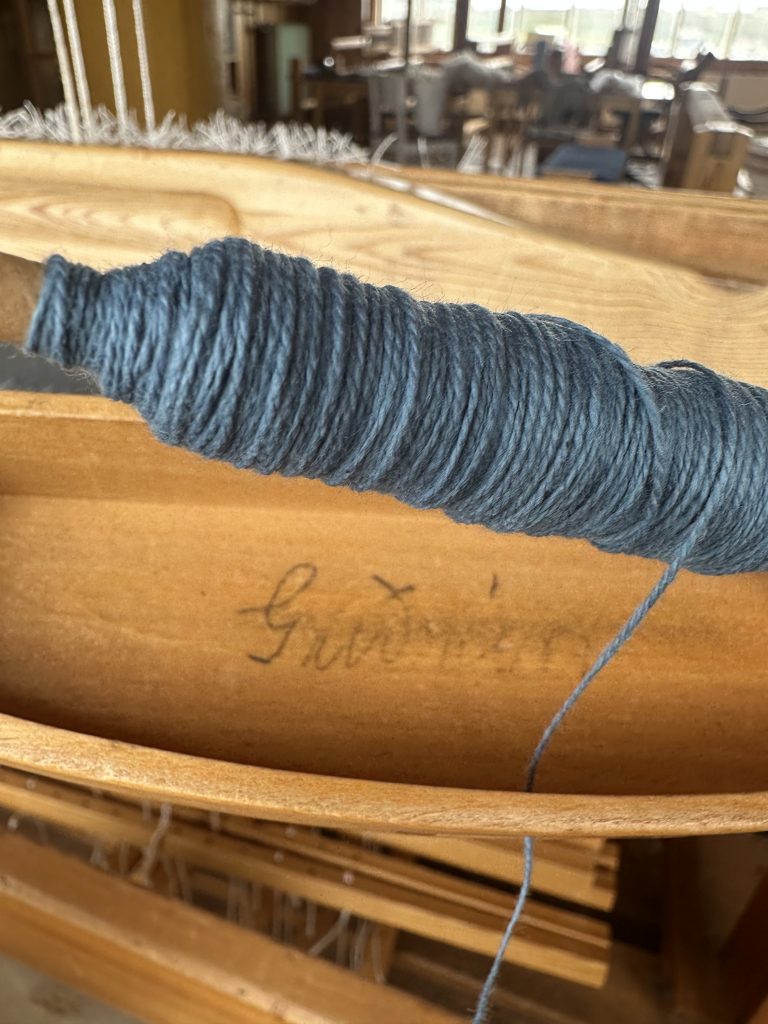
From there on out, it was more or less smooth sailing, mostly just time consuming and monotonous, till we got to the tie-up. The looms are countermarche, different from the jack looms that we learnt on. Thankfully, Sarah was available to help and honestly just direct us on what to do, otherwise we’d never have been able to weave. After that, Shan took the first turn weaving, while I tried out the tapestry loom, a vertical loom that already had a gorgeous linen warp on it that we could use and pay for by the meter. I’d never seen a loom like it, Ragga had mentioned it was probably an old Norwegian, with two heddles, and two peddles, simply doing tabby. It smelt of beeswax, probably what was used on the wood, and when I cut off my piece, and started finishing my ends, my hands also smelt of it. I didn’t go into the weaving with a specific plan, just played with wool, interlacing, and leaving warp thread open. It consumed me, and I spent a week working on and off, spinning the fleece I had bought for my original plan, but already coming to the realization that weaving would be what I was focusing on. 

Shan finished on a Sunday, and I started on the floor loom the next day, frantically weaving our last full week away. I got into a good rhythm, two picks of tabby, one pick of the overshot pattern, and before I knew it, I was almost at the lease sticks, just enough for a couple people to try the floor loom out. We cut the warp off Thursday afternoon, the day before install. It always feels like unwrapping a gift when you unroll the fabric from the front beam and get to see the whole piece at once, instead of rolled up. Divided it up into separate pieces, and then we were done weaving. It felt like the beginning of the end of our time, sensing that the countdown to the last day was dwindling, and that we were saying goodbye to the looms.

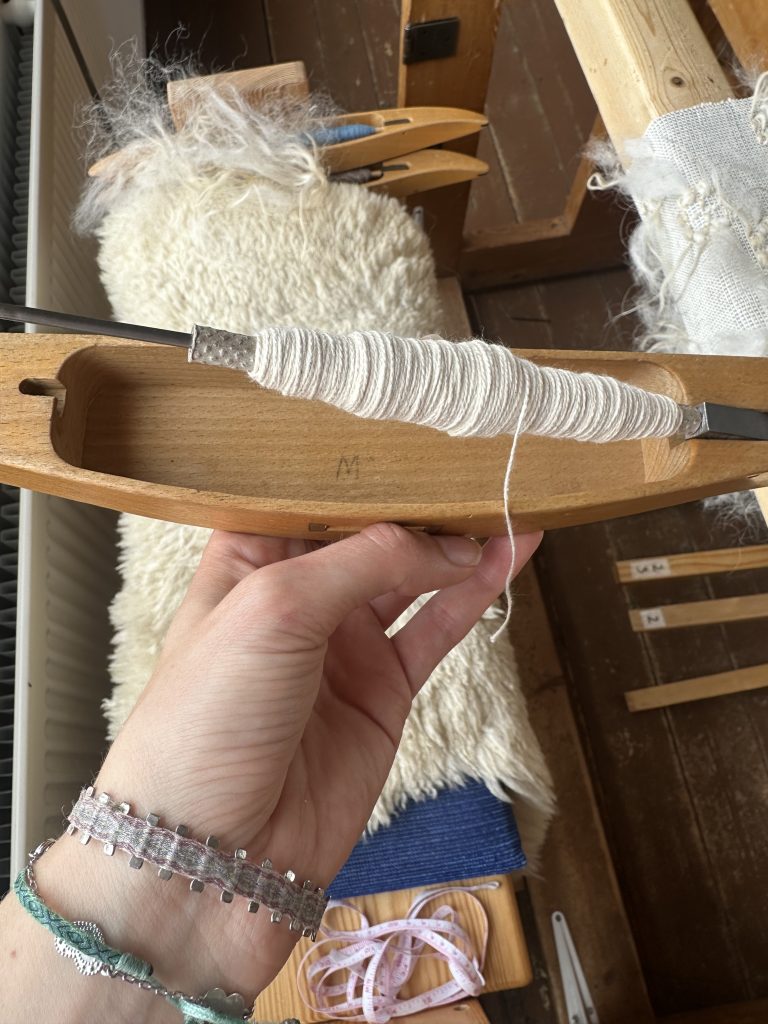
Once I came out of the haze of weaving, I realized that both the shuttles I had used throughout my weaving had names written on the inside. M & an Icelandic name starting with a G , that I’m really uncertain of. They’d kept me company the whole time, going back and forth, over and under each thread, and were probably horrified at some of my selvedges. They’d probably sat at this exact bench sometime in the last century and learnt to weave cloth.

not like other pools

I’ve been to a lot of public pools in my life, most definitely more than the average person. Growing up as a competitive swimmer turned lifeguard, you visit a lot; outdoor or indoors, olympic-sized or dinky gym pools, ones with slides, others with ten meter diving board, some with tons of deck space, others so hot and humid you feel like you’re in the tropics. After a while, they all start to feel the same, merging into singular experiences, where I can’t distinguish memories of different pools from one another. I think of the swim meet where we all got weird chlorine chemical coughs, but remember the pool in Lasalle where I used to play waterpolo late at night. Or the pool where my brother tripped over a rope on deck and fell flat on his face, becomes the last outdoor pool with a three meter diving board. I think I expected the same when coming to Blönduós , an outdoor pool like any other, with blue, red and yellow lane ropes, long black lines on the bottom that end in “T”s on each end. Needless to say that wasn’t the case. 

The water is the warmest I’ve ever been outdoors, it’ll be ten degrees and the pool will feel perfect, while I float back and forth, barely swimming. It’s clear and clean, a spotless pool with not a trace of a leaf, bug, or a lost bandaid. I worked at an outdoor pool in the summer for six years, and I remember early June, the first couple weeks, pulling out buckets of shad flies that would collect in the pool gutters overnight. Every morning from eight to nine, we’d go around the deck with garbage bags and gloves, pulling them from the pool, armed with nets that we’d drag along the surface of the water, picking up the bugs and the fluff of the cottonwood trees nearby that were shedding. Or how by mid-July, halfway through the season, without fail, algae would start to grow on the bottom of the deep end and we’d pull out the bristle brushes from underneath the sink, put on a pair of goggles and swim to the bottom, brushing it till it came away in a cloud, all the while holding your breath. Eventually, we got a brush attached to an extendable pole, kind of like a really long broom. 

Yet as I swim laps back and forth, I don’t come across any mysterious floaters, that the bottom is tiled and uncracked. I change from freestyle to breaststroke, sometimes a bit of backstroke, not much though cause I hate doing it outside, no fly. I think of the frigid mornings that I spent swimming back home, how pleasant this pool feels in contrast. How once I stop swimming laps, I’ll go join everyone in one of the hot tubs, where they’ll have cups of coffee, and we’ll chat and lose track of time. Probably get back in the pool eventually, and float back and forth to cool off, or maybe we’ll lay in the baby pool and pretend we’re at the beach and it’s a warm summer day. I’ve never spent so much time just laying around in a pool, not actively thinking about when I’m getting out, or what laps I have left to swim, mentally calculating if we’ll have enough time to finish the set before practice ends. I’ve never left the pool so relaxed, walking home with friends, ready to eat dinner, and maybe work on some projects. Maybe it’s the distance from when it consumed my life, or simply because it is so unlike any other pool experience I’ve ever had, but I can honestly say I think the pool might be one of the things I miss most when leaving.

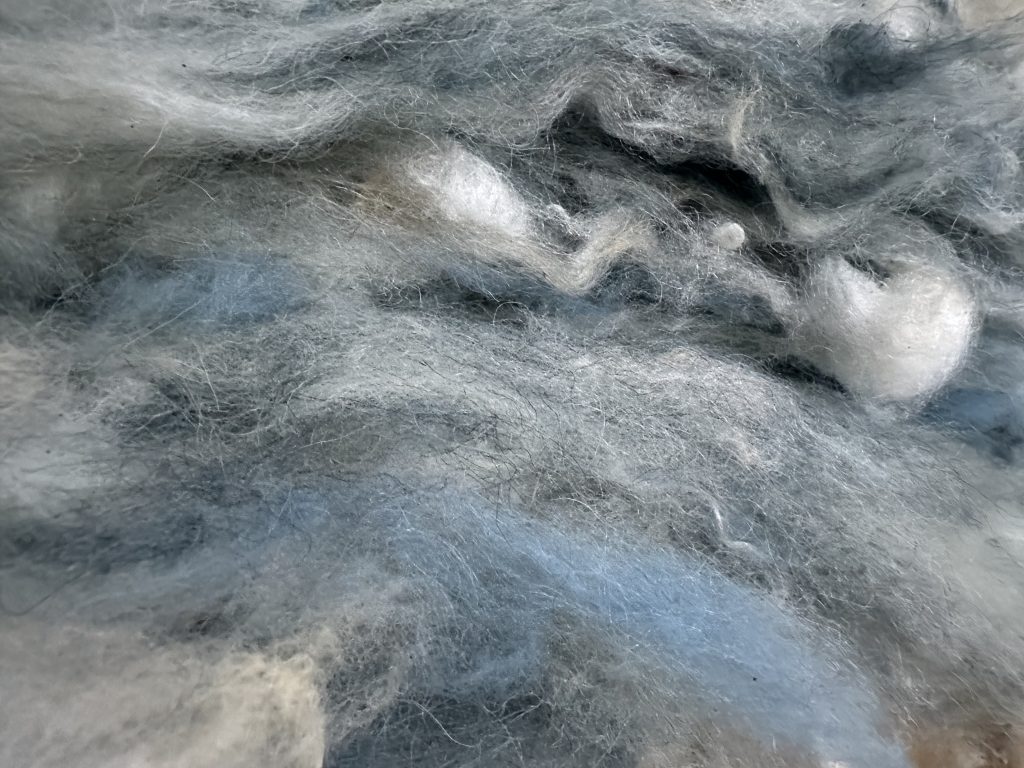
of course, couldn’t take any pictures at the pool, so had to settle for a photo of the fleece I dyed with indigo and carded to ressemble the water…

Togging

During our month here in Iceland, we chose to do a collaborative project focused on explorations with wool. We were curious about the physical properties of the wool fibres and the various ways we could play with wool to form different structures and textures. We created a series of five wool works made from a combination of wet felting, bioceramic, wheat paste, and weaving, which were displayed during our exhibition. Unincluded in this exhibition were two small books we created in reflection upon our experience as collaborators. This blog post is our attempt to share some further insight into where our heads and bodies went as we spent a month together learning from wool, from each other, and from the local environment we were situated in.

A big part of this project was exploring collaboration itself and what it means for two bodies and minds to interact daily in a closely entwined creative process, while also living in the same room, sharing meals, and trying to navigate a foreign small town with humility and awareness. We spent a lot of time talking and writing about how we can move respectfully when stepping into a community that we knew little about, and how to hold space for each other’s needs and ideas while remaining open to the people and spaces around us. The practices of writing, mapping, walking, and photography enabled us to examine how placemaking unfolds in a space that we occupy only temporarily. 

Along with our experiments with wool as a material, we created a small zine and a flip book (which has been converted into an animation for this blog). Many of the photos in the zine were taken during regular walks to trace our day in the endless light and ever-changing weather. The images feature a wool bag we found on the shoreline. From our understanding, this type of bag is typically used for holding and transporting wool, as we saw many similar ones during a visit to the Istex wool washery. The flip book was created using maps of our movements as we worked directly with wool. The maps were then turned into line drawings that became characters within the flip book. The font and lettering in both are from a typeface we created together using tog from local Icelandic sheep and wheat paste as a stiffener. By bringing these activities together, we created a space to play with ideas and approaches as we moved through the project. 

We are so grateful to all of the teachers, facilitators, and locals we met along the way, who allowed this collaborative project to come to life. 

Ginger + Lucy 

Stitching Memories

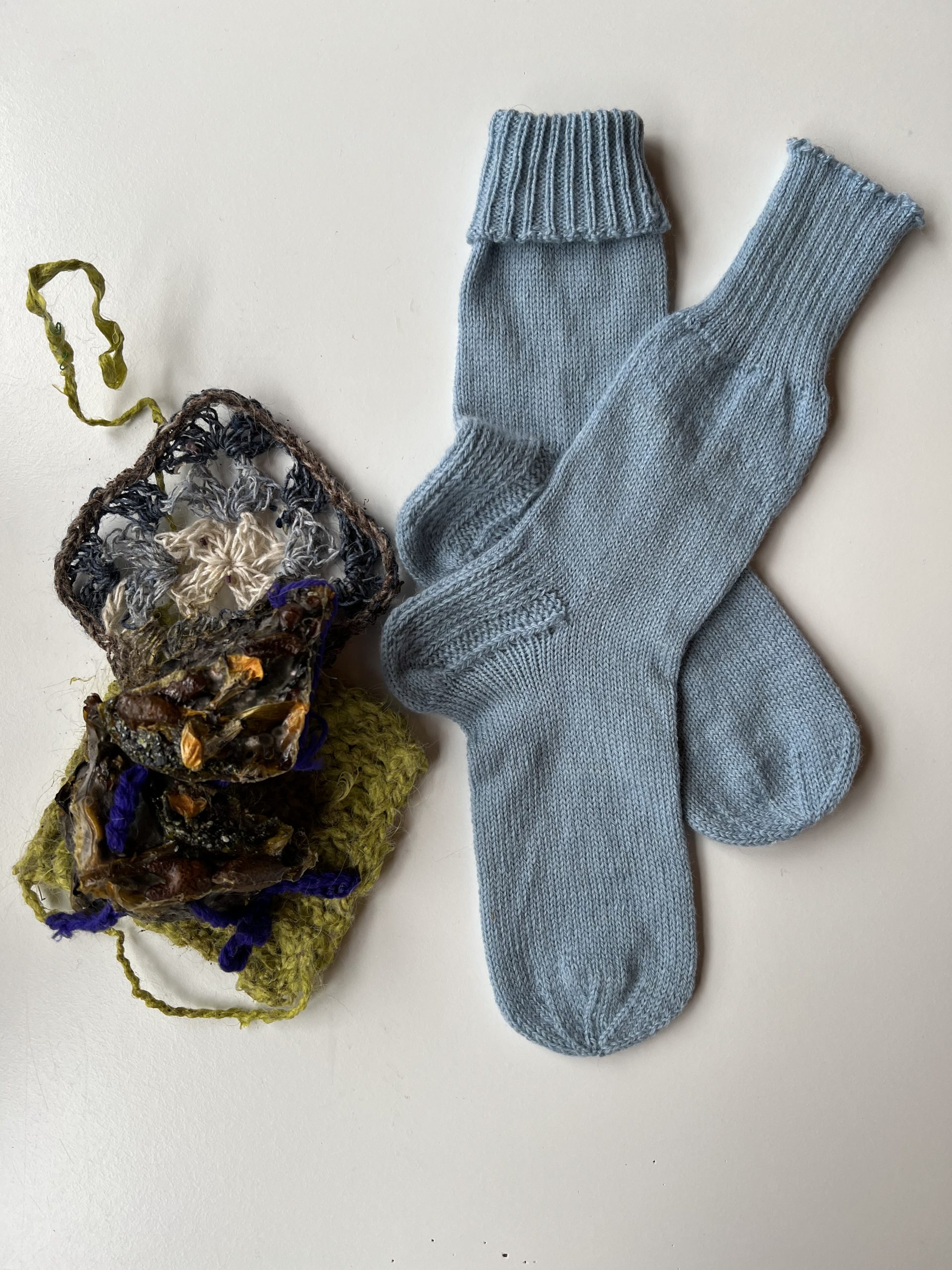
These socks will always remind me of my adventure in Iceland. If you are a knitter or textile artist you know that you are stitching your feelings and memories into the things that you are making.

Iceland Adventure Socks

I left Montreal with a sock tube and was knitting on the first toe which I completed by the time that I landed in Toronto. Circumstances forced me to stay another day in Toronto which allowed me to complete the other toe. The trip from Toronto to Iceland allowed me to knit a cut-in heel. The bus ride from Reykjavík to Blönduos was about knitting the other heel. Now, that I have learnt how to use the ribber on the circular sock knitting machine of the Textile Center, I have grafted the cuffs to the legs of the socks and here they are.

I will be wearing these socks when I say good-bye to Blönduos. My heart will remember every step of this Icelandic journey because of these socks.

Some of our cohort learnt how to knit from Icelandic knitters during the Knit Fest. How wonderful that you have this origin knitting story to share with your friends. The knitting style that the Icelandic knitters demonstrated is called Continental where you ergonomically pick the stitch from your finger and hold the yarn in your left hand. They showed some how to Norwegian purl. I am adding this in case you want to research these knitting techniques on YouTube.


you are stitching your feelings and memories into the things that you are making

on windows

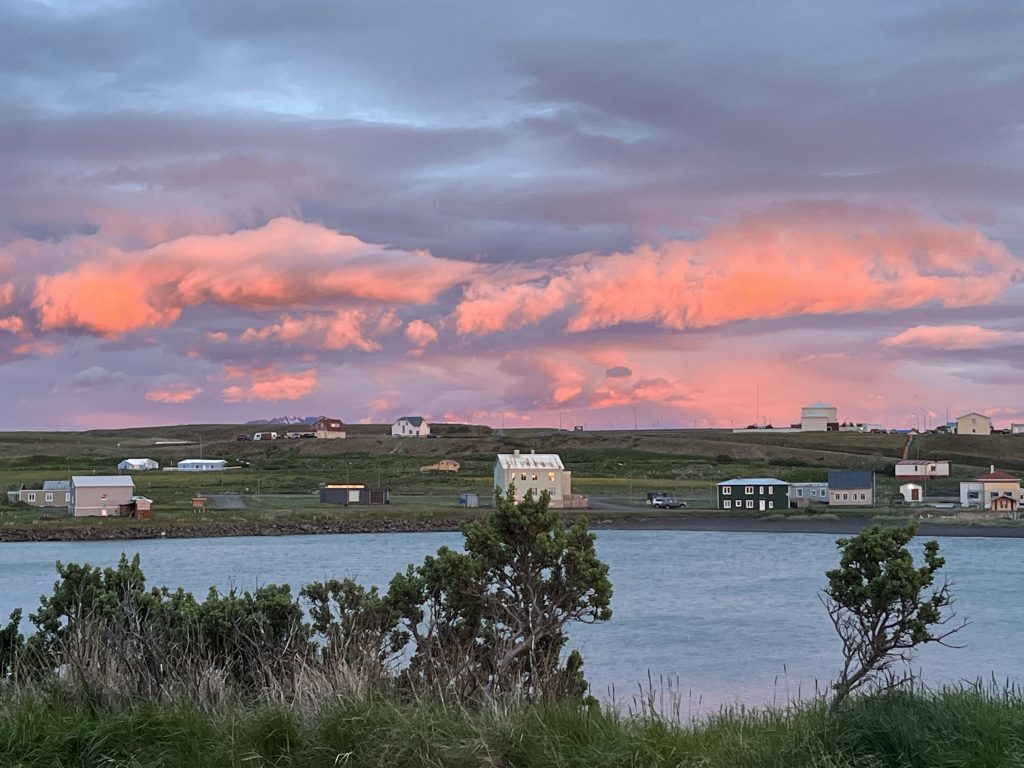
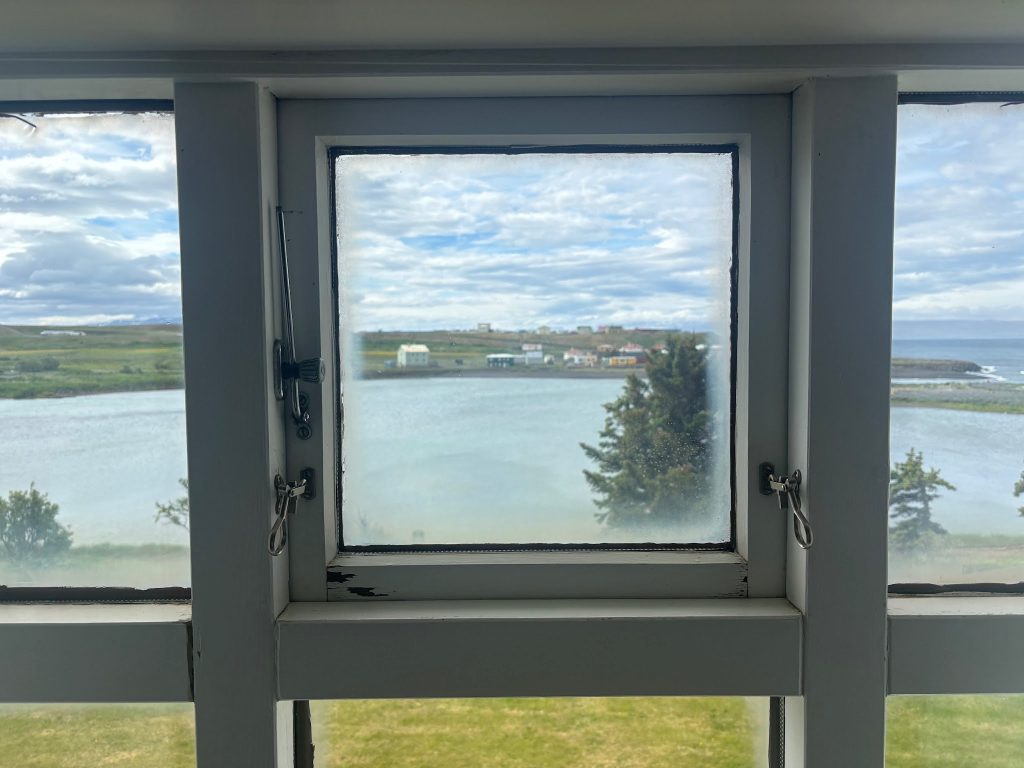
This month in Blönduós at the Kvennaskólinn has been one of the few times in my life where I have lived, worked, slept, and ate in the same building. All in this one beautiful and historic building, I have learned to spin wool, to weave, to knit. I have cooked, cleaned, cried, studied, read, slept, laughed. In all of these cases, in every room, the Kvennaskólinn windows are where my gaze drifts to. Twenty four hours a day, the sun keeps the landscape green and visible from any spot I sit. I can watch the tide change from my bedroom, the fog roll in from the loom room. From the studio, I can see the pink of sunset fade into the even sweeter pink of sunrise, and can spot whales on the horizon. As an ode to windows, here are a few of my Blönduós favourites.

Favourite window, 10:17am

This bathroom window over looks a parking lot, 11:24am

Church windows? 11:32am

Bedtime window, 1:16am

Perfect window latch, 11:54am 

Loom room window, 10:02pm

Pink curtains pink sunset, 11:27pm

Taken from studio window, 12:29am

The Thin Veil of Jónsmessa

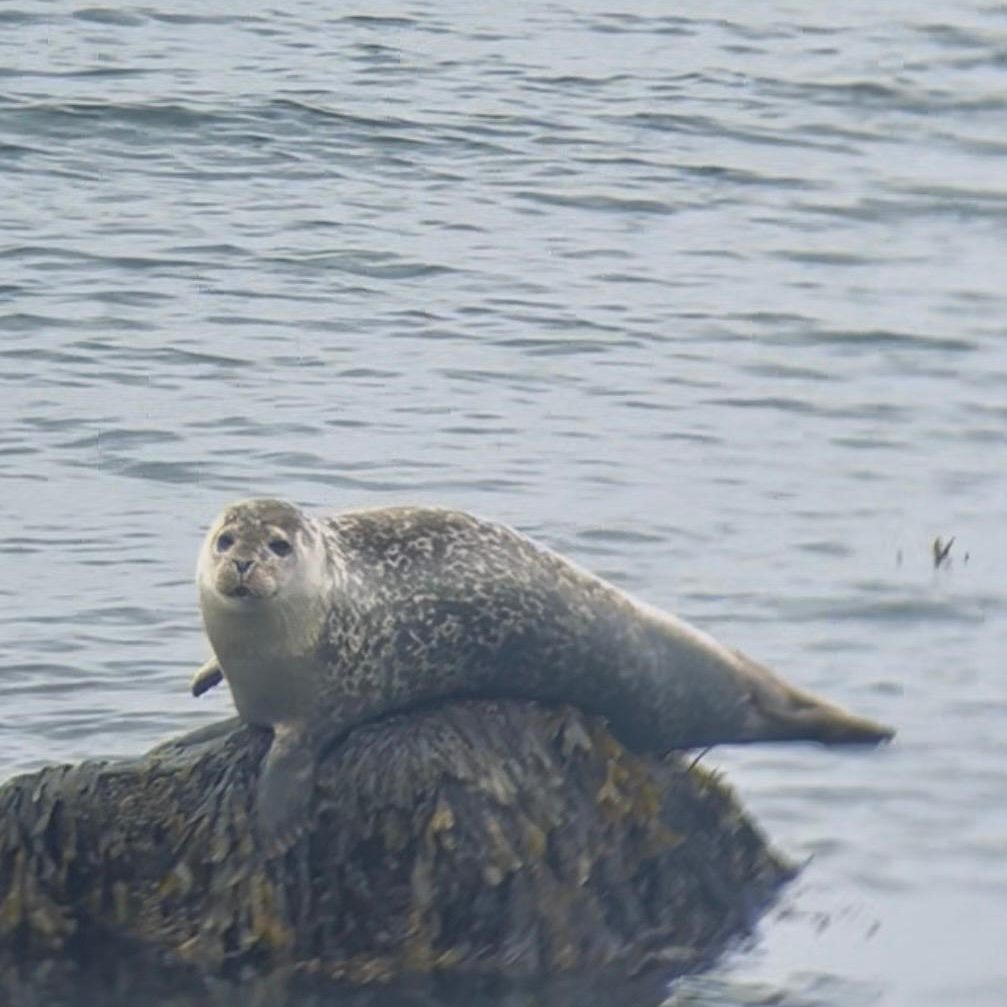
Our walk on the morning of June 24th began in a thick, quiet fog. I set out with Jen and Rowan, moving down along the Blanda river toward the black sand beach just north of town. Jen explained that June 24th marks Jónsmessa—Icelandic Midsummer. In local folklore, it is a night and day when the veil between realities wears thin. The old stories say that on this day, the huldufólk (hidden folk) are active, and seals shed their skins to step onto the shore as humans. 
As the fog drifted over the water, we came upon a seal resting quietly on a rock. It didn’t startle or dive away. Instead, it stayed perfectly still, watching us and keeping us company for a solid fifteen minutes. In the context of the heavy morning mist, it felt remarkable—almost as if we were interrupting a transition, a nod to the selkie legends exactly when they are meant to come alive. You can see the quiet stillness of the moment in the image I’ve included.
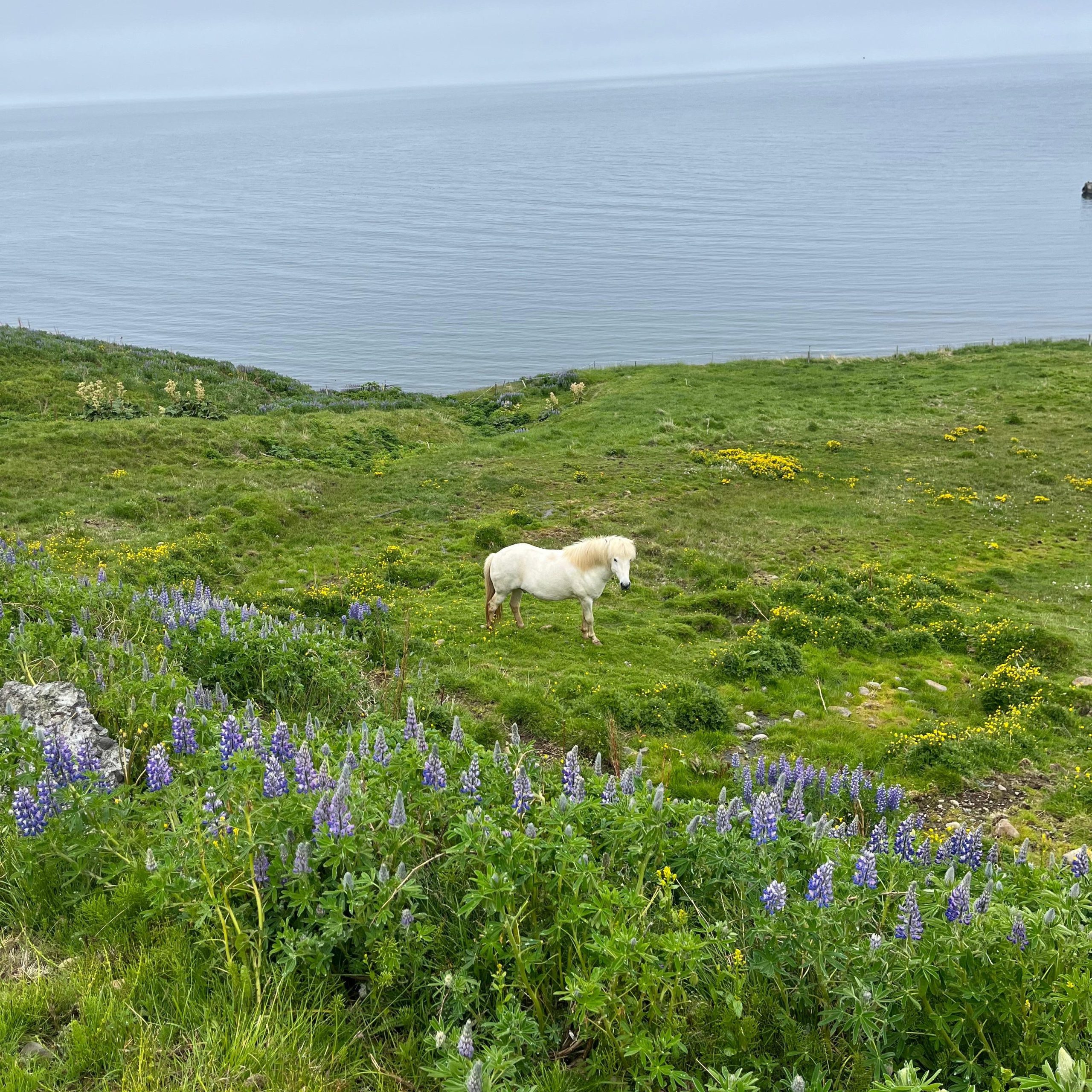
The sense of enchantment didn’t dissolve when we left the shore. Rowan and I made our way up the hill to to see a striking white horse standing in the landscape. Under the flat, misty sky, its profile was so clean and pristine it looked just like a unicorn.
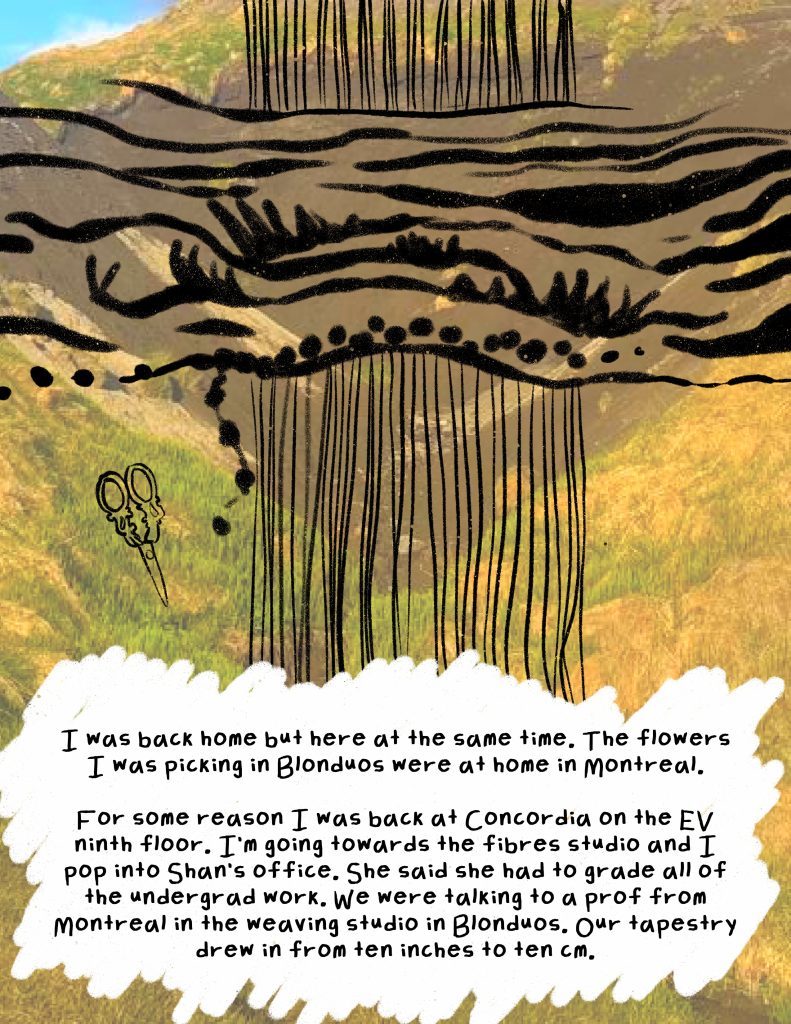
The sight instantly pulled me back to my childhood. Growing up, there was a field near my house with an orchard, and inside it lived a single white horse. I used to call it the unicorn, spending hours projectting that childhood magic onto a familiar creature. Standing in the foggy, north-Icelandic air, seeing those two animals back-to-back, the gap between past memory and present landscape completely closed.