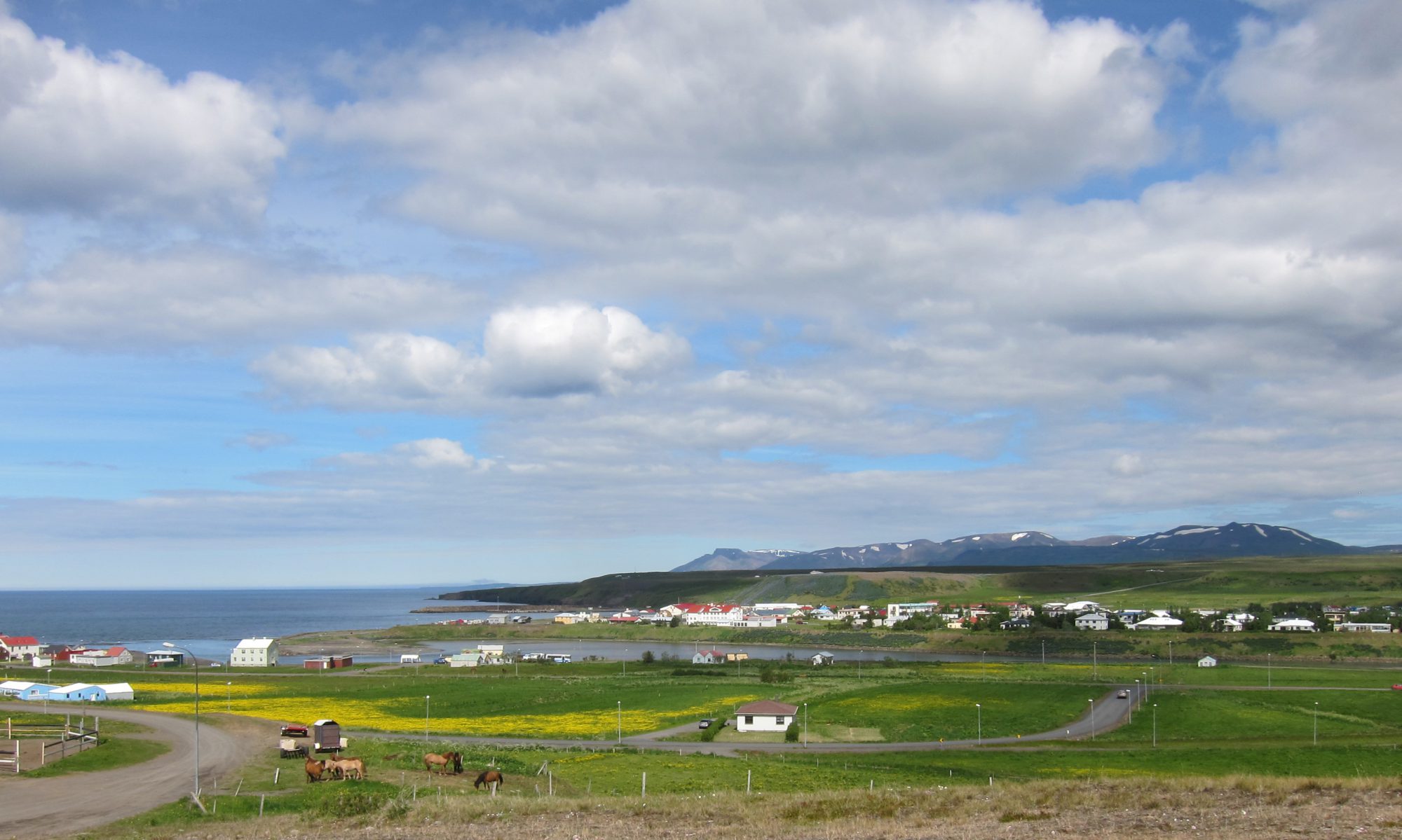
During our month here in Iceland, we chose to do a collaborative project focused on explorations with wool. We were curious about the physical properties of the wool fibres and the various ways we could play with wool to form different structures and textures. We created a series of five wool works made from a combination of wet felting, bioceramic, wheat paste, and weaving, which were displayed during our exhibition. Unincluded in this exhibition were two small books we created in reflection upon our experience as collaborators. This blog post is our attempt to share some further insight into where our heads and bodies went as we spent a month together learning from wool, from each other, and from the local environment we were situated in.
A big part of this project was exploring collaboration itself and what it means for two bodies and minds to interact daily in a closely entwined creative process, while also living in the same room, sharing meals, and trying to navigate a foreign small town with humility and awareness. We spent a lot of time talking and writing about how we can move respectfully when stepping into a community that we knew little about, and how to hold space for each other’s needs and ideas while remaining open to the people and spaces around us. The practices of writing, mapping, walking, and photography enabled us to examine how placemaking unfolds in a space that we occupy only temporarily.
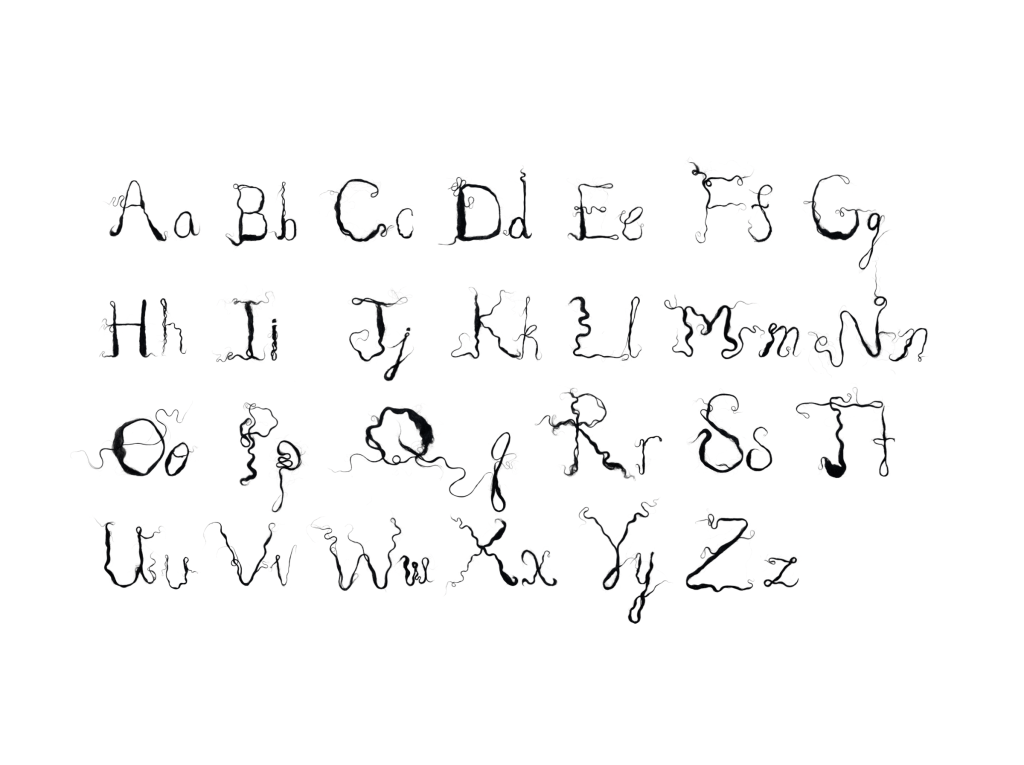
Along with our experiments with wool as a material, we created a small zine and a flip book (which has been converted into an animation for this blog). Many of the photos in the zine were taken during regular walks to trace our day in the endless light and ever-changing weather. The images feature a wool bag we found on the shoreline. From our understanding, this type of bag is typically used for holding and transporting wool, as we saw many similar ones during a visit to the Istex wool washery. The flip book was created using maps of our movements as we worked directly with wool. The maps were then turned into line drawings that became characters within the flip book. The font and lettering in both are from a typeface we created together using tog from local Icelandic sheep and wheat paste as a stiffener. By bringing these activities together, we created a space to play with ideas and approaches as we moved through the project.
We are so grateful to all of the teachers, facilitators, and locals we met along the way, who allowed this collaborative project to come to life.
Ginger + Lucy