Natural dyeing – a colorscape – Émilie Valiquette
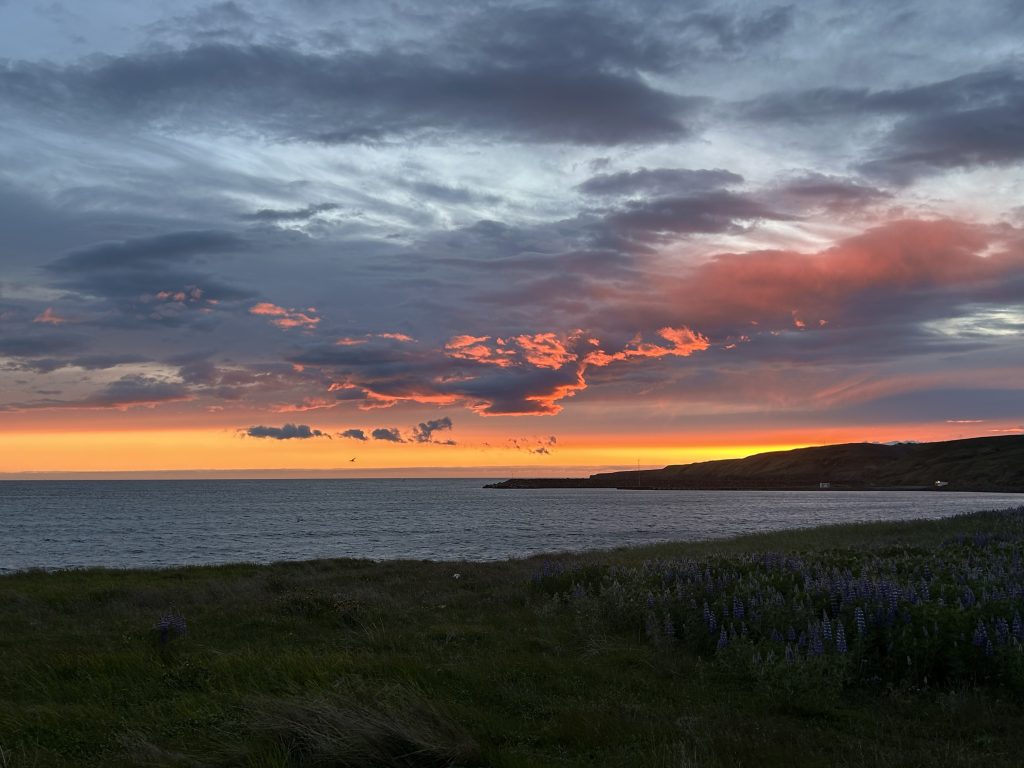
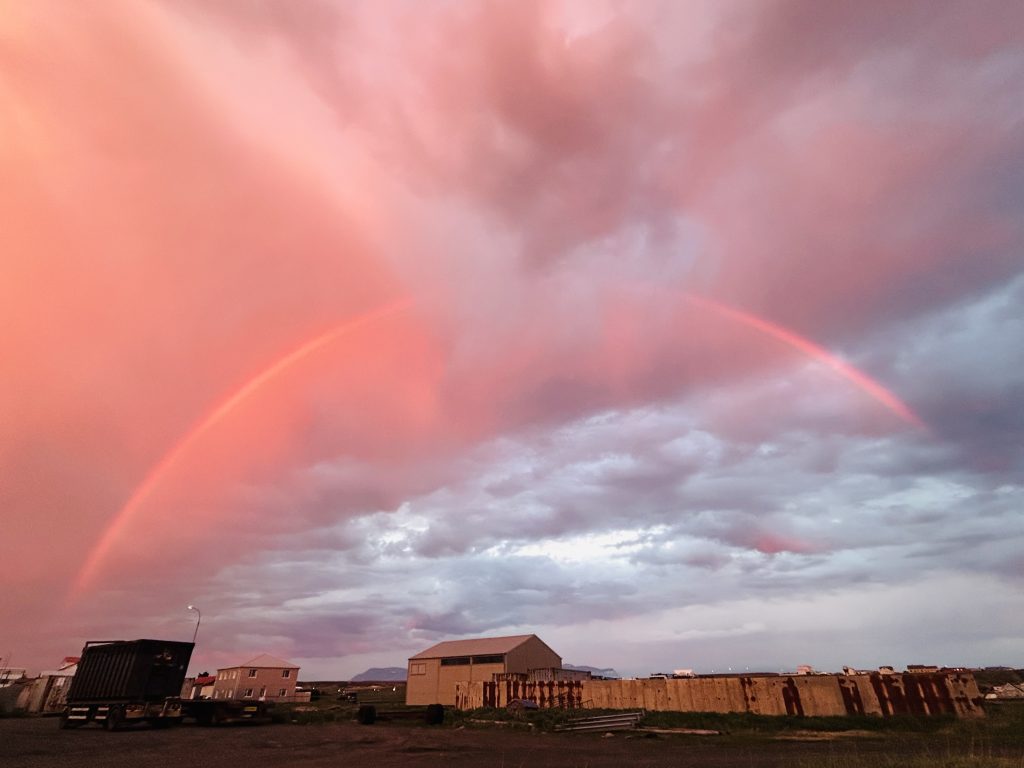
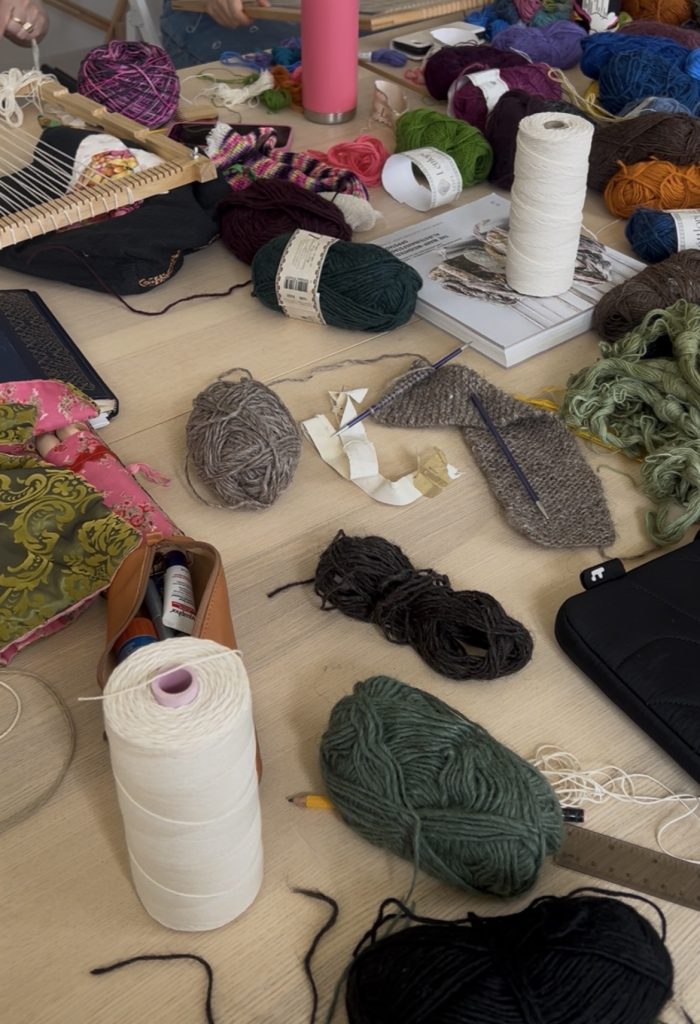
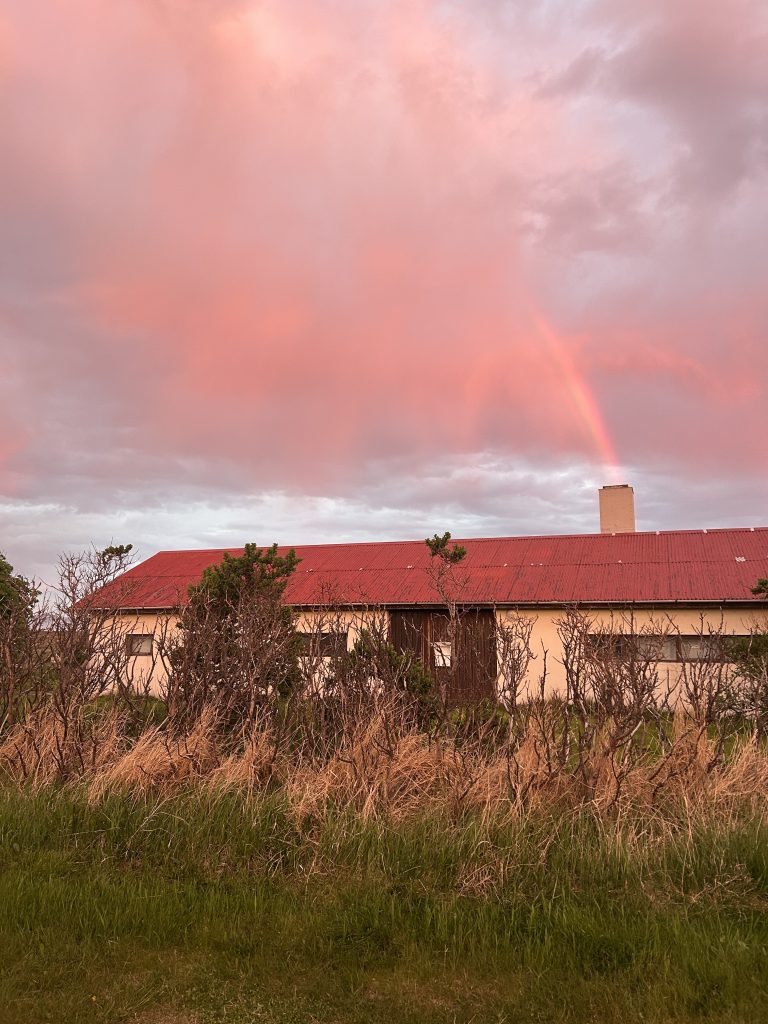
The through line of my experience in Blönduós has been taking in all the colours and the light quality to transpose them into a colorscape through natural dyeing. The experiments on cotton fabric were used to create a garment, a coat representing my experience of the sky using natural matter I gathered from the ground. The results of my experiments on wool were used to try all of the new techniques we were lucky to learn at the Textile Center. I leave this trip having done all of these new techniques for the first time: spinning wool, carding wool, weaving, bioplastics, felting, knitting and tufting.
My natural dyes experiments are each tied to a memory, a community aspect, a moment gathering in nature.
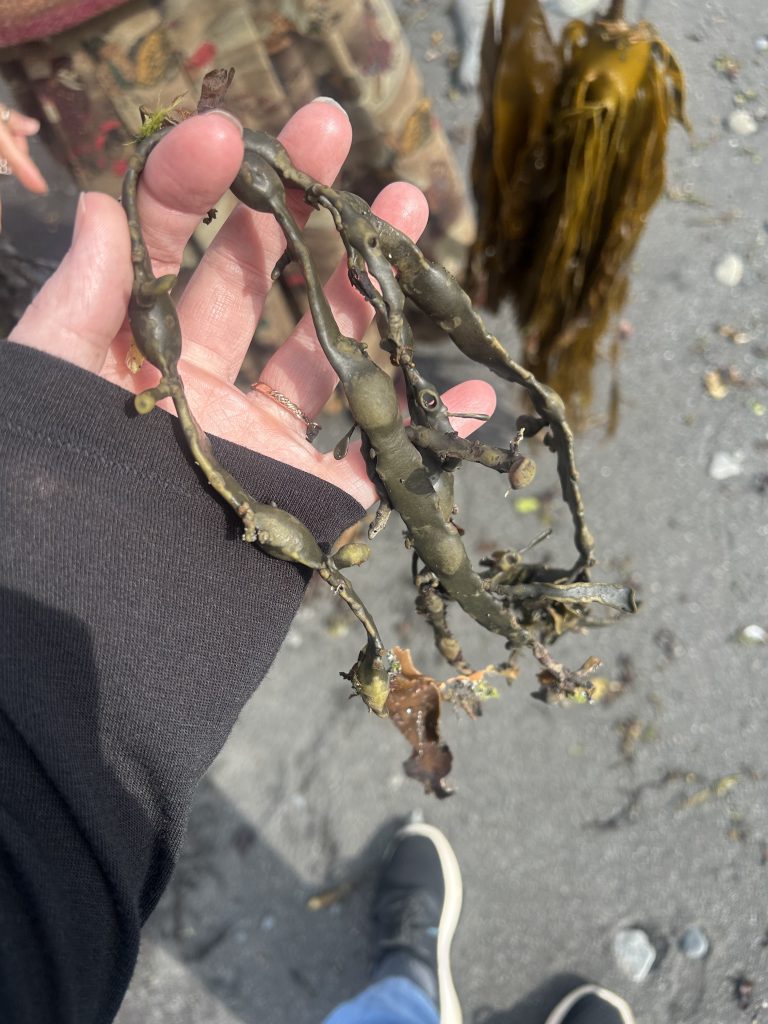
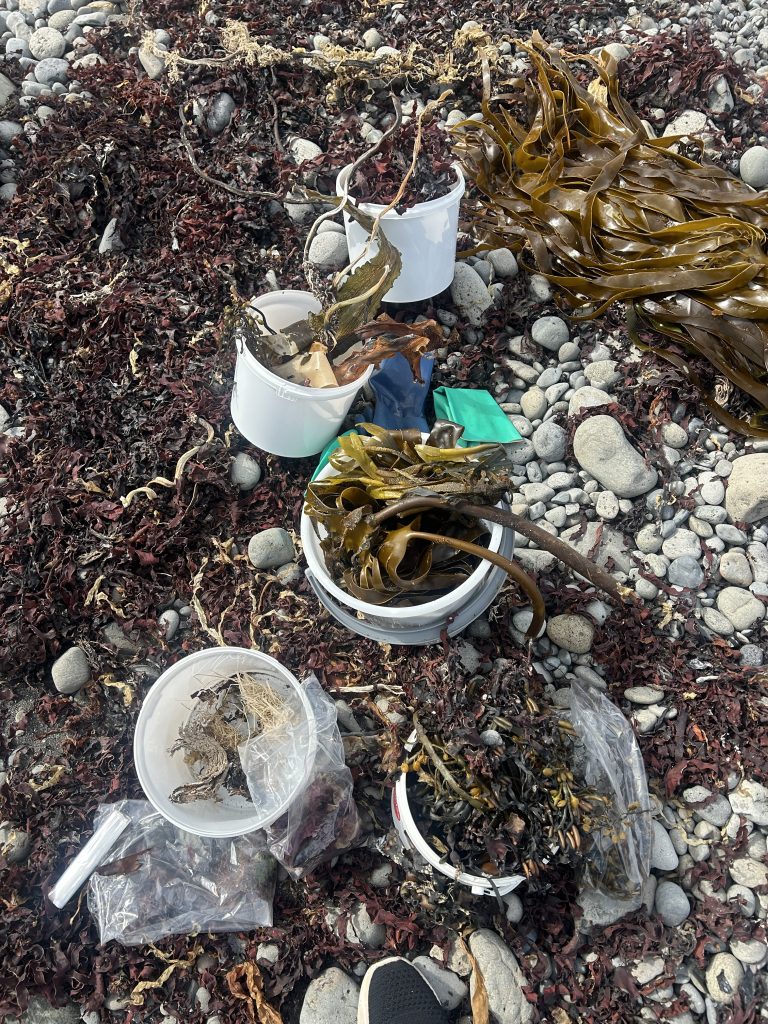
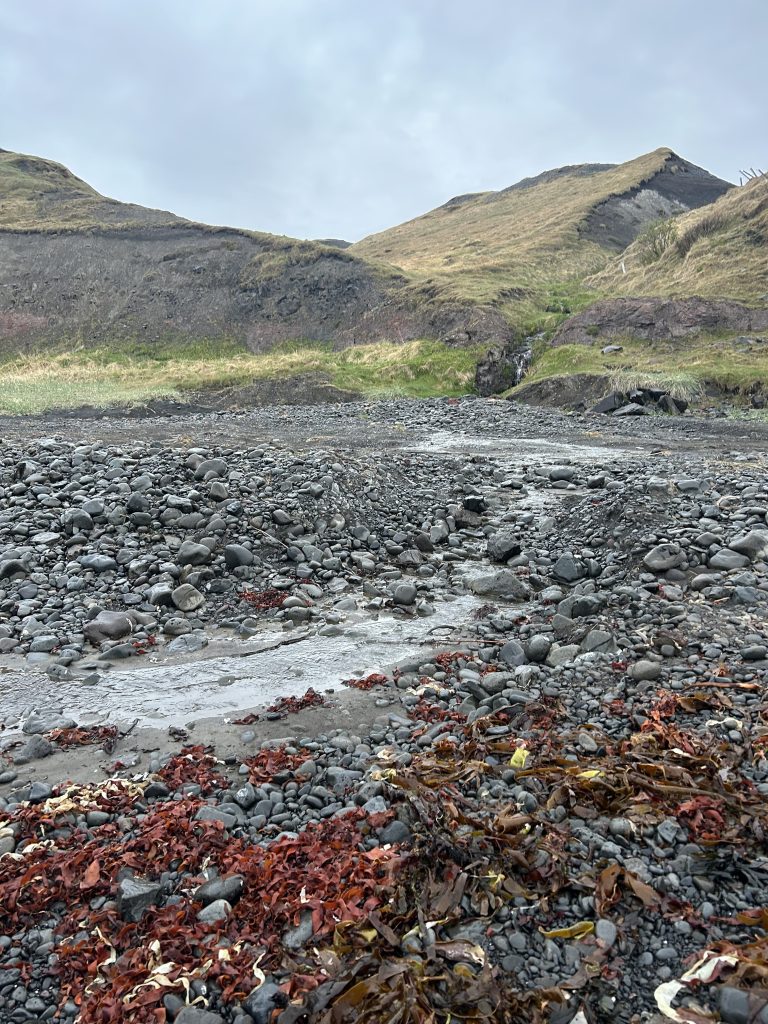
Algae: The algae were gathered with Alyssa and Sarah from the Textile Lab for the bioplastics class. We walked on the lovely black sand beach with our buckets. They told us we could dye with a specific kind of algae called bladderwrack. I distinctly remember the very strong smell of the sea from the pot. The results were a subtle cream colour.
Cochineal: Even if this natural dye originates from Mexico, it was meaningful for me on that trip. We dyed from it in the natural dye class with Þorgerður, and our classmate, Andre, is very fond of it. Experimenting with this natural dye heightened the community aspect of this experience. I got very nice purples and light pinks from this dye. Andre got very vibrant reds. It is impressive that such a vibrant colour comes from a bug.
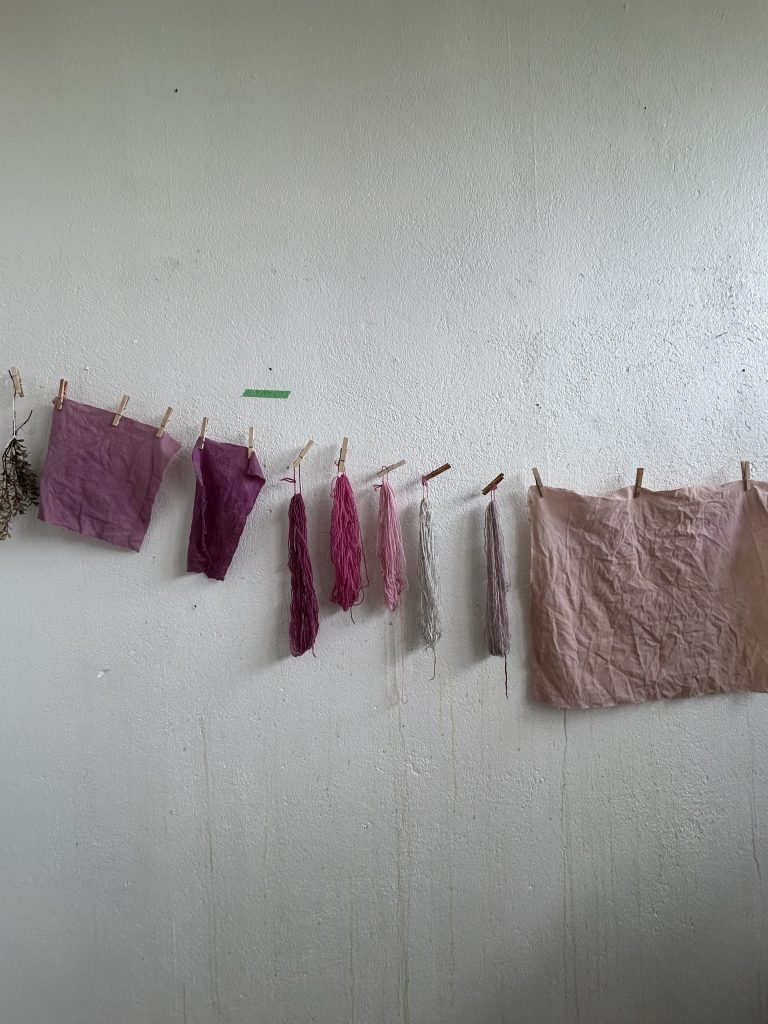
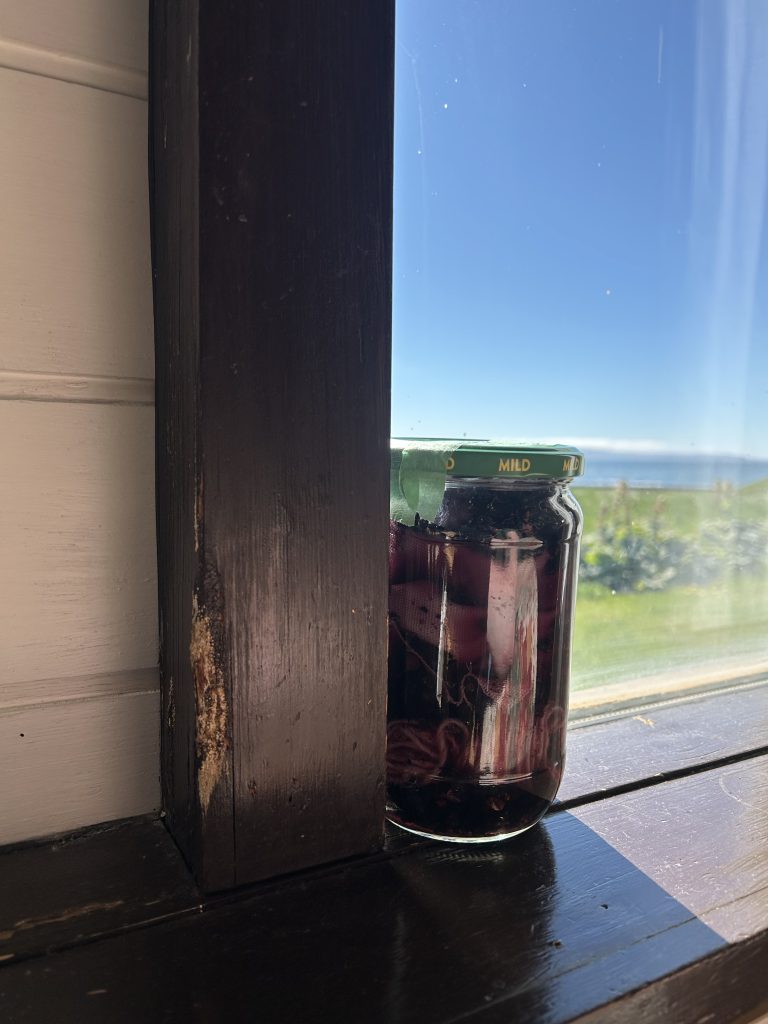
Crowberries: I encountered the crowberries a few times in consumable form across Iceland, so I was pretty happy to see them being sold as a dye material at the market at the Knit Fest being held in Blönduós. I would have liked to gather them myself, but it was also pretty special to be able to buy dye materials and ready-to-dye yarn. The seller, from Graenalaut Studio, recognized me pretty well at the end of the weekend. I gravitated around her booth quite a lot, natural dyes enthusiast that I am. I got to try solar soak dyeing for the first time with this, to keep as much of the colour of the berries as possible. I left the jar on the windowsill of house 35 for a week, and got a lovely vibrant purple on cotton and, surprisingly to me, a grey on yarn. Natural dyes usually take up much more on wool.
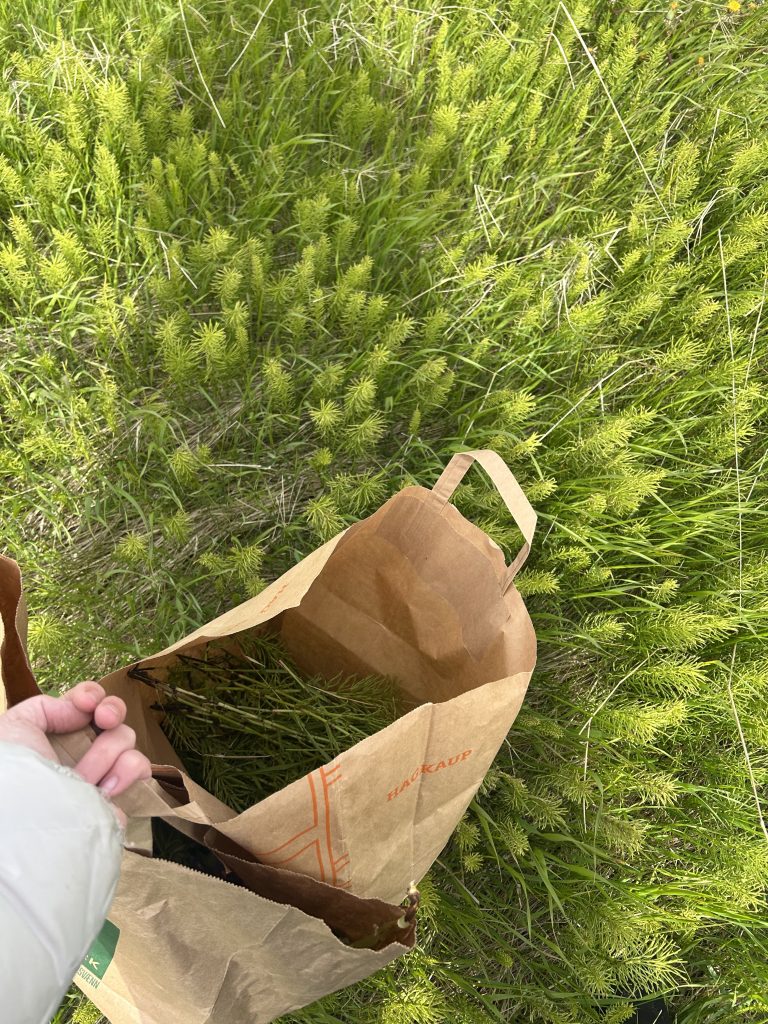
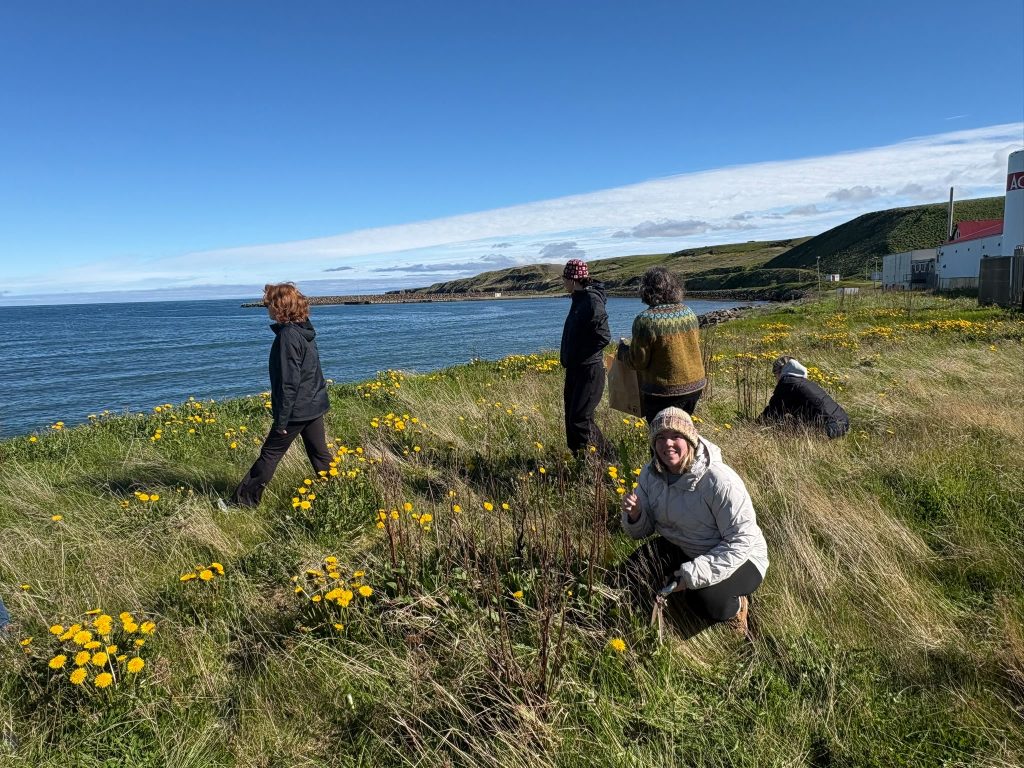
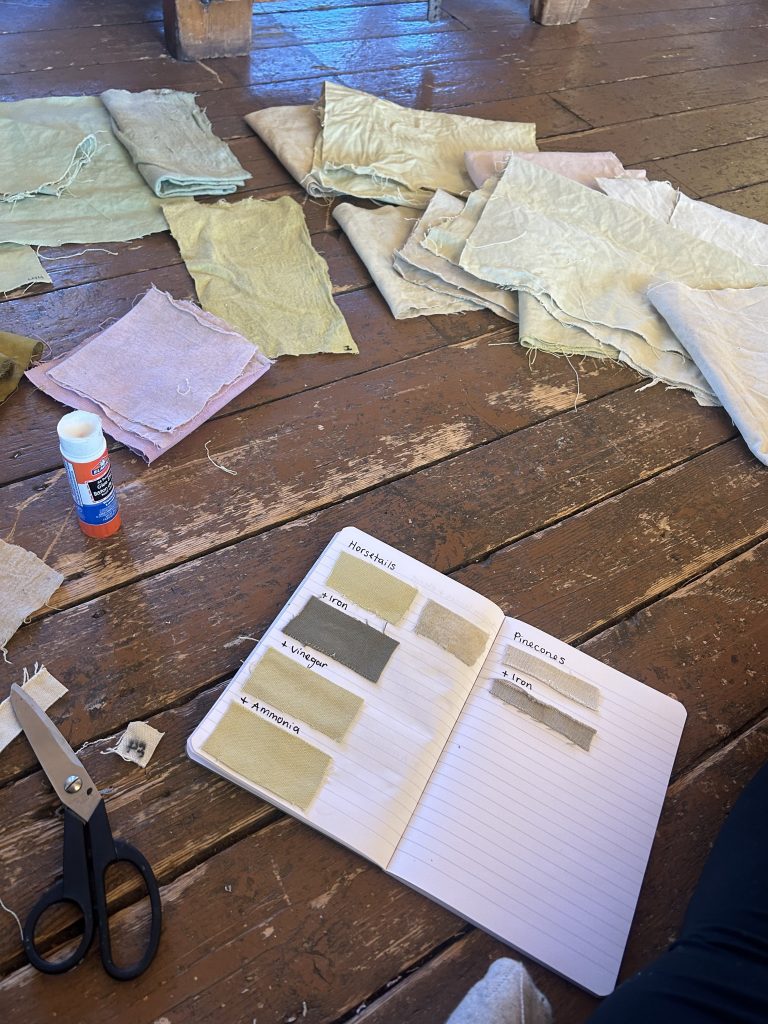
Horsetails: These spiky green plants are abundant in the grassy fields near the water. I was curious to see if they would dye, expecting a muted green. I was very surprised by the very vibrant yellow they yielded. The days I gathered them, it was really windy, true Icelandic weather. I had to hold on tight to my paper bags.
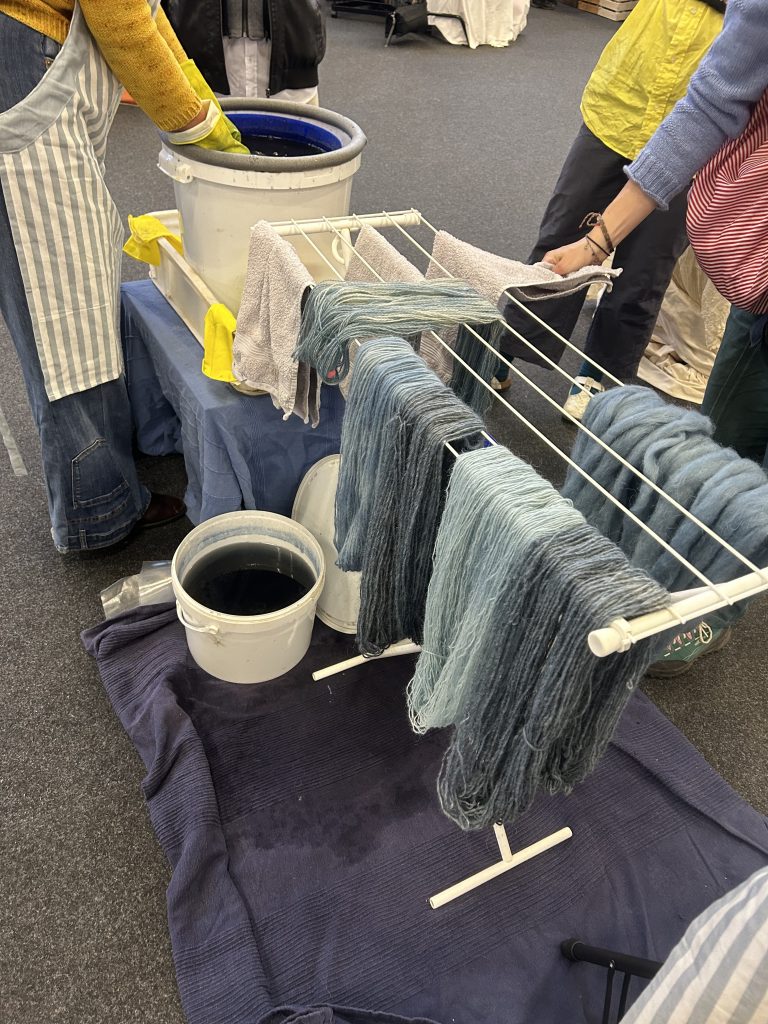
Indigo: I had the chance to dye with indigo at the Knit Fest with Graenalaut Studio. It was my chance to get a true blue, and it was meaningful to take advantage of a community event and integrate it into my dyeing experience.
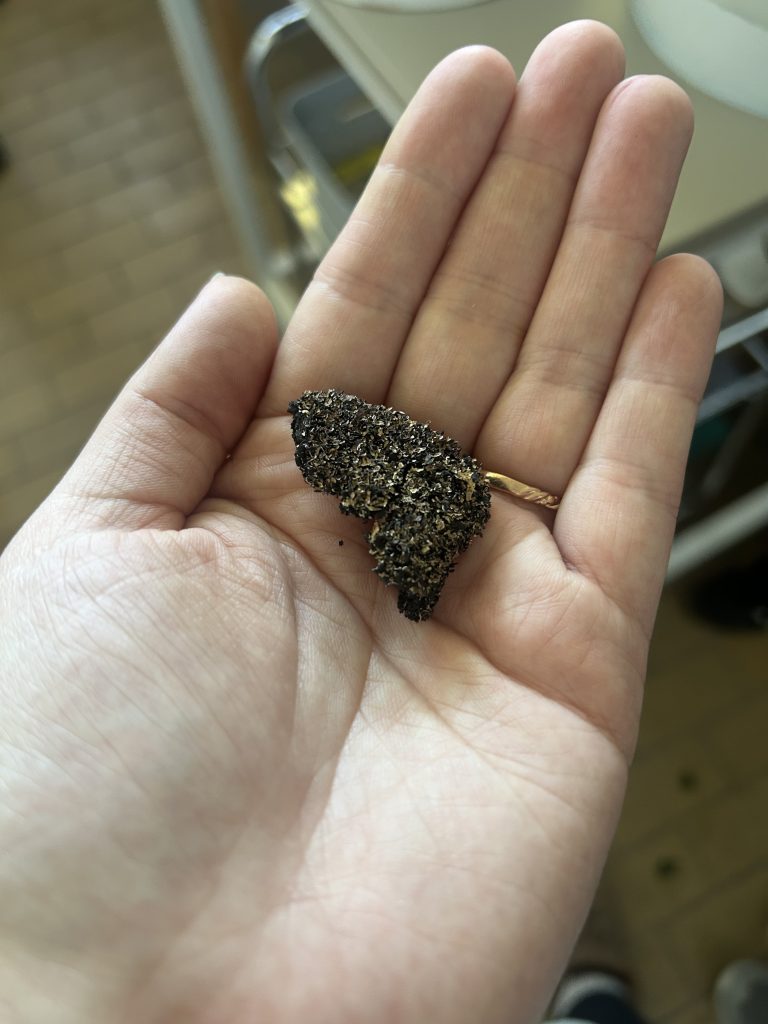
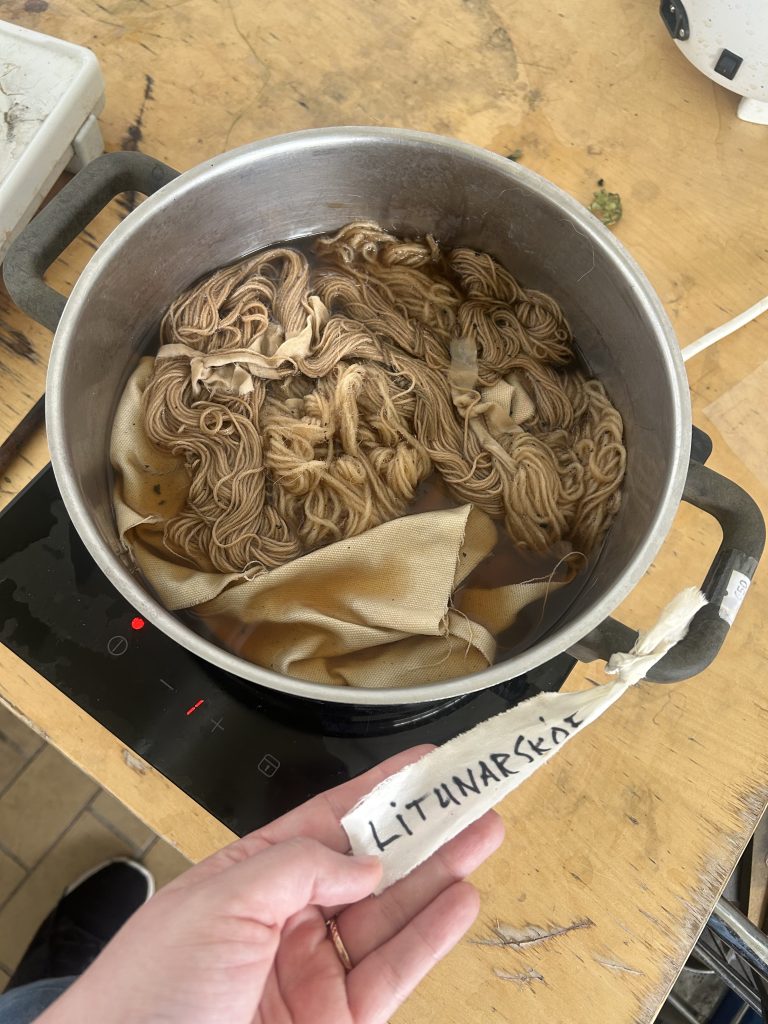
Lichen: Þorgerður, during her natural dyeing class, really put emphasis on the Icelandic name of the lichen she gathered and brought for us to dye with: Litunarskóf. It is a sort of lichen that is of the Parmelia family and is known as a natural dye. The smell was very earthy. With this dye, we did a long soak over multiple days and took off a skein of wool each day to create a gradient. It yielded an orangey cream colored wool.
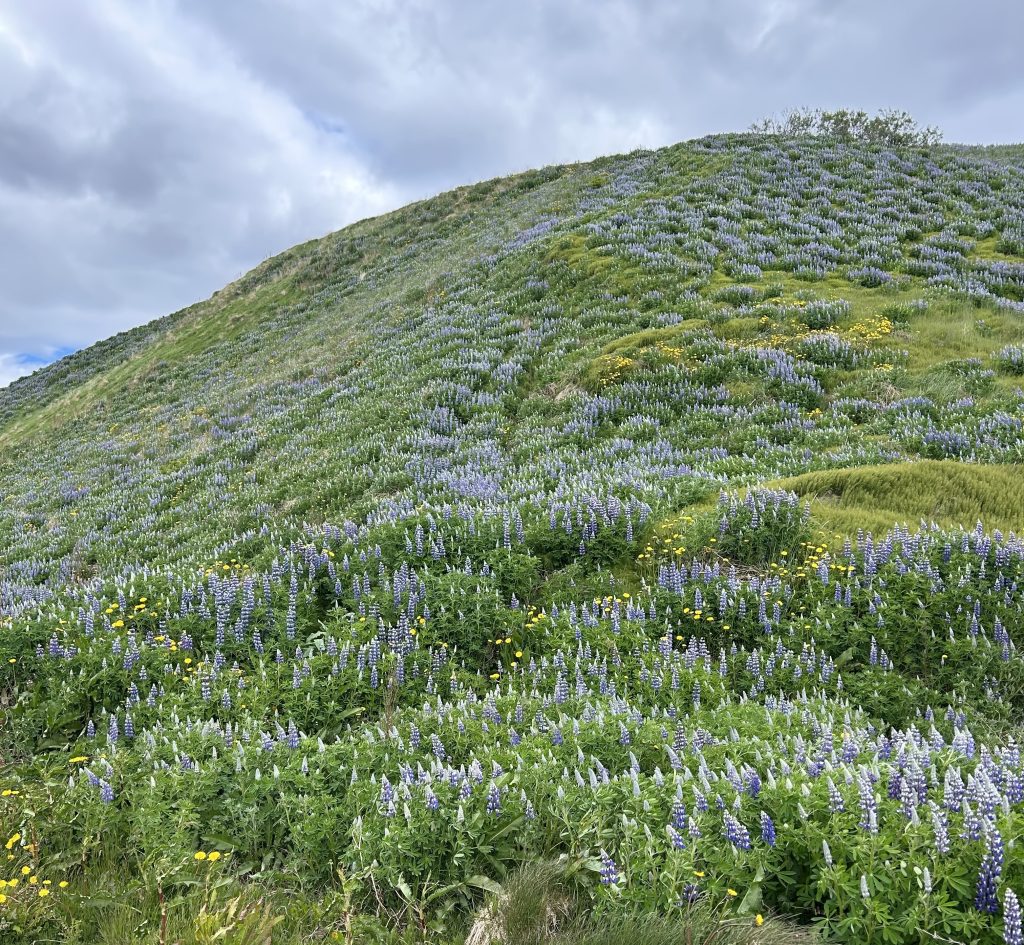
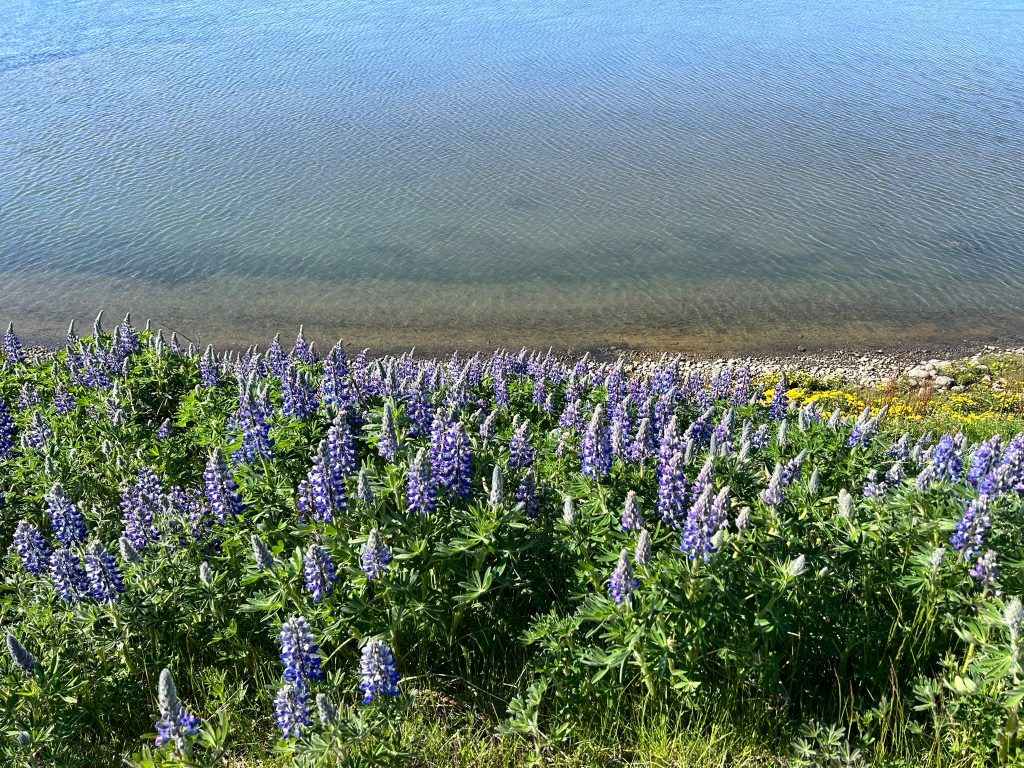
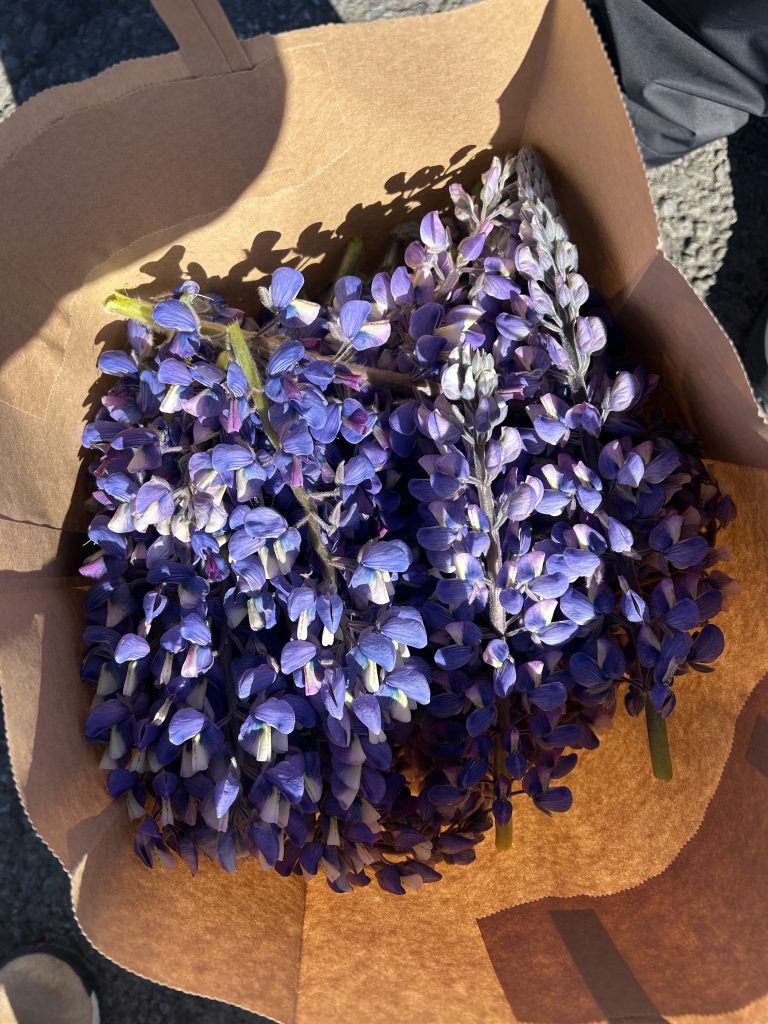
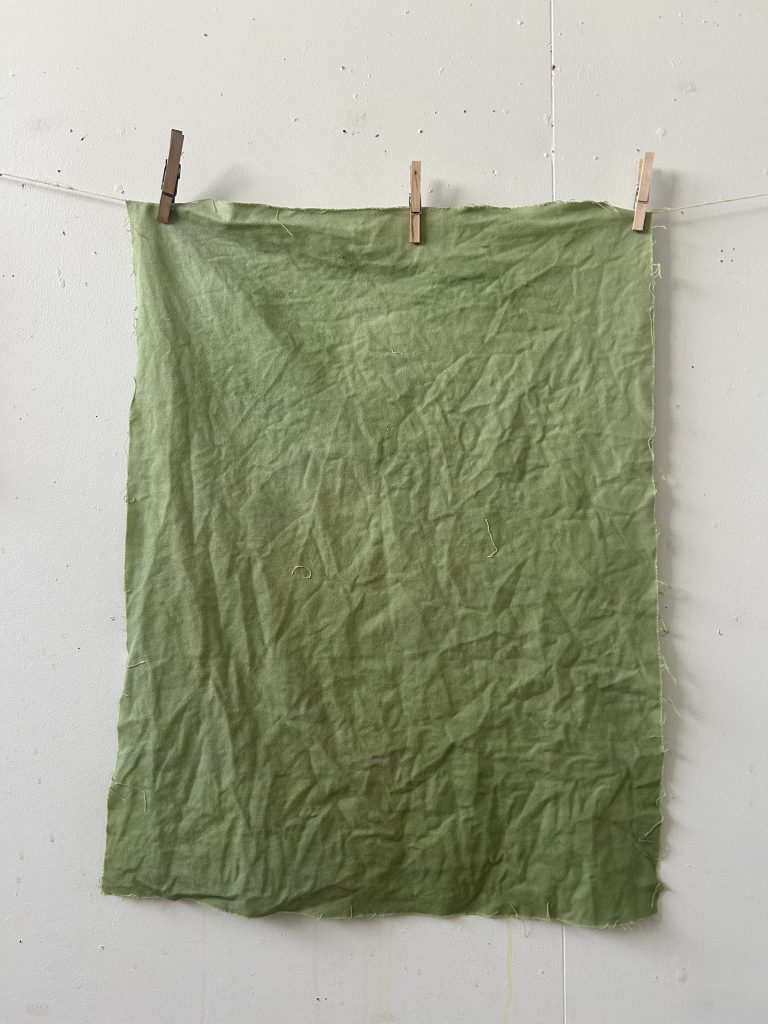
Lupins: Lupins are an invasive species that is not indigenous to Iceland. Most locals have a complicated relationship to it. For that reason, it was meaningful to use it to dye, since there is plenty of it and collecting it is actually a good thing. We were able to see them bloom and fill up the whole fields during June. I used the flowers to yield lovely greens. It was a long process, but really rewarding. To keep the green result, the bath needs to slowly get to 60 degrees and never go above it during the two hours it takes to extract the dye and then dye. The stems and leaves gave me a light yellow. I harvested the lupins on one of my recurring late-night walks to admire the sunset.
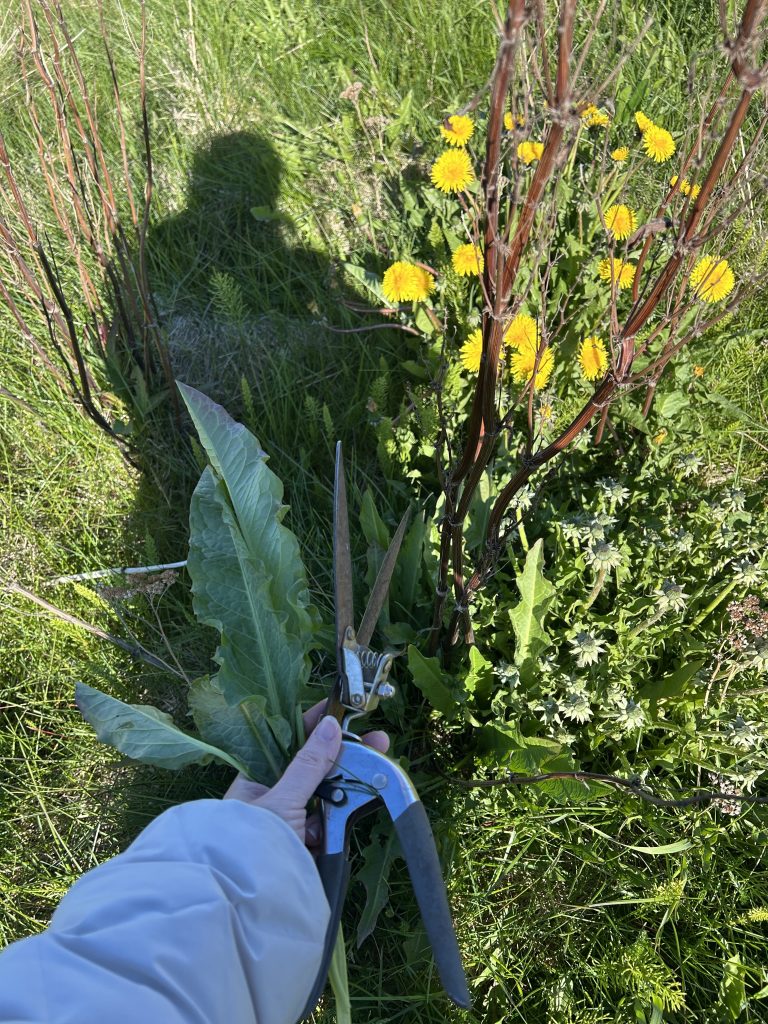
Northern Dock: Þorgerður presented this plant with its Icelandic name: Njóli. We dyed with the leaves. It yielded yellows and greens. It has these very distinctive branches.
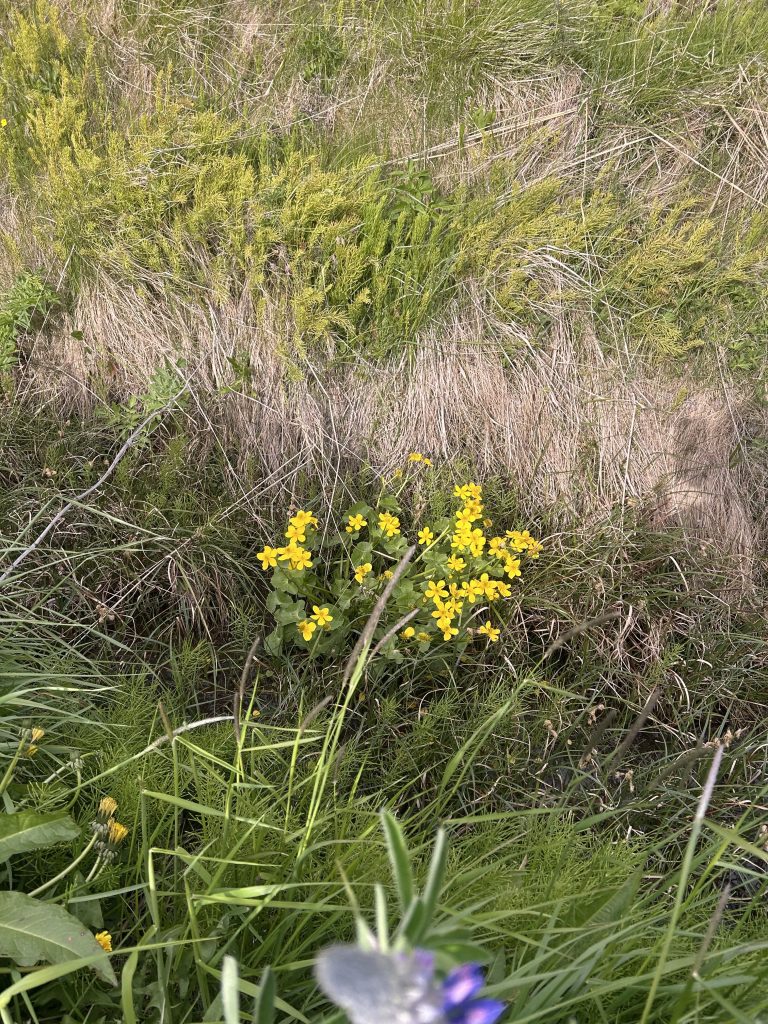
Marsh Marigold: I was charmed by these lovely yellow flowers that only grew near water. I tried a solar soak with them to experiment, since they are not known as a potent dye material. I opted for a solar soak to avoid heating the plant because of its potential slight toxicity. I gathered very little of it with protective equipment, and it yielded a nice yellow. I enjoyed trying a less well-known dye material. I will be able to test for myself its lightfastness.
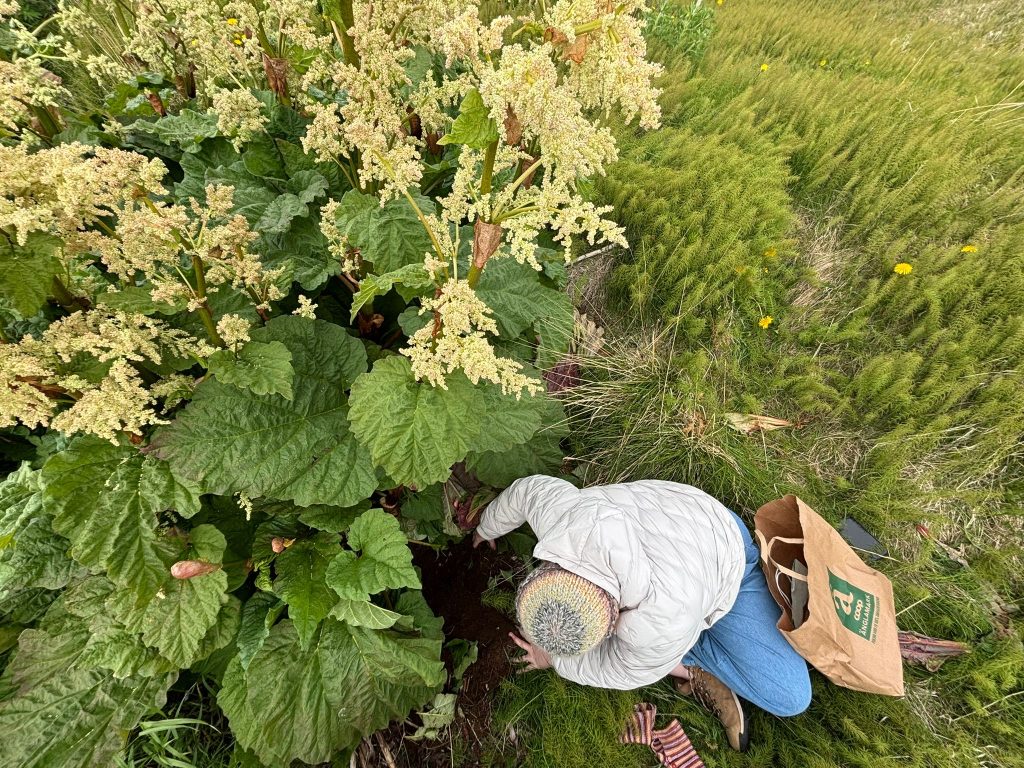
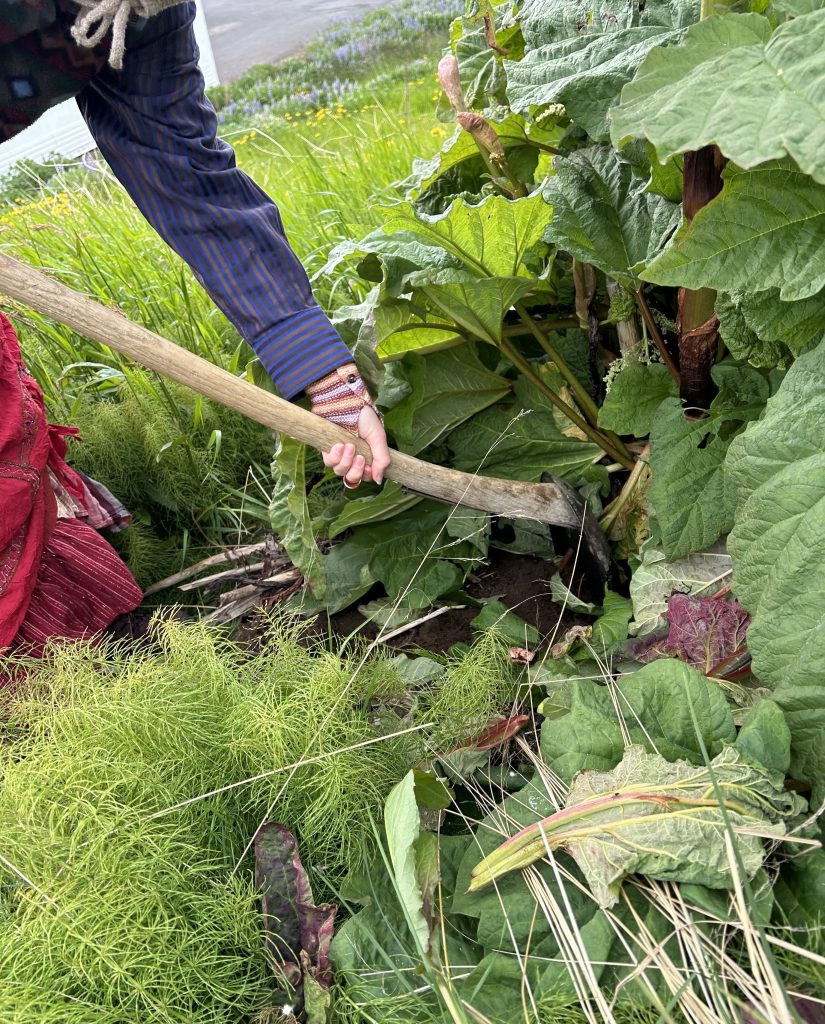
Rhubarb Root: The rhubarb stalks at Blönduós are huge and ancient. I was wary of extracting the root of such an old plant and took only a little, but the root turned out to be a very potent dye that only needed small amounts anyway. It was a fun experience to go dig the root with my classmate Annabel, with a shovel on the shoulder. The rhubarb root gave a rich ochre colour. Boiling the root was really reminiscent of cooking, natural dyeing already being a kind of kitchen magic.
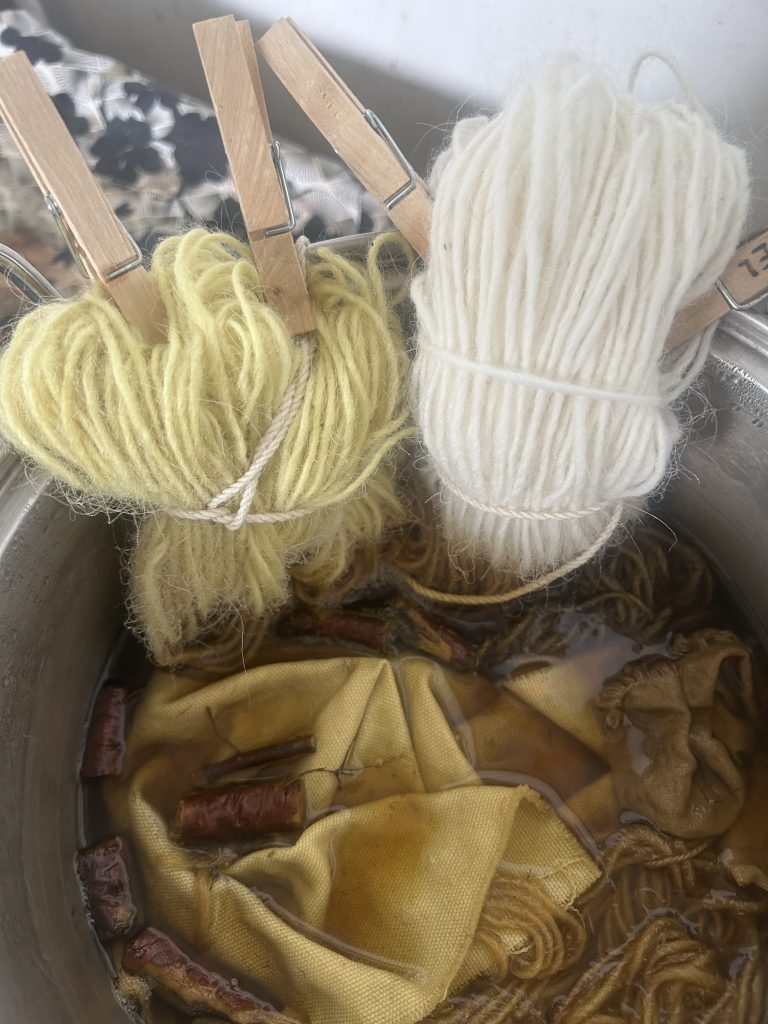
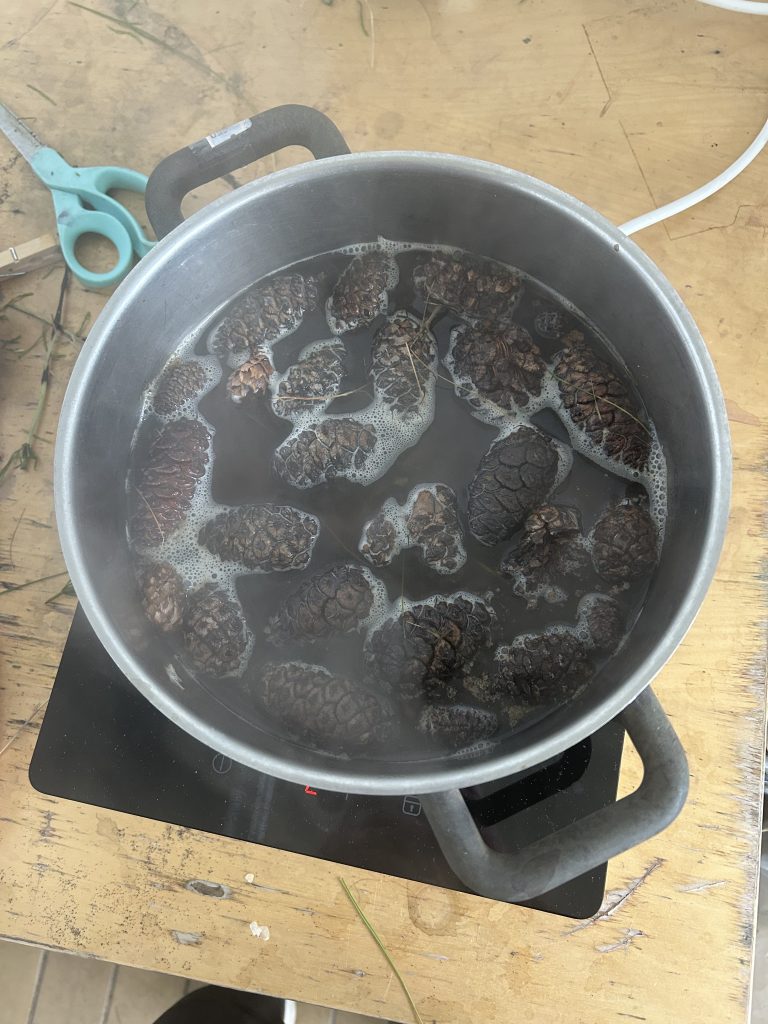
Pinecones: I gathered pinecones on my daily walk to the pool. I was hoping for a slight tint of pink, but I got a nice cream color.
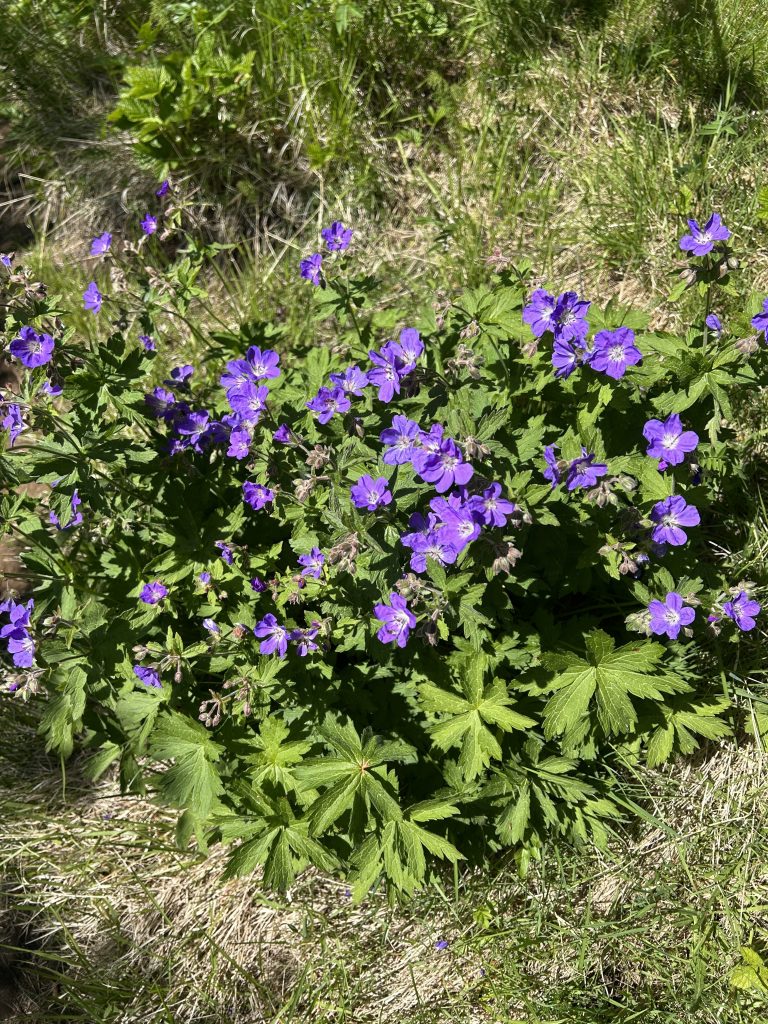
Wood Cranesbill: Þorgerður called it Blágresi. I picked some from Hrutey Island, or, as we call it, Bird Island, which was a lovely walk on the sunniest day we had in the month. The flower is purple, but wood cranesbill gives greens and yellows.
I finished my experiments by experimenting with modifying my results with iron, vinegar and ammonia and compiling my own book of experiments, truthful to the specific times I gathered the plants.
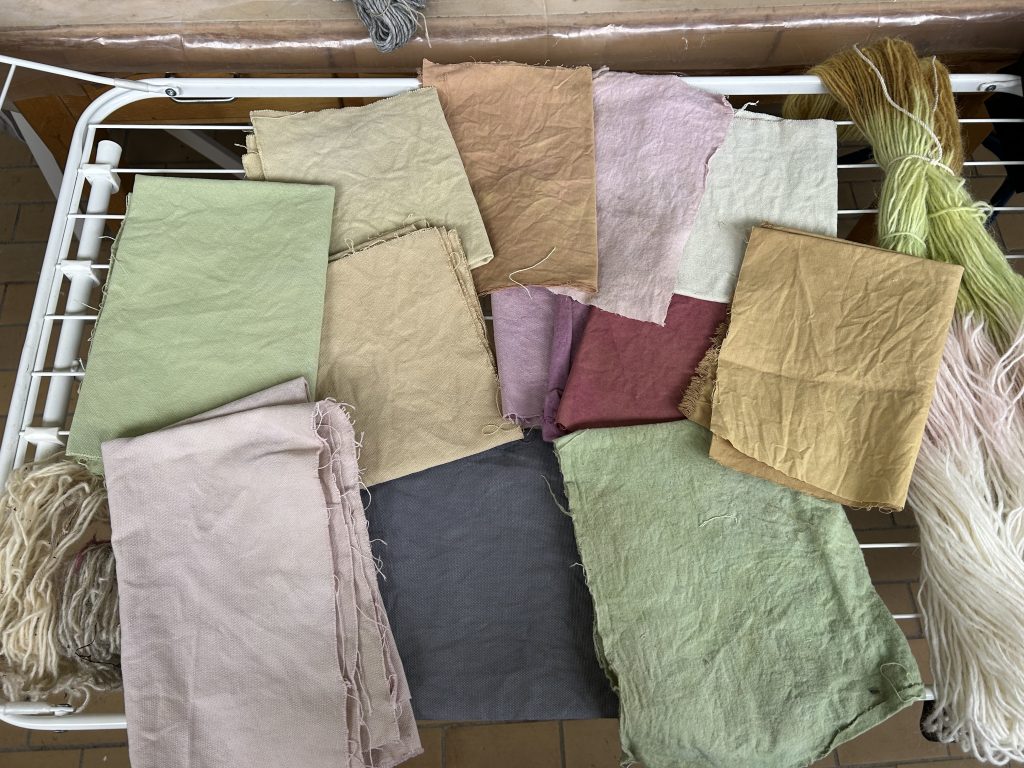
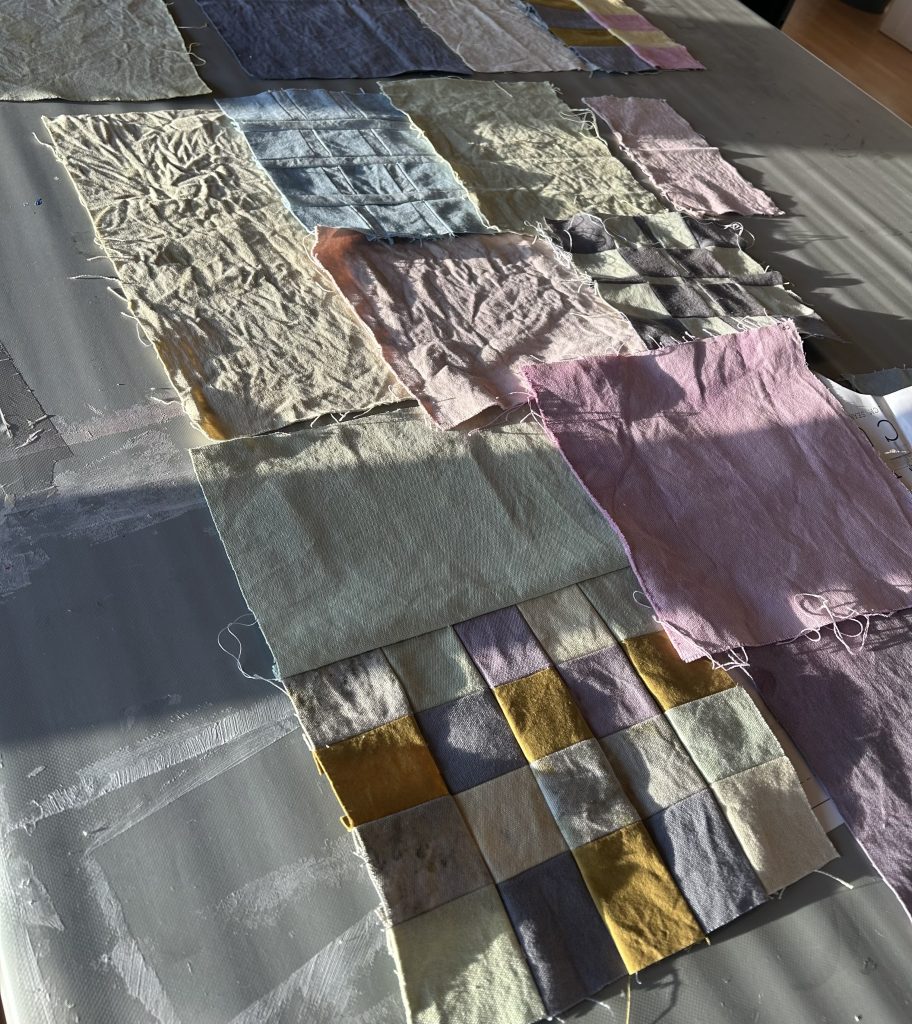
I processed all the results of these experiments by madly patchworking my way to the final coat, a labour of love that took me a lot of time, but melded my experiences together very nicely.
I had to immortalize the coat amongst the flowers I used, under the sky that inspired me.
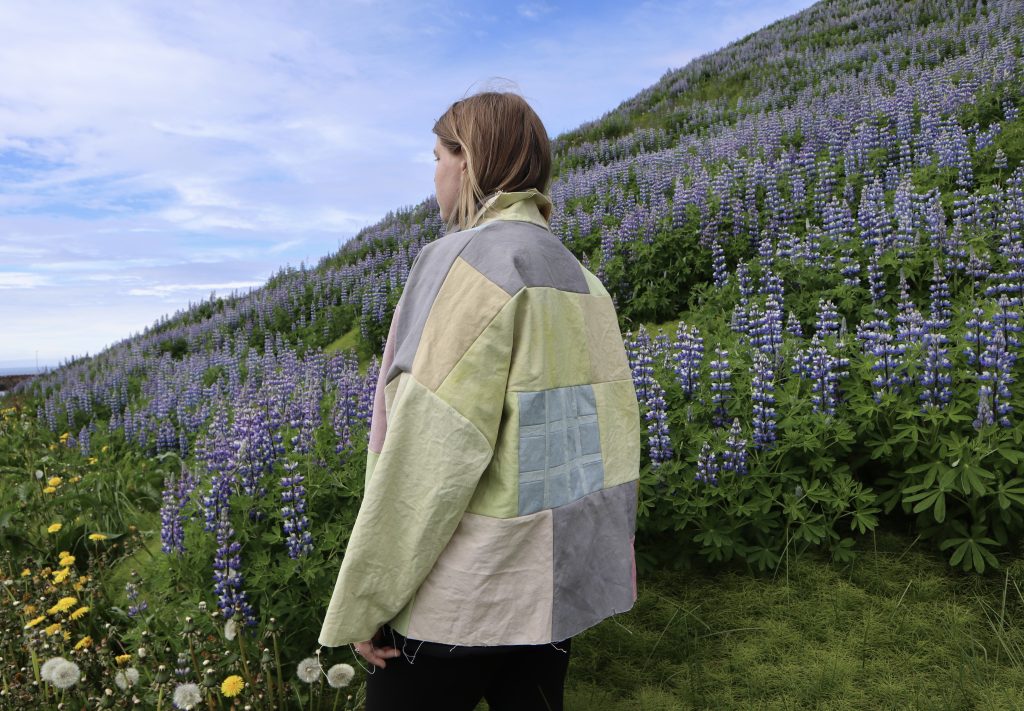
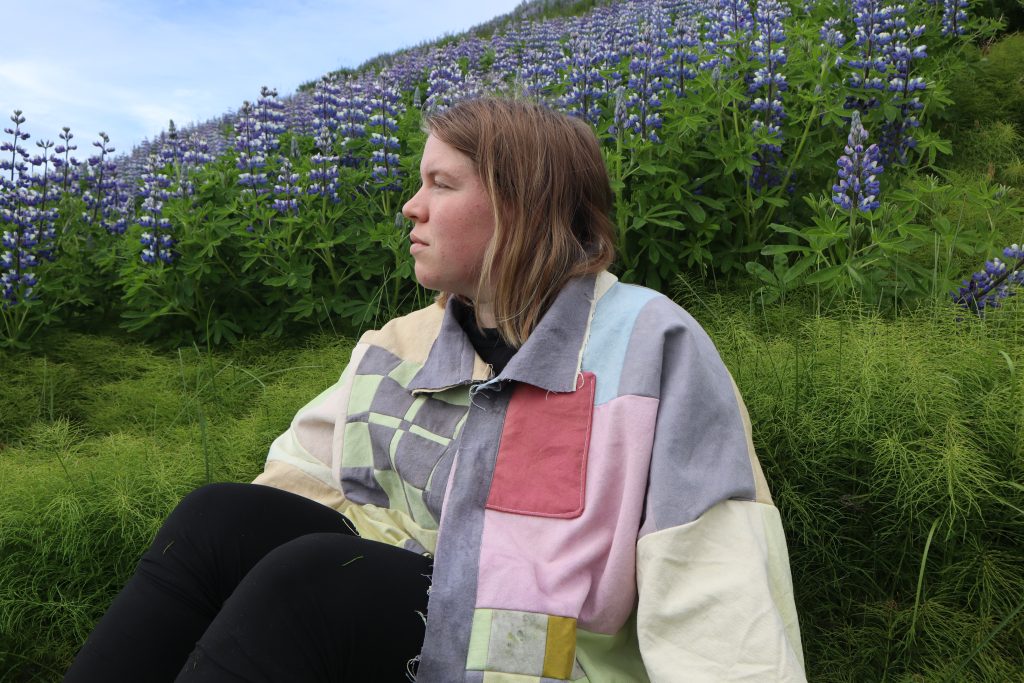
A special thanks to Rowan McKellar for the pictures of the coat in the landscape.