Iceland Up Close

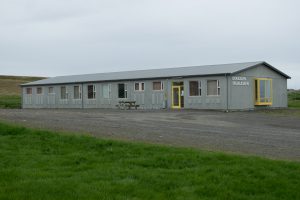
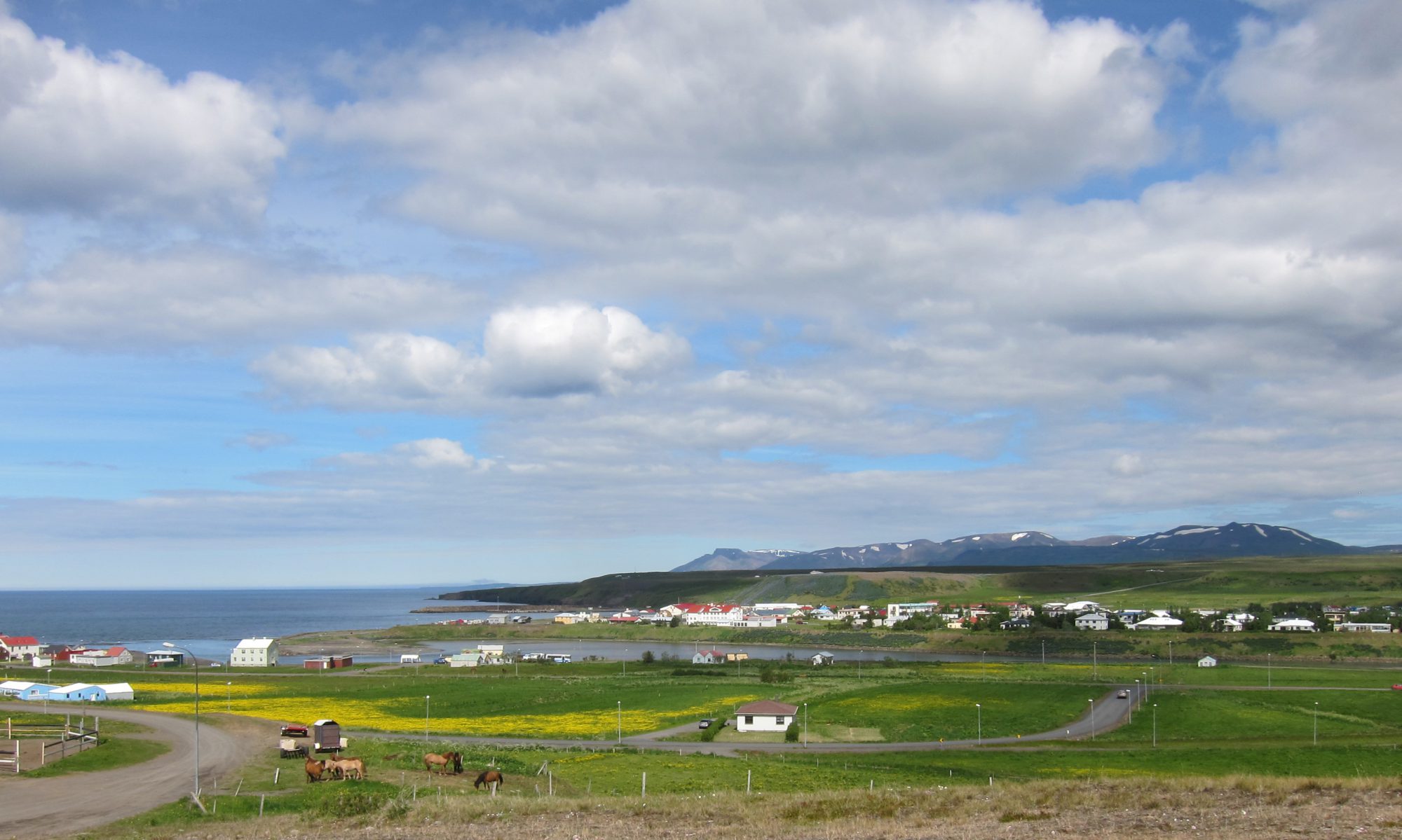
Iceland boasts a landscape unlike any other. A glance outside a window of the Icelandic Textile Center, previously the Kvennaskólinn in Blönduós, offers a view of black-sand beaches, green vegetation, snow-capped mountains, and infinite sea. This vast beauty is something which many travellers to Iceland eagerly anticipate, myself included. It was my intention, however, to explore the more intimate aspects of the majestic natural landscape, stopping to smell the proverbial flowers as I attempted to absorb as much of my surroundings as possible to ground myself in this new environment.

Armed with my iPhone and a 15x macro lens, I gingerly crept around the coastal area of the Textile Center on my first weekend in Blönduós. The following photos capture some of the fascinating objects I came across on my walks, for which the macro lens provided a novel, almost microscopic perspective. Online research and conversations with the centre’s director, Jóhanna Pálmadóttir, provided further insight into their significance.

Lichen (macro). Photo: Hannah Grabowecky
Lichen. Photo: Hannah Grabowecky

Lichens, or skófir, are among the most recognizable natural life in Iceland, with over 700 species across the country. These can be categorized into three groups, based on appearance: fruticose, foliose, or crustose lichens. The lichen pictured most likely belongs to the latter category as it grows as a crust on textured surfaces such as rocks, soil, or tree bark. Although leafy lichens are habitually confused for mosses, they are in fact comprised of multiple organisms which can be more easily appreciated at this close range.

Fish bone (macro). Photo: Hannah Grabowecky
Fish bone. Photo: Hannah Grabowecky

This fish bone likely came from an Atlantic cod, a noteworthy fish in Iceland. Historically, it has been the most important marine resource in the country, appearing on the Icelandic coat of arms between the 16th and 20th centuries. The cod is a fast-growing fish and can develop to a length of one meter with few predators, humans aside. This cod was not so lucky as indicated by its bones.

Blue mussels (macro). Photo: Hannah Grabowecky
Blue mussels. Photo: Hannah Grabowecky

Blue mussels are commonly found in shallow Icelandic waters. They attach themselves to hard surfaces and will remain there as the tide recedes, ultimately drying out and perishing. As a food source gaining popularity with humans, one must be aware of the potential toxicity when the mussels ingest a certain algae bloom. These blue mussels appear to have provided a tasty treat for some aquatic resident.

Brown algae (macro). Photo: Hannah Grabowecky
Brown algae. Photo: Hannah Grabowecky

Usually referred to as kelp or þang, brown algae comprise most of the large algae found in shallow waters and on the Icelandic seashore. Although the dominant species of seaweed on the northern shore has been identified as knotted wrack, the algae pictured looks more similar to a variety of sea belt which tends to live in saltier conditions. They grow in large, underwater forests, acting as protection for small or young animals and food for others.

For the above images, careful posing and Photoshop were not needed nor wanted, as I wished to digitally preserve, as best I could, exactly what was offered. With each encounter, a new wave of excitement surged through me, a hidden treasure concealed in plain sight, waiting to be discovered by a wandering and wondering visitor. How many people had taken this same path and seen this same landscape before me? How many had stopped to enjoy its intimacy as well as its grandeur? These photos serve as a reminder to remain aware of the many wonders on display, for those who are willing to take a closer look.

“So does my horoscope even apply here or like, what?”: On Missing the Moon


Total number of days it took to realize the moon is missing: 13 


I didn’t quite make note of the gesture when saying goodbye to the moon—she who is the major catalyst for the form of solitude I enjoy most, in which my own energy is reflected back to me, othering me. The moon splits me so that me and I may reconnect. She, Mother, instigates a playdate. It is Gemini season, a time defined by twins of the self. I have felt intellectually stunted and out of place, off my feet, in the air (literally, as the wind has situated itself as the primary weather condition on my radar visually, audibly and materially, not to mention the regular experience of shifting altitudes so rapidly yet subtly that I’m hardly conscious of it.) Does the moon, like anything, truly exist when beyond my registry? What does it mean to be castrated sensationally from an element so basic, especially when it flies beneath one’s nose for nearly two weeks’ time in the shadow of “minor”[1]? 

Gemini also belongs to the element of air, which rules abstraction, zippy thinking, problem solving and communication, extracting balance from an environment’s Ups and Downs. Perhaps its role, in the absence of the world’s most prominent environmental up and down, is to challenge me to make and fill crevices beyond those which have tactile presence—to use and live within the parts of my mind rooted elsewhere rather than replacing them with all things Iceland.


I have decided it is a good time

to hone my French.


[1] In reference to Anne Carson’s “On Major and Minor”, from the collection Plainwater. “Major things are wind. Evil, a good fighting horse, prepositions, inexhaustible love, the way people choose their king. Minor things include dirt, the names of schools of philosophy, mood and not having a mood, the correct time” (33-34).  

Góð Matarlyst!

Part of exploring a new country is enjoying and embracing their culinary traditions. These are some of my favourite Icelandic foodie finds, where to find them, and how to best enjoy them.

Góð Matarlyst! (Bon Appétit)     


Rúgbrauð — also known as hot spring bread or geyser bread — is an Icelandic rye bread which is cooked in pots or square baking pans that have been buried in the ground. How do you cook something in the ground you may ask? Iceland is home to many volcanoes, which in turn leads to a consistent flow of lava in many areas, heating the ground. This is also the reason for the many hot springs found in Iceland. The bread is placed in a hole in the ground, then covered with the steaming hot dirt. It cooks in the ground for up to 24 hours. This bread is very dense, is crustless, and has a sticky quality to it, mostlikely due to the sugar content. I found it to have a sweet, fig like flavour. Icelanders enjoy their Rúgbrauð with thick slabs of butter or mutton pate. It can also be found on menus across Iceland served with cheese platters or soup. I particularly enjoy eating it with gouda cheese and strawberry jam, or from time to time, with some Icelandic Skyr! 

Check out this video for more details on the preparation and cooking of Rúgbrauð:

Skyr is an Icelandic dairy product much like strained yogurt. It is one of the most popular food choices in our communal fridge at the Icelandic Textile Centre. It is extremely high in protein and low in fat. Skyr comes in many flavours, including but not limited to vanilla, mixed berry and crème brûlée! I really enjoy its decadent whipped texture and sweet and sour flavour. 


If you ever get the chance to visit Iceland, then you must try an Icelandic hotdog from one of the street vendors. Their hotdogs are made from lamb meat, are served on a steamed bun and come with the following toppings; ketchup, brown mustard, raw onions, remoulade sauce and my personal favourite, crispy friend onions! I don’t think I will ever be able to eat a hotdog without crispy onions again. The crunch from the onions in juxtaposition with the soft bread and salty sausage makes for a really good afternoon snack after walking the streets of Reykjavik. If you are willing to wait in line for a good 30 minutes, I suggest trying the hotdogs at Bæjarins Beztu Pylsur, they are definitely worth the wait! Just make sure not to eat too many, because you should leave some space for dessert!

Have you ever wanted to make your own ice cream? At Joylato in Reykjavik you can make your wildest ice cream dreams come true! You can design your own ice cream which they then freeze using liquid nitrogen. You select your preferred milk (cow or coconut), then the flavour (chocolate, vanilla, chocolate hazelnut, raspberry etc.) followed by a wide selection of toppings like fresh strawberries, brownies, nuts, sprinkles and sauces. My personal favourite combination is chocolate hazelnut ice cream topped with fresh strawberries, coconut chips and chocolate sauce. Each ice-cream is topped with a homemade vegan wafer cookie. Honestly, I can say that this s by far the best ice cream I have ever had, so much so that I went two days in a row!


Looking for a salty snack? Harðfiskur or dried fish is an Icelandic delicacy. Most often cod or haddock, it is hung to dry and cure through the natural bacteria of the Atlantic air. It is then broken apart with a hammer or meat cleaver. There are some Harðfiskur that are fishier then others. My favourite so far is the Harðfiskur ýsubitar, which has a subtle fishy smell and taste, and has a crispy wafer or chip like texture. Icelanders are known for eating Harðfiskur with butter, but I find it quite tasty on its own. It is widely available and can be found in all grocery stores and gas stations. 


Last but definitely not least, if you’re planning a trip to Iceland, you must be sure to try Fiskisúp or Icelandic fish soup. It is said that Icelanders all have their own recipe, but for the most part they all consist of a cream and tomato base with fresh white fish and vegetables. All you can eat soup and bread, and sometimes pizza, buffets are very common in Icelandic restaurants at lunch hour. Ömmukaffi – which means Grandma’s coffee house — located just a few minutes away from the Icelandic Textile Centre in Blönduós — is where you can find the best local Fiskisúp. It has big chunks of tender fresh fish and subtle notes of curry flavour. They serve it alongside homemade bread, butter, pesto and tomato pesto. It has been one of my favourite meals here in Iceland so far. 

Want to know when Ömmukaffi is serving their famous Fiskisúp? Check out their Facebook page here:

https://www.facebook.com/ommukaffi/

No mosquitoes!! Yet another reason to love Iceland!

Icelandic midges from Kathleen Vaughan on Vimeo.

 
While Iceland does have midges (that don’t seem to bite humans), there are no mosquitoes — sheer bliss to those of us who are extra delicious to the whining pest. This article from Iceland Magazine explains why Iceland is exempt when nearby Greenland and the British Isles are definitely afflicted. It’s all to do with the climate here.

http://icelandmag.is/article/reason-non-existence-mosquitoes-iceland


Iceland Field School Day 6 | June 6, 2018

Students warping their tapestry looms under the direction of Ragga Thorsdóttir, in the shared studio at the Icelandic Textile Centre. Photo: Kathleen Vaughan

In the studio at the Icelandic Textile Centre: learning tapestry weaving with Ragnheiður Björk Þórsdóttir, expert weaver and researcher at the Blönduós Research Centre.

Students warping their looms. Photo: Kathleen Vaughan

From the Studio to the Farm

Key to our time here is slowing down; experimenting in the studio, taking long walks, recording sounds, reading new books. Slowing down also speaks to how we’re learning, and yesterday was a first example of how as students, so lucky to be doing a field course abroad, we are taking the opportunity to ground our activities in local knowledge, history and experiences. Jóhanna Pálmadóttir, director of the Textílsetur Íslands (Icelandic Textile Center) since 2011 and spinning teacher for 25 years, led us on a day-long spinning workshop. While most in the group were sitting down at a wheel for the first time, making yarn was but one part of our learning.

As our first workshop, it was the chance for students to become familiar with the history and community work of The Icelandic Textile Center. Housed in what was previously the Kvennaskólinn women’s college the centre hosts among other initiatives a residence for international textile artists. Jóhanna recounted stories of artist collaborations, outdoor performances, and (our favourite) a knitting workshop that takes place in the local hot tub during the annual knitting festival. We also learned about the ongoing, collective Vatnsdæla Tapestry project. Based on the local saga of the same name, it tells the family story of the people of Hof. Jóhanna spearheaded the project, which has welcomed the participation of community members, tourists, and Icelanders from across the country — including a man in his late eighties whose mother had attended the Kvennaskólinn in her youth.

Icelandic fleece. Photo: Maisa Mreiwed, 2018

Once thrust into the art of spinning, we dug into a pile of Icelandic fleece, modestly beautiful in their natural hues of cream, brown, and almost black. Our fingers quickly took on the distinct scent of lanolin as we touched the fleece and learned about the Þel  — the inner wool that keeps the sheep warm (great for felting) and the Tog — the downward facing, water repellent overcoat that keeps the sheep dry and protects them for the wind. Those who hadn’t spun before developed new appreciation for the skill required to make the yarn that produces, among other things, the distinctive Icelandic sweater. Jóhanna told us if we kept at it we’d one day be able to spin without thinking about it. By the end of the day we were still far from that point, but nonetheless improved over hours of laughter and concentration, surmounting the odd frustration and stumbling block.

The Þel et Tog. Photo: Emily Keenlyside, 2018

From the workshop we made our way to Jóhanna’s family sheep farm a few kilometres away. Bought by her grandfather in the 1920s, it sits on 700 hectares with a small lake and not-so-small mountain range as its back drop. Its location off the main road can mean a 20 minute drive into town can take up to 1.5 hours in winter storms, but its unique position relative to sea level also meant it was spared the spring snow that recently fell on its immediate neighbours. The lake is cold but swimmable, and also used by fishermen from away. We toured the barn made by her father in the 1960s, which her son Pálmi Gunnarsson plans fix this summer as he takes over the farm from his parents over the coming years. We learned from his girlfriend Þuríður Hermannsdóttir, who is studying veterinary medicine in Slovakia, that the cost of farmland is now beyond the reach of most young people in Iceland who dream of such a life.

Photo: Emily Keenlyside, 2018

‘It’s like cream’ — this was how Jóhanna described the sight of thousands of mostly white sheep moving together in preparation for the journey back south from the highlands after three months of grazing. On the first Saturday of September they are herded and sorted in a massive pie formation by their respective owners in a day-long community event. Yesterday, only a few weeks from their departure on this annual journey, young lambs frolicked in the pastures, already squeezing through the fence and being called back by the ewes. Nearby, day-old newborns huddled with their mothers in pens in the barn — some drinking milk, others just learning to stand. Another had passed away only hours earlier, its small body taken by Jóhanna to its mother in the hopes should would then take on another lamb whose own mother was rejecting it. With a flock of 400, the whole month of May meant constant back and forth to the barn for Jóhanna and her husband — for the younger generation, it meant spending full nights sleeping there, on 24-hour call in case of complicated births .

Photo: Maisa Mreiwed, 2018

Seasonal farming patterns and rural traditions. The life cycle of sheep and the composition of their fleece. Late afternoon light reflecting off of a newly delivered placenta on the barn floor, the ripe smell of hay, and the vast views from a farm passed down through four generations. These are some of the vivid and much appreciated memories that grounded our spinning workshop yesterday. They also complemented the sage advice that when spinning, both hands must be doing something, and the encouraging words that if you struggle, you just may become a better spinner for it.

Thank-you Jóhanna!

Iceland Field School Day 5 | June 5, 2018

A ewe and her lambs at Jóhanna’s farm. Rembrandt lighting! Photo: Kathleen Vaughan

Our day of learning with wool (6 hours of spinning practice barely scratched the surface!) ended with a visit to the source of the precious fibre: Jóhanna Erla Pálmadóttir’s family sheep farm on the lakeside at Akur, outside Blönduós.

We got to visit the barn that serves as home for the new lambs and their mothers in the first three days of their lives, before they’re released to the healthy air of the spring fields then summer highlands. How remarkable to be in the presence of such vital new life, the often fierce protectiveness of the mother sheep, and the beautiful raking sunlight — Old Master paintings in-the-making all around us. Thank you, Jóhanna!

Iceland Field School Day 5 | June 5, 2018

At the Kvennaskóllin, Jóhanna (far right) teaches us how to spin, as we learn how to handle fleece and the wheel and ‘sit like a queen.’ Photo: Kathleen Vaughan

Two years ago I was enraptured by my first visit to Blönduós, here for a residency at the Icelandic Textile Centre. On this anniversary I’m back for a second trip — with 13 ConU students as part of the Iceland Field School. Today as the sun burns off the morning fog, we are working with  Jóhanna Erla Pálmadóttir at the Kvennaskolinn, where she is patiently teaching us how to spin Icelandic wool! Horrible/fabulous to be an incompetent beginner at something again!

First Impressions

Before arriving at the Icelandic Textile Center (Textílsetur Íslands) in Blönduós, I did some research and was elated at what I read and the images that I saw; not only was the location ideal for working with textiles and learning new skills but also for getting inspiration. My expectations were as high as my excitement. The image of Iceland as a country

“where the past meets the future in an elemental symphony of wind, stone, fire, and ice” (Parnell, Presser, & Bain, 2013, p.3)

lingered in my mind. Luckily, upon arriving to Reykjavík, I was greeted by a kaleidoscope of colors in both the sky and land. This was only the beginning of a journey of discovery and awakening. These initial images that I took as my journey from Reykjavík to Blönduós began were only the tip of the iceberg; what was yet to come was beyond my imagination.

Reykjavik. Photo: Maisa Mreiwed, 2018

While my first impression was a great one; the rest of the scenery that I began to see as my trip was unfolding was breathtaking. My view was not blocked by big buildings and polluted air. I was able to see mountains and blue skies with land that stretched beyond my immediate vision. As I took a breath, I felt the air fill my lungs and my eyes began to see more beautiful details at every turn. As an artist and researcher, this was the perfect location for inspiration.

Reykjavík. Photo: Maisa Mreiwed, 2018

As I began to get ideas from the different shapes and colors as well as the amazing natural vista, I took out my sketchbook and began to draw. The more I looked around, the more I wanted to meet people and learn about them, their culture and connection to the land. Our connection as human beings to the land and how we treat it has always been important to me and is a consistent theme in my artwork, and I felt that this connection is also present in Iceland as nature is clearly protected and preserved. I am looking forward to the rest of my experiences in this breathtaking country.

borgarbyggð. Photo: Maisa Mreiwed, 2018
Maisa Mreiwed. Untitled, 2018. Ink on paper.

References

Parnell, F., Presser, B., & Bain, C. (2013). Lonely Planet Iceland(8th Ed.). Lonely Planet Publications.